7 Best Yarn Winders For Handmade Hanks To Try
Transform your hanks into neat cakes with ease. We review the 7 best yarn winders to help you streamline your knitting process and keep your stash organized.
There is nothing quite as satisfying as transforming a tangled, unruly hank of hand-dyed wool into a neat, center-pull cake ready for your needles. Over two decades of knitting, I have learned that the right yarn winder is the difference between a meditative prep session and a frustrating afternoon of snarls. Whether you are working with delicate lace-weight silk or rustic, heavy-ply highland wool, the tool you choose dictates the longevity and tension of your yarn. This guide explores the best winders on the market to help you find the perfect match for your stash.
Stanwood Needlecraft Large Metal Yarn Winder


The Stanwood Large Metal Winder is a workhorse that consistently earns its place on the tables of serious knitters. Its metal gears provide a smoothness that plastic models simply cannot replicate, especially when you are winding heavy, 200-gram hanks of bulky yarn.
The standout feature here is the heavy-duty construction, which prevents the unit from wobbling or "walking" across your table during high-speed winding. If you frequently work with large sweater quantities, the sheer capacity of this winder will save you significant time.
However, keep in mind that metal gears require occasional maintenance to stay quiet. A tiny drop of sewing machine oil keeps this machine running like a dream for years.
KnitPicks Ball Winder: Best Budget Option
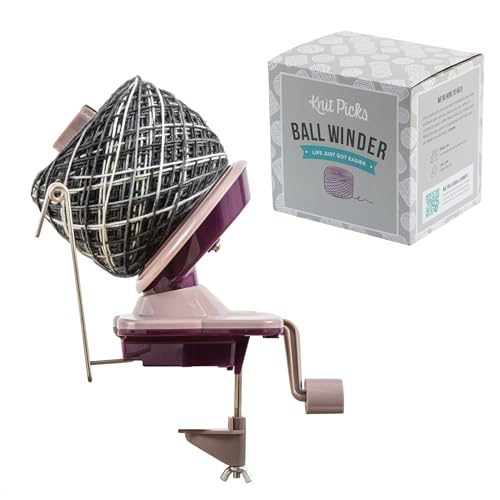
If you are just beginning your journey into dyeing or buying hanks, you don’t necessarily need an industrial-grade machine. The KnitPicks winder is the classic entry-level choice that balances affordability with functional, reliable performance.
This winder is perfect for standard 100-gram hanks of fingering or worsted-weight yarn. It is lightweight, easy to store in a project bag, and simple enough for a teenager or a beginner to operate without a steep learning curve.

Be aware that because it is made primarily of plastic, it isn’t designed for heavy, continuous use. If you try to force a massive, 400-gram lace-weight cake onto it, the tension arm may eventually show signs of fatigue.
Nancy’s Knit Knacks Heavy Duty Yarn Winder
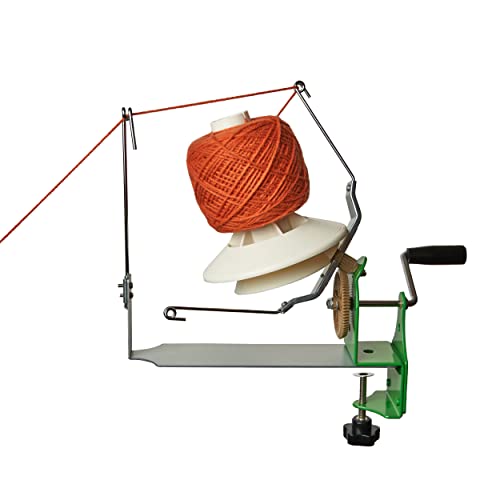
Nancy’s Knit Knacks has built a reputation for tools that are designed by people who actually understand the mechanics of fiber. This winder is engineered for those who want a professional-grade tool without the footprint of a floor-standing machine.
The precision-machined components ensure that your yarn tension remains consistent throughout the entire cake. Consistent tension is vital; if your yarn is wound too tightly, it can stretch the fibers, leading to gauge issues once you start knitting.
This is an investment piece for the dedicated maker. If you find yourself winding yarn every weekend, the ergonomic handle and smooth rotation will save your wrists from unnecessary strain.
Strauch Jumbo Ball Winder: Best Professional
When you are dealing with massive quantities of yarn, such as winding for a large-scale colorwork blanket, the Strauch Jumbo is the gold standard. It is a heavy, substantial piece of equipment that makes short work of even the most intimidating hanks.
This winder creates a very large, stable cake that won’t collapse as you pull from the center. The wide base and sturdy clamp ensure it stays anchored to your table, even when you are winding at a rapid pace.
It is expensive, but for the knitter who owns a spinning wheel or buys exclusively in large hanks, it is worth every penny. It handles everything from delicate angora to sturdy, multi-ply wool with equal grace.
Lacis Wooden Yarn Winder: The Classic Choice

There is something undeniably beautiful about the Lacis Wooden Winder, which brings a touch of old-world charm to your craft room. Beyond aesthetics, the wood construction offers a different tactile experience compared to modern plastic or metal winders.

The wood is smooth and finished well, ensuring that your yarn doesn’t snag or catch during the winding process. It is a fantastic option for those who prefer natural materials in their workspace and want a tool that feels as good as it looks.
Note that wooden winders can be sensitive to humidity changes. Keep it in a climate-controlled area to prevent the wood from warping, which could interfere with the alignment of the gears.
U-nitt Hand-Operated Yarn Winder Review
The U-nitt winder is a reliable mid-range option that often surprises people with its durability. It occupies a "sweet spot" for knitters who have outgrown entry-level plastic winders but aren’t ready to invest in professional-grade equipment.
The design is straightforward and intuitive, making it a great choice for those who dislike complex setups. It handles various yarn weights well, provided you don’t overfill the bobbin beyond its intended capacity.
One tip: always ensure the yarn is feeding off your swift at a steady rate. If the winder feels like it is pulling too hard, stop and check that your swift isn’t snagging, as the winder is only as good as the yarn delivery system.
Olikraft Metal Yarn Winder: Best Durability
If you are tired of plastic gears stripping or winding arms snapping, the Olikraft Metal Winder is your solution. This is a tool built for longevity, designed to withstand the rigors of a high-volume knitting lifestyle.
The metal construction provides a satisfying weight and stability that makes the winding process feel effortless. Because the frame is so rigid, there is very little vibration, which results in a cleaner, more uniform cake.
This winder is ideal for the knitter who values "buy it for life" quality. It is a robust tool that will likely outlive your current stash and be ready for the next decade of projects.
How to Properly Use a Yarn Winder for Hanks
A yarn winder is useless without a good swift to hold your hank in place. Never try to wind a hank by draping it over the back of a chair; the uneven tension will result in a cake that is either too loose or stretched beyond repair.
- Secure the swift: Ensure your swift is clamped firmly to a stable surface.
- Check the tension: Guide the yarn through the winder’s eyelet with your fingers to maintain a light, even tension.
- Start slow: Begin winding slowly to ensure the yarn is feeding correctly before increasing your speed.
Always watch for tangles as you wind. If you hit a knot in the yarn, stop the winder immediately rather than forcing it through, as this can cause the yarn to snap or the winder to jam.
Essential Tips for Winding Cakes by Hand
Sometimes you don’t have a winder, or you are working with a delicate fiber like mohair that requires a gentler touch. Hand-winding a cake is a skill that every knitter should possess for those "emergency" situations.
To wind a cake by hand, wrap the yarn around two fingers to start, then slowly build a cylinder by rotating the bundle. Keep the tension loose; if you pull too hard, you will lose the "bounce" of the yarn, which is crucial for stitch definition.
Remember that hand-wound cakes are generally less stable than machine-wound ones. Store them carefully and use them soon, as they are more prone to collapsing into a "yarn barf" if left to sit for too long.
Maintaining Your Winder for Long-Term Use
Most mechanical yarn winders suffer from the same issue: dust and fiber buildup in the gears. Every few months, take a soft brush or a can of compressed air to clear out any stray bits of wool or lint that have migrated into the mechanism.
If your winder starts to squeak or feels "gritty," a tiny dab of food-grade silicone grease or sewing machine oil on the moving parts works wonders. Avoid using heavy household oils, which can attract more dust and eventually gum up the works.
Finally, always store your winder in a box or a dedicated drawer when not in use. Keeping it protected from dust and accidental drops will ensure that it remains a reliable companion for all your future knitting adventures.
Investing in a quality yarn winder is a commitment to the longevity of your fiber stash and the quality of your finished garments. By choosing a tool that suits your specific volume and fiber preferences, you eliminate one of the biggest hurdles in the knitting process. Take the time to care for your equipment, and it will reward you with years of perfectly wound cakes. Happy knitting, and may your yarn always pull from the center without a hitch.