7 Best Pipe Cleaners For Internal Skeletons Reviewed
Explore our top 7 pipe cleaner picks for internal skeletons. We evaluate durability, flexibility, and wire gauge to help you build sturdy, poseable armatures.
Adding a wire skeleton to your knitted or crocheted creatures is the secret to moving from a static plushie to a poseable work of art. While many beginners reach for the first pack of craft stems they see, the structural integrity of your fiber project depends entirely on the wire gauge and fiber density of your chosen pipe cleaner. Choosing the right internal support prevents your stitches from stretching out and ensures your hard work doesn’t sag after a few weeks on the shelf. This guide breaks down the best options to help you build a sturdy foundation for your next heirloom project.
Darice Deluxe Extra Thick Chenille Stems: Best Overall


When you need a skeleton that can hold a firm pose without collapsing under the weight of heavy wool, these are the gold standard. Their extra-thick pile provides a crucial cushion between the sharp wire core and your delicate yarn, preventing the metal from poking through the fabric.
I find these particularly useful for amigurumi projects where the limbs need to be bent and repositioned frequently. The density of the chenille acts like a grip for your stitches, keeping the internal frame from sliding around inside the body cavity.
The bottom line? If you are working with a worsted or bulky weight yarn, these stems offer the perfect balance of rigidity and protection. They are the most reliable workhorse for general-purpose toy making.
Westcott Craft Pipe Cleaners: Best for Small Dolls
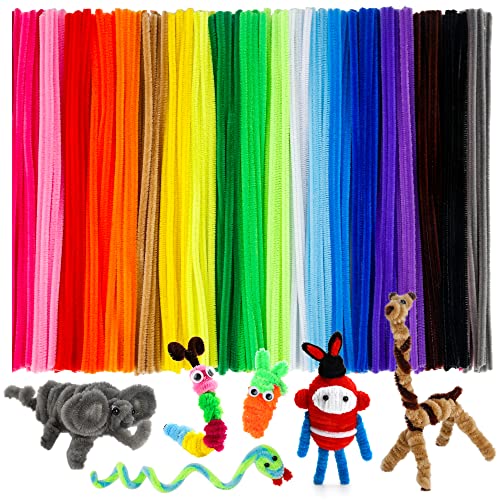
Fine-gauge knitting or miniature crochet requires a delicate touch and a skeleton that won’t add unnecessary bulk. These stems are thinner than the standard variety, making them ideal for small-scale dolls where you need to articulate tiny fingers or ankles.
Because they are slimmer, you can easily double or triple them up to create a reinforced spine without making the torso look like it has been overstuffed. They are surprisingly flexible, allowing for subtle, natural-looking bends rather than stiff, robotic angles.
If you are working with lace weight or fingering weight yarn, avoid the temptation to use heavy-duty stems. These Westcott cleaners provide the support you need without distorting your carefully crafted gauge.

Baker Ross Assorted Chenille Stems: Best Value Pack
When you are deep in a marathon of making gifts for a craft fair, you need a high volume of materials that won’t break the bank. This bulk pack is a practical choice for makers who want to keep a variety of colors and textures on hand for experimentation.
While they aren’t the thickest stems on the market, they are perfectly functional for light-duty structures or decorative accents. I often use these for projects where the skeleton doesn’t need to support significant weight, such as the stems of knitted flowers or small ornaments.
Keep in mind that the pile on these is slightly thinner, so I suggest wrapping them with a layer of cotton batting before inserting them into your project. This simple step adds the necessary padding to keep the wire from feeling sharp against your yarn.
Juvale Bulk Pipe Cleaners: Best for Large Projects

Large-scale fiber sculptures require a robust frame that can be twisted into complex shapes without snapping. The Juvale bulk sets offer a consistent length and wire gauge that makes planning your armature much easier when working on a grand scale.
One common mistake is using a single thin stem for a long limb, which inevitably leads to a "floppy" toy. With this bulk quantity, you can easily braid three or four stems together to create a sturdy, custom-thickness "bone" structure that won’t buckle.
If you are building a large creature, think of this as building a house; you need a strong foundation. Use these to create a multi-strand core, and your finished piece will hold its posture for years to come.
Creatology Metallic Stems: Best for Decorative Flair

Sometimes the skeleton is meant to be seen, especially in whimsical pieces where you might want a bit of glitter peeking through the stitches. These metallic stems add a touch of magic to fairy wings or the antennae of a knitted insect.
The wire core in these is often slightly stiffer than the standard fuzzy variety, which is a happy accident for structural support. However, because the metallic fibers can be a bit abrasive, always ensure they are fully encased in your work to avoid snagging your yarn from the inside.
Use these sparingly to add character to your designs. They are a fun way to incorporate texture and light, provided you are mindful of their slightly sharper edges.
Hygloss Products Neon Stems: Best for Color Coding
In complex projects with multiple joints—think of a multi-legged spider or a complex dragon—it is easy to lose track of which wire goes where. Using neon-colored stems allows you to color-code your internal structure during the assembly process.
I often use different colors to distinguish between the "spine" and the "limbs" while I am still in the prototyping phase. Once the project is finished, the neon color won’t show through, but it makes the construction phase infinitely less frustrating.
If you are a visual learner, this system is a game-changer. It helps you keep your internal geometry organized before you finish off your last row of stitches.
Caydo Fuzzy Stems: Best for Heavy-Duty Structures

If your primary goal is a toy that can withstand the rough-and-tumble play of a child, you need a stem with a high-tensile wire core. The Caydo stems are known for their durability and ability to hold a shape even after repeated bending.
The "fuzz" on these is also quite dense, which provides a nice friction against the inside of your stitches. This keeps the limbs from rotating or twisting out of place when the toy is being handled by little hands.
For high-wear items, I always recommend doubling these up. The extra wire gauge ensures that even with aggressive play, your knitted friend will stay in its intended position.
How to Choose the Right Gauge for Your Fiber Art
- Weight of the Yarn: Heavier yarns (worsted, bulky) need thicker, high-density stems to prevent internal shifting.
- Scale of the Project: Use thin, flexible wire for delicate fingers and thick, braided wire for the main torso and legs.
- Desired Range of Motion: If you want a toy that can sit, stand, and wave, prioritize the flexibility of the wire core over absolute rigidity.
- Stitch Density: If your gauge is loose (large stitches), use a thicker stem to ensure the wire doesn’t poke through the gaps.
Techniques for Wrapping Skeletons to Prevent Wear
The biggest enemy of a wire skeleton is the wire itself, which can eventually saw through your yarn from the inside. To prevent this, always wrap your wire frame in a layer of fleece or cotton batting before inserting it into your project.
You can also use a layer of medical tape or electrical tape over the ends of the wire to create a blunt tip. This prevents the sharp metal edges from snagging your yarn or poking through the fabric of your finished work.
Finally, consider using a "tube" of knitted fabric—a simple i-cord—to house your wire skeleton. This creates a soft, protective sleeve that keeps the armature secure and adds a professional finish to the internal structure.
Safety Tips for Using Wire Skeletons in Toys
If you are gifting your creations to children, safety must be your priority. Always ensure that the wire ends are folded back on themselves and covered with a protective layer so they cannot pierce the fabric.
Never leave the wire ends exposed, even if they are tucked deep inside the stuffing. Over time, the constant friction of play can cause the wire to migrate toward the surface, posing a potential scratch hazard.
When in doubt, perform a "stress test" on your finished toy by bending the limbs repeatedly to ensure the wire remains safely contained. If you see any metal poking through, it’s time to reinforce that area with a few extra stitches or an additional layer of batting.
Selecting the right pipe cleaner is just as important as choosing the right yarn for your project. By considering the gauge, the density of the chenille, and the intended use of your fiber art, you can create pieces that are as durable as they are beautiful. Take the time to pad your frames, protect your stitches, and choose the structure that best fits your design. With these tools in your kit, your knitted creatures will be ready to stand the test of time.