
7 Best Yarn Mast Antennas For Tangle-Free Feeding
Discover the 7 best yarn mast antennas designed for tangle-free feeding. Improve your crafting efficiency with these top-rated, reliable fiber accessories.
There is nothing more frustrating than mid-row momentum being halted by a yarn cake that has collapsed into a tangled heap. Yarn mast antennas serve as the unsung heroes of a knitter’s workspace, providing a consistent, vertical feed that prevents snags and keeps your tension uniform. By lifting the yarn away from the center-pull cake, these tools ensure you spend your time creating stitches rather than untying knots. Here are seven of the best options to streamline your workflow and protect your precious fiber.
Yarn Valet Portable Yarn Dispenser: Best Overall


The Yarn Valet is a masterclass in minimalist design, focusing on stability and simplicity. It sits firmly on your table, providing a weighted base that prevents the "walking" motion common with lighter plastic dispensers.
Its standout feature is the telescoping metal mast, which guides your yarn upward and away from the cake. This vertical lift is essential when working with slippery fibers like silk or bamboo, which tend to slide off the center of a cake and knot at the base.
If you are a prolific knitter who switches between multiple projects, this is your best bet. It is compact enough to tuck into a project bag, yet robust enough to handle a heavy worsted-weight wool cake without tipping over.
Stanwood Needlecraft Yarn Ball Winder Antenna

Stanwood is a household name in the fiber arts world for a reason: they build tools that last. Their dedicated antenna attachment is designed specifically to pair with their industry-standard ball winders, creating a seamless transition from winding to knitting.
The primary benefit here is the integrated eyelet guide, which ensures the yarn maintains a constant angle of entry. This is particularly helpful when you are using a mechanical winder to create cakes that might otherwise have a slight "lean" or uneven tension.
While it is an excellent addition to a winding station, keep in mind that it is less "portable" than standalone dispensers. It is the perfect choice for the knitter who has a dedicated craft room and wants to keep their yarn supply organized and ready for action.
KnitIQ Yarn Feeder and Tension Guide Stand
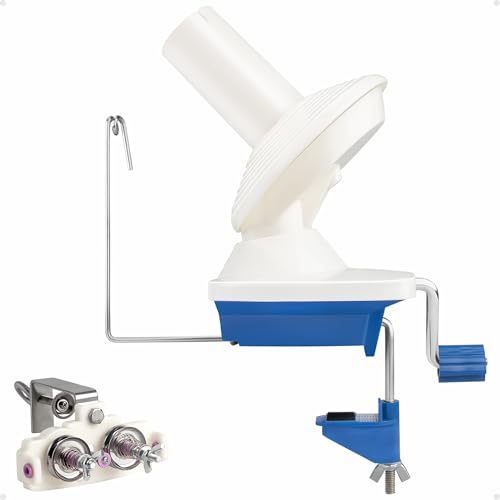
KnitIQ takes the concept of a yarn mast and adds a sophisticated tensioning element. It isn’t just about keeping the yarn from tangling; it’s about ensuring the yarn is delivered to your needles with consistent resistance.
This is a game-changer for those who struggle with uneven gauge in stranded colorwork. By passing your yarn through the tension guide, you remove the "slack" that often occurs when pulling yarn from a cake, leading to more professional, even stitches.
The stand is adjustable, allowing you to accommodate everything from tiny lace-weight cobweb yarns to chunky, single-ply wools. It is a slightly larger footprint, but for the knitter focused on precision, the trade-off in desk space is well worth the result.
Coxeer Adjustable Yarn Guide and Antenna
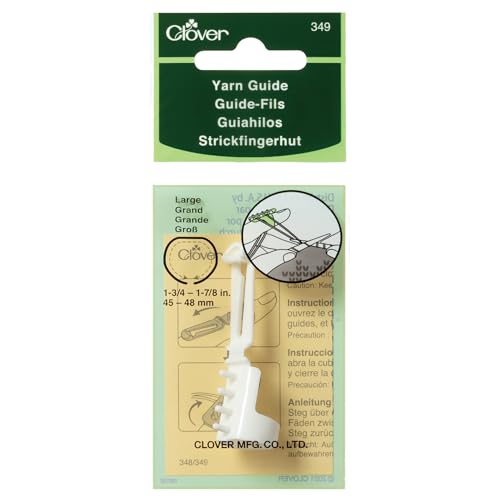
The Coxeer model is a fantastic entry-level option that prioritizes versatility. Its adjustable height allows you to customize the feed based on the size of your yarn cake, preventing the "drag" that occurs when a tall mast pulls too sharply on a small, nearly finished ball.
It is lightweight and easy to assemble, making it ideal for knitters who move their setup from the living room to the kitchen table. The smooth finish on the guide eyelet is a critical detail, as it prevents snagging on delicate fibers like mohair or lace-weight alpaca.
If you are just starting to experiment with yarn masts, this is a low-risk, high-reward investment. It provides the essential tangle-free experience without the complexity or price tag of more specialized tensioning systems.
Lacis Yarn Ball Winder and Tension Mast

Lacis has been a staple in the sewing and knitting community for decades, and their tension mast reflects a deep understanding of textile physics. This unit excels at managing the "bounce" that can occur when pulling yarn quickly from a center-pull cake.
The mast is designed with a high-friction base and a smooth, polished guide loop that minimizes static buildup. This is particularly important when working with acrylic or synthetic blends, which can become charged and clingy during dry winter months.
This tool is built for the long haul. If you are a high-volume knitter who goes through dozens of skeins a month, the durability of the Lacis mast will save you from the recurring cost of replacing cheaper, plastic alternatives.
Nagina International Wood Yarn Mast Feeder
For the knitter who appreciates the aesthetic of their tools, Nagina International offers a beautiful, handcrafted wooden solution. Beyond its visual appeal, the wood provides a natural, smooth surface that is inherently snag-free.
Wood is an excellent choice for those who work with "sticky" wools or high-twist yarns that might catch on metal eyelets. The weight of the wooden base also provides a solid, non-slip foundation that feels substantial on a table.
While it lacks the complex tensioning mechanisms of some modern plastic models, it offers a classic, reliable feed. It is the perfect choice for the knitter who wants a tool that functions well and looks like a piece of furniture rather than a piece of hardware.
ArtBin Yarn Drum and Integrated Antenna

The ArtBin system is the ultimate solution for the knitter who needs their project to be truly mobile. By housing your yarn inside a drum with an integrated antenna, you are essentially creating a self-contained, tangle-proof environment.
This is the gold standard for travel knitting. Whether you are on a plane, in a car, or just moving between rooms, the yarn stays protected from dust, pet hair, and accidental tangles while it feeds smoothly through the top.
The trade-off is the size of the drum, which takes up more space than a simple wire mast. However, for those who knit on the go, the peace of mind that comes with a protected, organized yarn feed is invaluable.
Benefits of Using a Yarn Mast for Colorwork
When you are juggling two or more strands in stranded colorwork, a yarn mast becomes an essential piece of equipment. It keeps your multiple balls of yarn separate, preventing the dreaded "yarn soup" that happens when cakes roll together and intertwine.
Using a mast ensures that both yarns are fed at the same height and tension. This prevents one color from being pulled tighter than the other, which is the most common cause of puckering in Fair Isle or intarsia projects.
- Prevents tension bias: Keeps the dominant and background colors feeding evenly.
- Reduces friction: Minimizes the drag that causes uneven stitch size.
- Improves speed: Allows you to focus on your pattern rather than untangling your yarn.
How to Properly Set Up Your Yarn Mast Antenna
The key to a successful setup is the distance between the cake and the mast. You want the yarn to travel at a slight upward angle, not a sharp vertical drop, to ensure it doesn’t pull too hard on the center of the cake.
Place your yarn cake directly at the base of the mast, but ensure there is enough clearance so the cake can rotate freely if it needs to. Always thread the yarn through the eyelet from the center-pull core to ensure the cake unwinds from the inside out.
Finally, adjust the height of the antenna so the eyelet sits about 6 to 8 inches above the top of your yarn cake. This provides just enough lift to keep the yarn taut without creating unnecessary tension that could distort your gauge.
Troubleshooting Common Yarn Tangling Issues
Even with a mast, you may occasionally encounter a "yarn barf," where a large clump of yarn pulls out of the center of the cake. This usually happens if the cake was wound too loosely or if you are pulling the yarn too quickly.
If you notice your yarn catching, check the eyelet of your mast for any burrs or rough spots that might be grabbing the fiber. A quick buff with a fine-grit sandpaper or a touch of wax can smooth out a rough metal guide and solve the problem instantly.
If your yarn is still tangling, try slowing down your knitting pace or checking the internal structure of your yarn cake. Sometimes, the issue isn’t the mast, but the way the yarn was originally wound; if the cake is too soft, consider rewinding it onto a firmer base.
Investing in a yarn mast is one of the simplest ways to elevate your knitting experience from a series of interruptions to a fluid, meditative practice. By choosing the right tool for your specific project needs—whether it’s a portable dispenser for travel or a tension-heavy stand for colorwork—you remove the technical friction that often leads to frustration. Take the time to set your station up correctly, and you will find your stitches becoming more uniform and your knitting time significantly more enjoyable. Happy knitting!
