7 Best Scale Sets For Weighing Yarn Yardage
Accurately measuring yarn yardage is essential for crafters. We review the 7 best scales for precision, helping you track your stash and project needs easily.
Whether you are playing yarn chicken on a complex sweater or trying to calculate the remaining yardage on a partial skein, precision is your best friend. Every knitter eventually faces the mystery of how much yarn is left in their stash, and a reliable scale is the only way to solve it. By measuring weight, you can mathematically derive your remaining yardage with surprising accuracy. This guide explores the best tools to ensure your project never runs short.
American Weigh Scales Blade: The Best Overall Pick
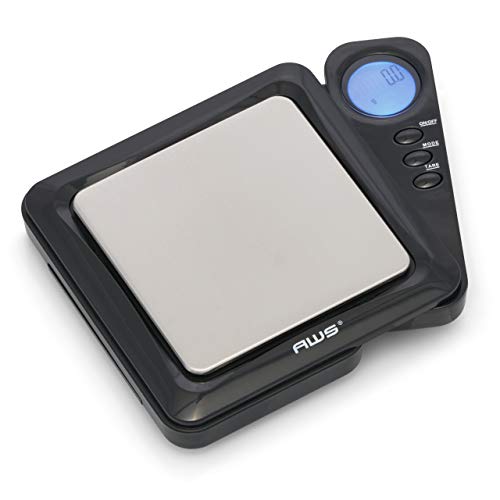

The Blade series is a staple in many knitting studios because it balances a slim profile with a high-capacity sensor. It feels sturdy, which is vital when you are weighing a heavy, saturated wool sweater that you’ve just finished blocking.
Its standout feature is the retractable display, which keeps the screen visible even when you are weighing larger, bulky yarn cakes. You won’t have to squint or crane your neck to see the numbers while your hands are busy balancing a delicate lace project.
Ultimately, this scale offers the most professional experience for the serious stash-manager. If you are regularly weighing multiple skeins to ensure your dye lots match or to calculate leftover yardage for scrap projects, this is the gold standard.
Etekcity Digital Kitchen Scale: Best Value Choice

If you are a casual knitter who just needs to check if you have enough yarn for a pair of socks, the Etekcity is your best bet. It is incredibly affordable and gets the job done without any unnecessary bells and whistles.
The surface area is generous, meaning you can easily place a large bowl on top to hold your yarn while you weigh it. This is a huge advantage when you are dealing with loose hanks that might otherwise spill off a smaller, pocket-sized scale.
While it lacks the hyper-precision of laboratory-grade tools, it is perfectly accurate for standard knitting math. For the price, it is an essential piece of kit for any knitter’s workspace.
My Weigh Triton T3: Best for Precision Accuracy

When you are working with luxury fibers like silk or cashmere, every gram counts toward your final yardage calculation. The Triton T3 is built for those who demand extreme precision and need to know exactly how much fiber they are using.
It features a protective hard cover that doubles as a weighing tray, which is brilliant for preventing stray fibers from getting into the sensors. This keeps the scale clean and ensures that your readings remain consistent over years of use.
This is the scale for the knitter who loves data and precise project tracking. If you are calculating yardage for a high-stakes project where you have exactly enough yarn and no room for error, the T3 provides the peace of mind you need.
Weigh Gram Digital Pocket Scale: Best for Travel
Knitters often find themselves needing to weigh yarn while at a retreat or a local yarn shop. This pocket-sized scale is small enough to tuck into your project bag right alongside your interchangeable needle set.
Despite its tiny footprint, it is surprisingly sensitive and responsive. It is ideal for measuring small amounts of yarn, such as when you are weighing the contrast color for a stranded colorwork project to ensure you have enough for the final repeats.
It isn’t meant for weighing massive sweater quantities, but for spot-checking yardage on the go, it is unbeatable. It is a reliable, portable tool for the knitter who never leaves home without a project in progress.
GreaterGoods Digital Scale: Best Easy-Read Design

The GreaterGoods scale is designed with a high-contrast, backlit display that makes reading your measurements effortless. In a dimly lit living room while you’re settling in for an evening of knitting, this visibility is a massive benefit.
The interface is incredibly intuitive, featuring a simple tare function that resets the scale to zero with a single tap. This is crucial when you need to subtract the weight of a yarn bowl or a project bag before measuring the yarn itself.
It is a sleek, modern choice that looks great on a craft room shelf. If you prioritize user-friendly design and clear feedback, this is the scale that will make your yarn math feel like less of a chore.
Ozeri Pronto Digital Scale: Best Large Capacity

Sometimes you need to weigh an entire sweater or a massive stash of bulky weight yarn. The Ozeri Pronto is built to handle significant weight without flickering or losing its calibration.
It features a wide platform that accommodates larger items easily, preventing the "tipping" issue common with smaller, circular scales. When you are weighing a heavy project that is still damp from blocking, this stability is a lifesaver.
This scale is a workhorse that handles the heavy lifting with ease. For the knitter who keeps a large stash and frequently weighs multiple skeins at once, the high-capacity limit is a game-changer.
Escali Primo Digital Scale: Best User Experience
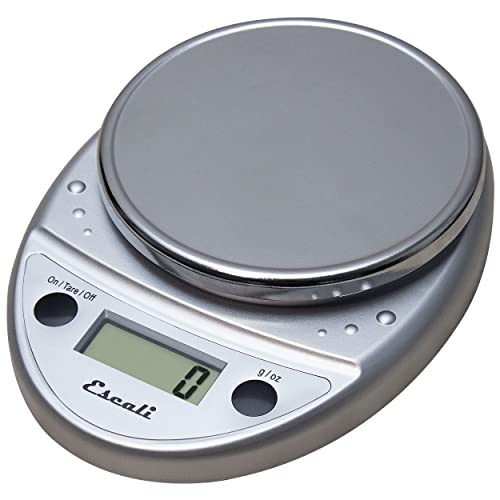
The Escali Primo is legendary in the kitchen, but it is equally beloved by knitters for its simplicity and durability. It features a simple two-button operation that is nearly impossible to mess up, even when you are tired after a long day of knitting.
The buttons are sealed, which means they are protected from accidental spills or lint buildup. In a fiber-heavy environment, this kind of low-maintenance design is exactly what you want for a tool you use every day.
It comes in a variety of colors, allowing you to match it to your craft room aesthetic. It is a reliable, no-nonsense tool that simply works every time you turn it on.
Why Precision Scales Matter for Yarn Yardage Math
To calculate yardage, you must know the weight of the full skein (from the label) and the weight of the remaining yarn. By using the formula: (Remaining Weight / Total Weight) x Total Yardage = Remaining Yardage, you can determine if you have enough yarn to finish that last sleeve.
Without a scale, this is all guesswork. If you are knitting with a hand-dyed yarn that doesn’t have a standardized yardage-to-weight ratio, a scale becomes your primary tool for project planning.
Always remember that moisture affects weight. If your yarn is stored in a humid environment, it will weigh more than it would in a dry one, which can throw off your math. Store your yarn in a stable environment to keep your calculations consistent.
Understanding Grams vs Ounces in Knitting Projects
Most yarn labels provide weight in both grams and ounces, but grams are significantly more precise for small-scale measurements. Always set your scale to grams when working with partial skeins or fine lace-weight yarns.
Ounces are often too broad a unit of measurement for the delicate math required for knitting. Using grams allows you to see small changes in weight, which translates to more accurate yardage estimates.
If you are working with a pattern that lists yardage, converting that into grams is the best way to ensure you don’t run out. Stick to grams to avoid the rounding errors that come with using ounces.
How to Calibrate Your Scale for Better Accuracy
Scales can lose their accuracy over time, especially if they are bumped or moved frequently. Most digital scales come with a calibration weight, which is a small, precise metal block used to reset the sensor.
To calibrate, place the scale on a perfectly flat surface and follow the manufacturer’s instructions for the calibration mode. This ensures that the scale knows exactly what a specific weight feels like, maintaining its accuracy for your projects.
Even if you don’t calibrate daily, doing so every few months is a good habit. A calibrated scale is the difference between a finished sweater and a project that runs out of yarn three rows too early.
Investing in a quality digital scale is one of the smartest decisions a knitter can make for their stash management. Whether you choose a high-precision pocket tool or a robust kitchen scale, the ability to measure your yarn accurately will save you from countless headaches. Use these tools to master your yardage and knit with confidence, knowing exactly how much fiber you have on hand. Happy knitting, and may your yarn always be enough!