6 Best Swifts For Winding Yarn Hanks Worth Using
Find the perfect yarn swift for your craft. We evaluate six top-rated models based on durability and ease of use to help you wind hanks with total precision.
Few things are more frustrating for a knitter than watching a beautiful, hand-dyed hank of yarn collapse into a tangled nightmare of knots. A reliable yarn swift is the unsung hero of your craft room, transforming loose loops into neat, manageable cakes in minutes. Whether you are working with delicate lace-weight mohair or sturdy wool, the right tool makes all the difference. Here are the top six swifts to help you keep your stash organized and your sanity intact.
Stanwood Needlecraft Tabletop Swift: Best Overall
This wooden tabletop model is the gold standard for many knitters because it balances durability with a smooth, silent rotation. It features a heavy-duty clamp that secures firmly to almost any table edge, ensuring it won’t wobble while you wind.
The ball-bearing construction allows the swift to spin with minimal friction, which is vital when you are working with finer, more delicate fibers. If you’ve ever had a swift jerk and snap a strand of expensive silk-blend yarn, you’ll appreciate the consistent, fluid motion this model provides.
While it is a bit of an investment, the build quality is meant to last for years of heavy use. If you process a lot of hanks—especially those large 100-gram skeins—this is the most reliable workhorse you can find.
Amish-Style Wooden Swift: Best Manual Option
Amish-style swifts are unique because they lay flat on a table rather than clamping to the side. They consist of two interlocking wooden slats that rotate around a central pivot, making them incredibly intuitive to set up and use.


Because they don’t rely on tension-heavy clamps, they are excellent for knitters who don’t have a dedicated table edge or work from a small coffee table. They are also remarkably quiet, as there are no metal gears or screws to squeak during the winding process.
The main trade-off is the footprint; these require a larger surface area to operate effectively. However, for those who value simplicity and portability, the lack of mechanical parts makes this a virtually indestructible tool.
Lacis Wooden Umbrella Swift: Best for Stability
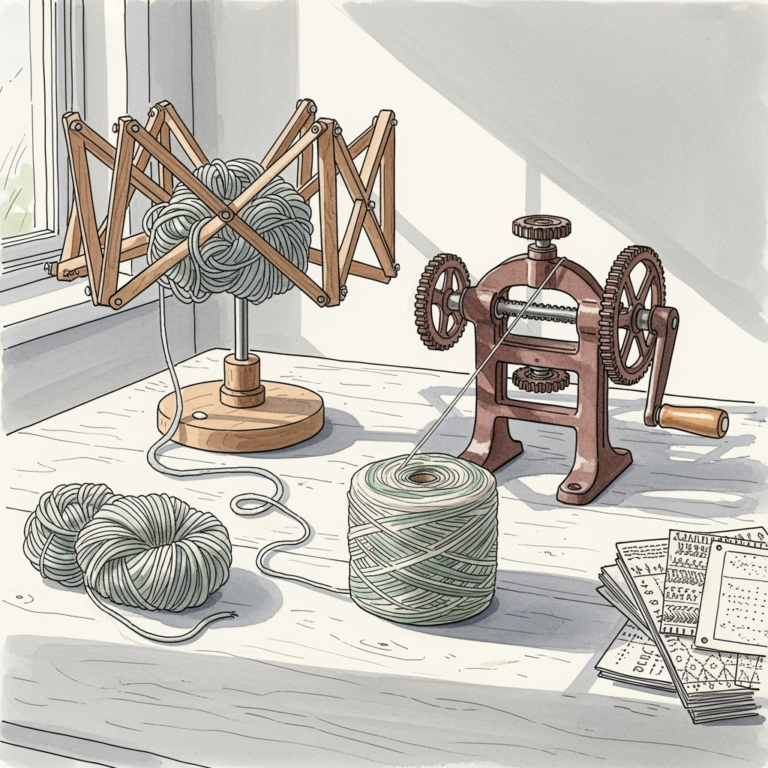
The Lacis umbrella swift is a classic design that fans out like a parasol to hold your yarn in a circular tension. It is known for its exceptional stability and heavy-duty wooden construction, which prevents the "tipping" that can happen with cheaper, lighter models.
It is particularly useful when you are dealing with very large hanks or heavy, bulky-weight yarns that might pull on a flimsier swift. The structure provides a very even, uniform tension, which helps prevent the yarn from snagging on itself.
If you have limited space, be aware that this does require a sturdy surface and a good clamp. It is a professional-grade tool that rewards you with a smooth, tangle-free winding experience every single time.
KnitPicks Yarn Swift: Best Budget-Friendly Pick
If you are a casual knitter who only occasionally buys hanks, the KnitPicks swift offers a functional, no-frills entry point. It utilizes the standard umbrella design and provides a reliable rotation that gets the job done without breaking the bank.
It is lightweight and easy to store, making it a great choice for knitters living in smaller apartments or those who don’t want a permanent fixture on their crafting desk. While it isn’t as heavy or ornate as high-end wooden models, it performs the core task of holding yarn securely.
The primary trade-off here is the material; it is generally made of lighter-weight components that may not withstand decades of daily abuse. However, for the hobbyist knitter, it is a perfectly capable tool that offers excellent value.
Strauch Jumbo Ball Winder and Swift: Best Pro Tool
When you are dealing with massive quantities of yarn—like winding five skeins for a large sweater project—the Strauch system is in a league of its own. It is designed for high-volume use, offering a level of precision that standard hobby tools simply cannot match.
The swift is engineered to handle massive hanks without buckling or losing tension. When paired with their heavy-duty winder, you can turn a mountain of yarn into perfectly uniform cakes in a fraction of the time.
This is definitely a "pro" tool, both in terms of price and size. If you are a serious stash-builder or a professional designer, this is the final upgrade you will ever need to make.
ChiaoGoo Yarn Swift: Best Portable Design
ChiaoGoo is well-known for their high-quality needles, and their swift follows that same philosophy of thoughtful, user-friendly design. This model is exceptionally compact and breaks down easily, making it perfect for knitters who travel to retreats or workshops.
Despite its compact nature, it doesn’t sacrifice performance for portability. It features a smooth rotation that handles various yarn weights with ease, ensuring your yarn doesn’t twist or bind during the winding process.
If you find yourself needing to wind yarn in different locations, or if you simply prefer a tool that can be tucked away in a drawer when not in use, this is the ideal solution. It’s a clever design that bridges the gap between professional performance and home-knitter convenience.
How to Properly Set Up Your Swift for Winding
Always start by placing your hank on the swift before you cut the ties. If you remove the ties while the yarn is loose on the table, you are asking for a tangle.
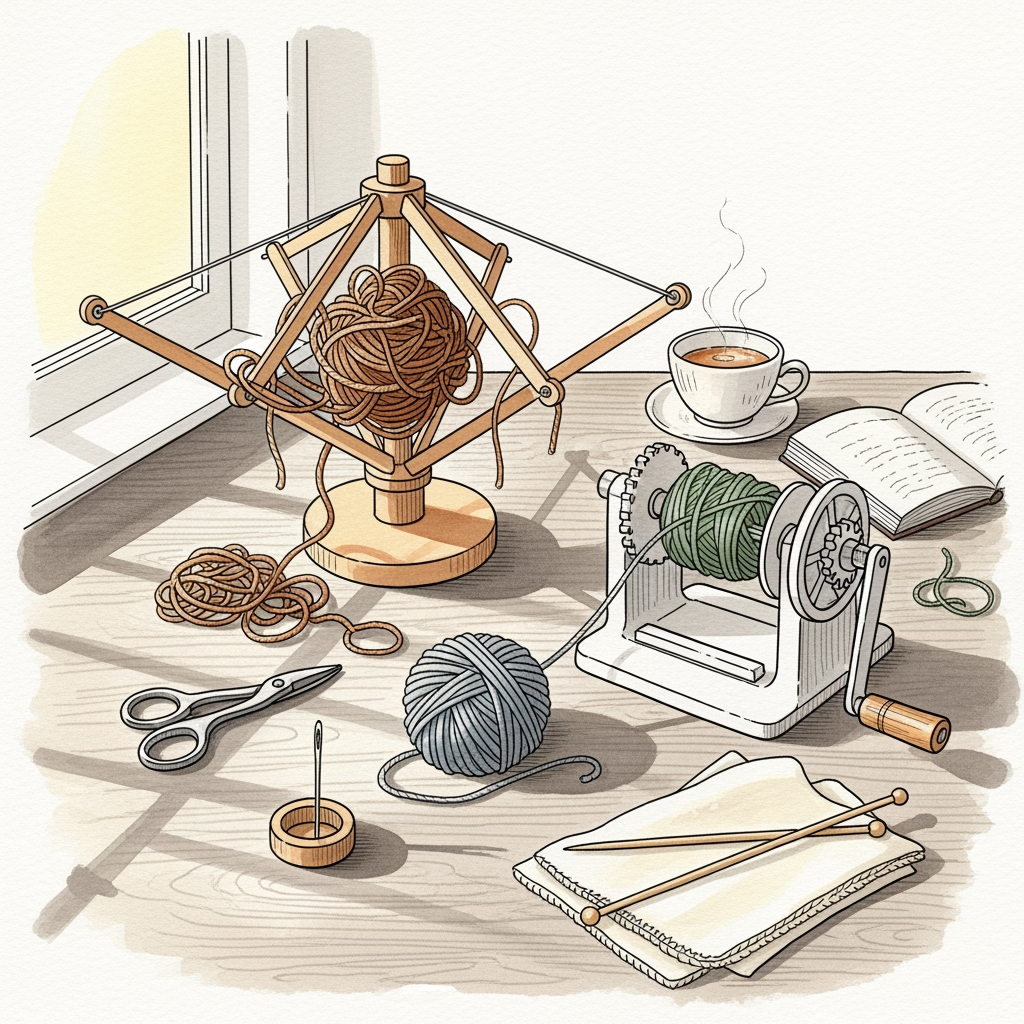
Once the hank is on the umbrella or slats, expand the swift gently until the yarn is taut but not stretched. If you stretch the yarn too much, you can actually change its gauge, which will wreak havoc on your knitting tension later.
Finally, ensure your yarn winder is positioned at a comfortable distance from the swift. You want a steady, smooth flow of yarn that isn’t pulling upward or downward, as this can cause the yarn to pop off the swift mid-wind.
Umbrella vs. Amish Style: Which Swift is Better?
Umbrella swifts are generally better for those who want a vertical, space-saving footprint and precise tension adjustment. They are excellent for fine fibers like lace-weight alpaca or silk, where consistent, gentle tension is paramount.

Amish-style swifts are the better choice if you have plenty of table space and want something that is incredibly easy to set up and store. Because they rotate horizontally, they are very stable and less prone to the mechanical issues that can plague complex umbrella mechanisms.
Ultimately, your choice depends on your workspace. If you have a dedicated craft room, an umbrella swift is a dream; if you knit at your dining table and need to clear it quickly, the Amish style is your best friend.
Essential Tips for Winding Hanks Without Tangles
Always check for "figure-eight" twists in your hank before putting it on the swift. A quick visual inspection can save you twenty minutes of untangling later.
When you begin winding, start slowly to ensure the yarn is feeding properly. If the swift starts to spin too fast, it can gain momentum and "overshoot," causing the yarn to slip off the arms and create a knot.
If you are winding a delicate fiber like mohair or angora, go even slower. These fibers have a "halo" that can catch on itself; keeping the tension low and the speed consistent is the only way to prevent a fuzzy, knotted mess.
Maintaining Your Swift for Long-Term Durability
Most wooden swifts benefit from a light dusting and an occasional check of the screws. If your swift starts to squeak or feel "gritty," a tiny drop of sewing machine oil on the pivot points can work wonders.
Avoid storing your swift in extreme temperatures or high humidity, as wood can expand and contract, which may cause the arms to stick. If you have a metal-based swift, keep it dry to prevent any oxidation or rust on the moving parts.
Treat your swift as a partner in your knitting process, not just a piece of equipment. With just a little bit of care, a high-quality swift will remain a reliable part of your knitting toolkit for decades to come.
Investing in a good swift is one of the most practical upgrades you can make for your knitting practice. It saves you time, protects your yarn, and makes the preparation phase of your project feel like a treat rather than a chore. Choose the model that best fits your workspace and your fiber habits, and you will find yourself enjoying every stitch much more. Happy winding, and may your yarn cakes always be perfectly round.