6 Best Swifts For Hanks Of Luxury Yarn To Own
Discover the top 6 yarn swifts for luxury fiber. Our guide evaluates durability and ease of use to help you protect your delicate, hand-dyed hanks safely.
Investing in a quality yarn swift is the single most effective way to protect your hand-dyed, luxury fiber investments from becoming a tangled, heartbreaking mess. When you buy a beautiful hank of silk or cashmere, the transition from twisted loop to usable cake is a high-stakes moment that requires precision tools. A reliable swift ensures your yarn remains tension-free, preventing the stretching or snapping that can ruin delicate fibers. Choosing the right one transforms a tedious chore into a seamless part of your creative process.
Stanwood Needlecraft Wooden Umbrella Swift


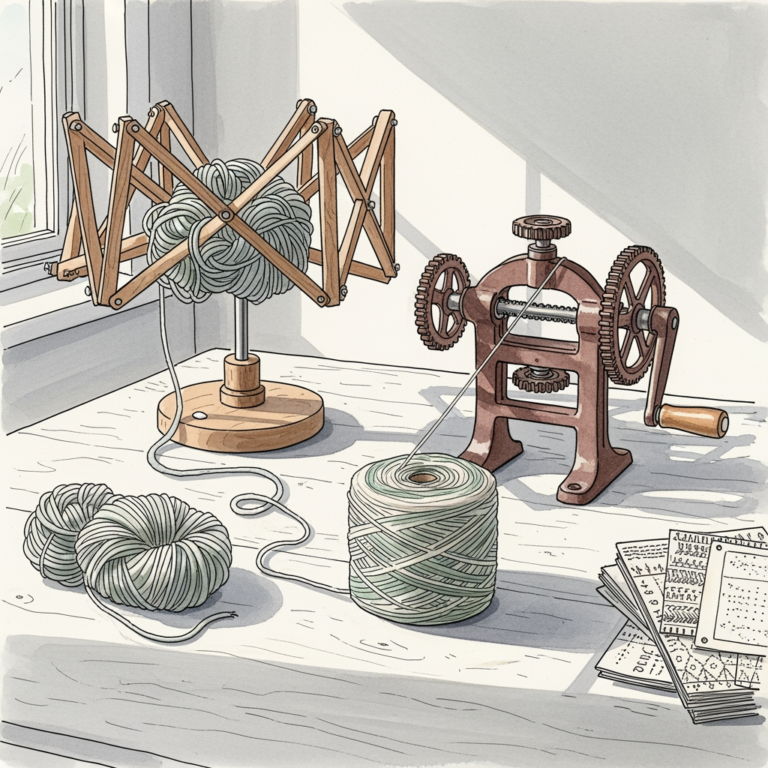
The Stanwood wooden umbrella swift is a staple in many studios because it balances durability with a smooth, silent rotation. Its heavy-duty construction handles everything from lightweight lace-weight mohair to heavy, rustic wools with equal grace.
The key here is the friction-free movement. When you are winding a hand-dyed skein of merino silk, any hitch in the rotation can cause the yarn to snag or pull, potentially altering the ply. This model’s hardware is designed to spin effortlessly, meaning you spend less time untangling and more time casting on.
Be aware that wooden swifts require a bit of space and a sturdy table edge for clamping. If you are working in a cramped corner, ensure your surface is thick enough to handle the clamp without marring your furniture.
Amish Style Tabletop Swift by Nancy’s Knit Knacks

Amish-style swifts are a brilliant departure from the traditional umbrella design because they don’t require clamping to a table. They sit flat on your surface, using adjustable wooden pegs to accommodate different hank circumferences.
These are ideal for knitters who frequently work with delicate or slippery fibers like bamboo or silk. Because the yarn sits on stationary pegs rather than being stretched over a rotating umbrella, there is zero risk of the swift "snapping" open and putting too much tension on the strand.
The tradeoff is footprint; these take up more horizontal table space than a vertical umbrella swift. However, for the knitter who values absolute control over tension, the stability of an Amish-style swift is unmatched.
Strauch Jumbo Ball Winder and Swift Combo Kit

If you are a serious knitter who frequently buys large, 100-gram or 200-gram hanks, a combo kit is a professional-grade solution. Strauch is renowned for engineering that feels like it will last a lifetime.
The benefit of using a matched system is the synchronicity between the swift and the winder. When the two components are designed to work together, the yarn flows at a consistent speed, which produces perfectly shaped, center-pull cakes that won’t collapse mid-project.
These kits are an investment, both in terms of cost and storage space. They are best suited for the dedicated maker who has a permanent "winding station" set up in their craft room.
Lacis Wooden Umbrella Swift for Luxury Fibers

Lacis has a reputation for fine craftsmanship, and their wooden swifts are often finished with a smoothness that prevents snagging. When you are working with high-end fibers like hand-spun angora or cashmere, even a tiny splinter can cause a disaster.
The precision of the joinery on a Lacis swift is its greatest asset. The arms move with a fluidity that feels almost lubricated, which is crucial when you are winding expensive, fragile yarns that cannot afford to be tugged or stressed.
Think of this as the "heirloom" choice for your knitting kit. While it requires the same care as any wooden tool, its build quality ensures it won’t warp or bind over years of heavy use.
Knit Picks Yarn Swift: Best Value for Beginners
For the knitter who is just starting to transition from store-bought balls to indie-dyed hanks, the Knit Picks swift is a fantastic entry point. It is functional, lightweight, and gets the job done without breaking the bank.
It uses a standard umbrella mechanism that is intuitive to set up. It is perfectly capable of handling standard weight wools and acrylics, making it a great tool for learning the mechanics of winding before upgrading to more specialized equipment.
Keep in mind that this is a lighter-weight tool. It may not provide the same ultra-smooth, silent spin as a high-end wooden model, but it provides the essential utility you need to stop winding yarn by hand around the back of a chair.
ChiaoGoo Hand-Operated Wooden Yarn Swift

ChiaoGoo is a brand synonymous with quality needles, and their foray into wooden accessories maintains that high standard. This swift is designed with the ergonomic needs of the knitter in mind, featuring smooth edges and a balanced frame.
The standout feature here is the compact design. It folds down neatly, which is a significant advantage if you live in an apartment or share your crafting space with a dining room table.
It handles a wide range of hank sizes, from small lace loops to large, bulky-weight skeins. It is a reliable, mid-range option that bridges the gap between basic plastic models and professional, heavy-duty studio equipment.
How to Properly Set Up Your Swift for Success
Setting up your swift is a ritual that dictates the quality of your finished yarn cake. Always ensure the swift is level and that the yarn hank is placed evenly over the arms before you begin.
If the yarn is placed off-center, the swift will wobble, creating uneven tension. This can lead to "ghosting" or tangles in your center-pull cake, which will inevitably cause a headache later when you are trying to knit a complicated cable pattern.
- Check your tension: The yarn should be taut enough to stay on the swift, but not so tight that it stretches the fiber.
- Clear the area: Ensure the swift has enough clearance to spin without hitting a lamp or wall.
- Start slow: Always begin winding slowly to ensure the yarn is feeding correctly before picking up speed.
Why Umbrella Swifts Protect Delicate Yarn Hanks

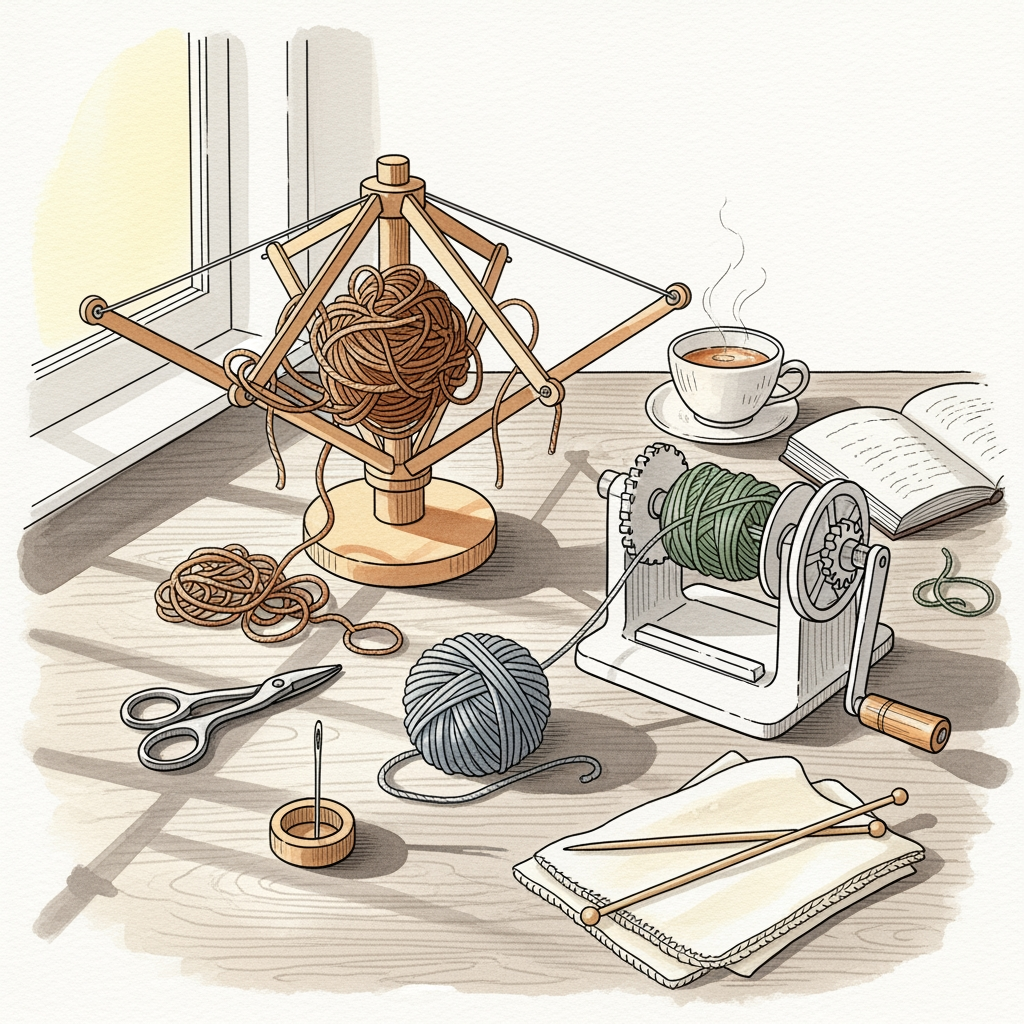
Umbrella swifts are designed to mimic the natural shape of a hank, providing a circular support system that distributes weight evenly. This prevents the yarn from sagging or tangling during the winding process.
When you use a swift, you are essentially mimicking the way the yarn was originally dyed and dried. This preserves the natural loft and elasticity of the fiber, which is vital for maintaining gauge in your final project.
Without a swift, you risk creating "yarn barf" or excessive friction as you pull from a hank draped over your knees or a chair. Using a swift ensures that the yarn enters your winder at the same tension it was intended to have, keeping your stitches uniform.
Maintenance Tips for Your Wooden Yarn Swift
Wooden swifts are beautiful, but they are also organic tools that respond to their environment. To keep them in top condition, store them in a climate-controlled area to prevent the wood from warping or cracking.
If the movement becomes stiff, a tiny drop of furniture wax or a specialized wood lubricant on the joints can restore that smooth spin. Never use harsh chemical cleaners, as these can strip the wood’s finish and leave residue that could transfer to your yarn.
- Dust regularly: Use a soft, dry cloth to remove lint.
- Check the hardware: Tighten screws periodically if they loosen from vibration.
- Avoid moisture: Never leave wooden tools in damp basements or garages.
Essential Tools for Winding Luxury Yarn Cakes
A swift is only half of the equation; you also need a high-quality ball winder to create a stable cake. A good winder should have a sturdy base and a smooth gear mechanism to prevent the yarn from snagging.
Beyond the tools, consider the surface you are winding on. A non-slip mat under your winder can prevent it from "walking" across the table, which is a common frustration when winding large hanks.
- Yarn labels: Keep your labels! I always tuck the label into the center of the cake so I never lose track of dye lots or fiber content.
- Scissors: Keep them handy, but only use them to trim the ties on the hank.
- Patience: Winding is a meditative process; don’t rush it, or you’ll risk a tangle.
Choosing the right swift is a personal decision that depends on your space, your budget, and the types of yarn you gravitate toward. Whether you opt for a heavy-duty wooden umbrella or a compact Amish-style frame, the goal is always to protect your fiber and prepare it for the needles. By investing in a quality tool, you are honoring the time and effort that went into producing your luxury yarn. May your cakes be tidy, your tension be even, and your next project be a joy to knit.