7 Best Project Journals For Fiber Notes To Try
Organizing your craft is vital. Explore our top seven project journals for fiber artists to track patterns, yarn stashes, and progress with ease and precision.
Every project you cast on tells a story, but memory is a fickle companion when you are juggling multiple WIPs and complex lace charts. A dedicated project journal transforms your knitting from a series of isolated tasks into a cohesive library of your growth as a maker. By documenting the tension, fiber content, and modifications for every garment, you build a personal reference guide that makes future projects significantly more successful. These seven journals offer the structure you need to stop guessing and start mastering your craft.
The Knit Notes Journal: Best Overall for Projects
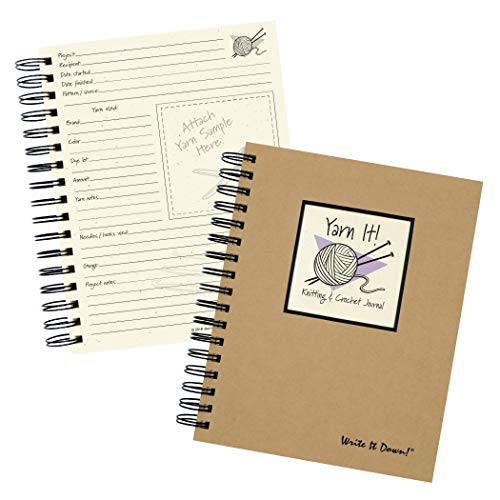

The Knit Notes Journal is designed for the knitter who wants a structured home for every detail without feeling overwhelmed by empty pages. It strikes the perfect balance between guided prompts and open space, which is ideal if you tend to forget which needle size you used for a specific project halfway through the ribbing.
This journal excels because it forces you to record the "why" behind your choices. If you’ve ever struggled with a sweater that ended up too tight in the shoulders, having a record of your original gauge swatch and the needle size you chose is invaluable for your next attempt.
The layout is intuitive, catering to those who want to track yarn yardage and fiber content (like superwash wool vs. non-superwash) without getting bogged down in unnecessary paperwork. Bottom line: This is the gold standard for keeping your stash and your projects in perfect harmony.
Cocoknits Maker’s Journal for Detailed Tracking
If you are the type of knitter who loves to dissect the mechanics of a pattern, the Cocoknits Maker’s Journal is your new best friend. It is built for the maker who treats knitting as a technical pursuit, offering specific sections for tracking modifications and pattern notes.
When you are deep into a complex colorwork yoke, you need a place to jot down exactly where you made that one-stitch adjustment to fix a float. This journal provides the room to document those nuances, ensuring you can replicate your success or avoid past mistakes on your next sweater.
The trade-off here is the sheer volume of information; it can feel slightly intimidating if you only knit simple garter stitch scarves. However, if you are a process-driven knitter, the level of detail it encourages is unmatched. Bottom line: Choose this if you want to elevate your knitting from a hobby to a refined, documented practice.
The Knitter’s Year Project Log by Laine Magazine

Laine Magazine brings their signature aesthetic to this project log, making it a beautiful addition to any knitting nook. It is less of a technical manual and more of a curated space to celebrate the rhythm of your knitting throughout the seasons.
This journal is particularly helpful for those who knit as a form of mindfulness. It encourages you to reflect on the experience of the yarn—how the fiber felt in your hands or how the colorway shifted as you worked—rather than just the technical specs.
It is a fantastic tool for keeping a long-term record of your creative output. While it lacks some of the hyper-technical charts found in other logs, it makes up for it by being a joy to open every single day. Bottom line: Perfect for the knitter who wants to document the emotional and creative journey of their projects.
Fringe Supply Co. Field Notes for Fiber Artists
Fringe Supply Co. understands the rugged reality of knitting on the go, and these field notes are designed to be tossed into your project bag without a second thought. They are compact, durable, and unpretentious.
If you are a knitter who works on projects in transit or at the park, you don’t want a heavy, delicate book. These notebooks allow you to quickly sketch a modification or note a needle size change without needing a desk or a fancy pen.
The lack of rigid structure is a double-edged sword; you have to create your own system. For some, this is freedom; for others, it is a barrier to consistency. Bottom line: Ideal for the knitter who values portability and prefers a minimalist approach to documentation.
Moleskine Pro Collection for Custom Knitting Maps

The Moleskine Pro collection is a favorite among knitters who prefer to map out their own patterns or create custom stitch diagrams. Because the pages are often grid-lined or dot-grid, they are perfect for sketching out lace repeats or stranded colorwork motifs.
If you are designing your own garments or heavily modifying existing patterns, you need the flexibility of a blank canvas. These notebooks provide the high-quality paper that holds up well to fountain pens or technical markers, which is essential if you are color-coding your charts.
The trade-off is that you have to do all the heavy lifting regarding organization. You won’t find pre-printed fields for "yarn brand" or "gauge," so you must be disciplined enough to create your own header system. Bottom line: The best choice for the "knitter-designer" who needs a flexible, high-quality workspace.
Leuchtturm1917 Notebooks for Bullet Journaling

Leuchtturm1917 notebooks have become the industry standard for bullet journaling, and they are equally effective for knitting logs. Their numbered pages and index allow you to create a custom "table of contents" for all your finished projects.
You can set up a "WIPs" page, a "Stash Inventory" page, and a "Pattern Wishlist" all in one place. This is incredibly helpful if you are the type of knitter who keeps five projects on the needles at once and needs a quick way to reference which needle size belongs to which project.
Be aware that the paper, while excellent, can have some ghosting if you use heavy markers. Stick to fine-liner pens to keep your project pages clean and legible. Bottom line: The ultimate tool for the organized multi-tasker who wants all their fiber notes in one centralized location.
Mindful Collection Journal for Pattern Planning

The Mindful Collection Journal focuses heavily on the preparation phase of knitting. It is designed to help you plan your projects before you ever cast on, which is a critical skill for avoiding the "yarn-mismatch" disaster.
It prompts you to consider the drape of the fabric, the suitability of the fiber for the pattern, and the necessary yardage calculations. If you have ever bought five skeins of mohair only to realize the pattern required six, you will appreciate the pre-planning structure here.
This journal is a great preventative measure against wasted time and money. It forces you to pause and think about the technical requirements of your yarn choice before the first stitch is knit. Bottom line: An essential tool for the knitter who wants to master the art of pattern and fiber selection.
Essential Elements to Include in Your Project Log
Regardless of which journal you choose, your entries should always contain the "Big Five" data points. Without these, even the most beautiful journal becomes a mystery novel you can’t solve.
- Project Name & Designer: Essential for searching your records later.
- Yarn Details: Include the brand, colorway, dye lot, and fiber content.
- Needle Size & Type: Note if you used wood, metal, or carbon fiber, as this affects your tension.
- Gauge: Record your pre- and post-blocking gauge.
- Modifications: Document every single change, no matter how small.
Including the dye lot is non-negotiable if you are working with hand-dyed yarns. If you run out of yarn and need to order more, that number is the only thing standing between a perfect match and a glaring color shift.
Why Paper Journals Beat Digital Knitting Apps
While digital apps are convenient, they lack the tactile feedback that reinforces memory. Writing down your stitch count or your row repeat helps you internalize the pattern, making you a more intuitive and confident knitter.
A paper journal is also immune to software updates, battery failure, or the sudden disappearance of a platform. Your notes are physically tethered to your project bag, meaning they are always available when you are actually working with the needles.
Finally, there is a sentimental value to a physical journal that an app simply cannot replicate. Looking back at a journal from five years ago and seeing your handwriting alongside a swatch of a favorite wool is a powerful way to track your evolution as an artist.
Tips for Keeping Your Fiber Notes Organized Daily
The biggest mistake knitters make is waiting until the project is finished to log their notes. By then, you have likely forgotten which needle size you actually used for the collar or how many increases you skipped.
Try to keep your journal right next to your project bag at all times. Make it a habit to log your row count or any modifications immediately after you finish a session. If you are working on a complex lace project, keep a small tally on a sticky note and transfer it to your journal when you reach a milestone.
Consistency beats intensity every time. You don’t need to write a novel; just jot down the essentials so that when you pick up the project a week later, you can jump right back into the rhythm without a second of hesitation.
Keeping a project journal is the single most effective way to transition from a casual knitter to a true master of the fiber arts. Whether you choose a guided, structured log or a blank notebook, the act of writing down your process creates a roadmap for your future success. Embrace the imperfections of your early notes, as they are simply the evidence of your growing skill. Pick up one of these journals today and start turning your beautiful yarn into a documented legacy of your craft.