
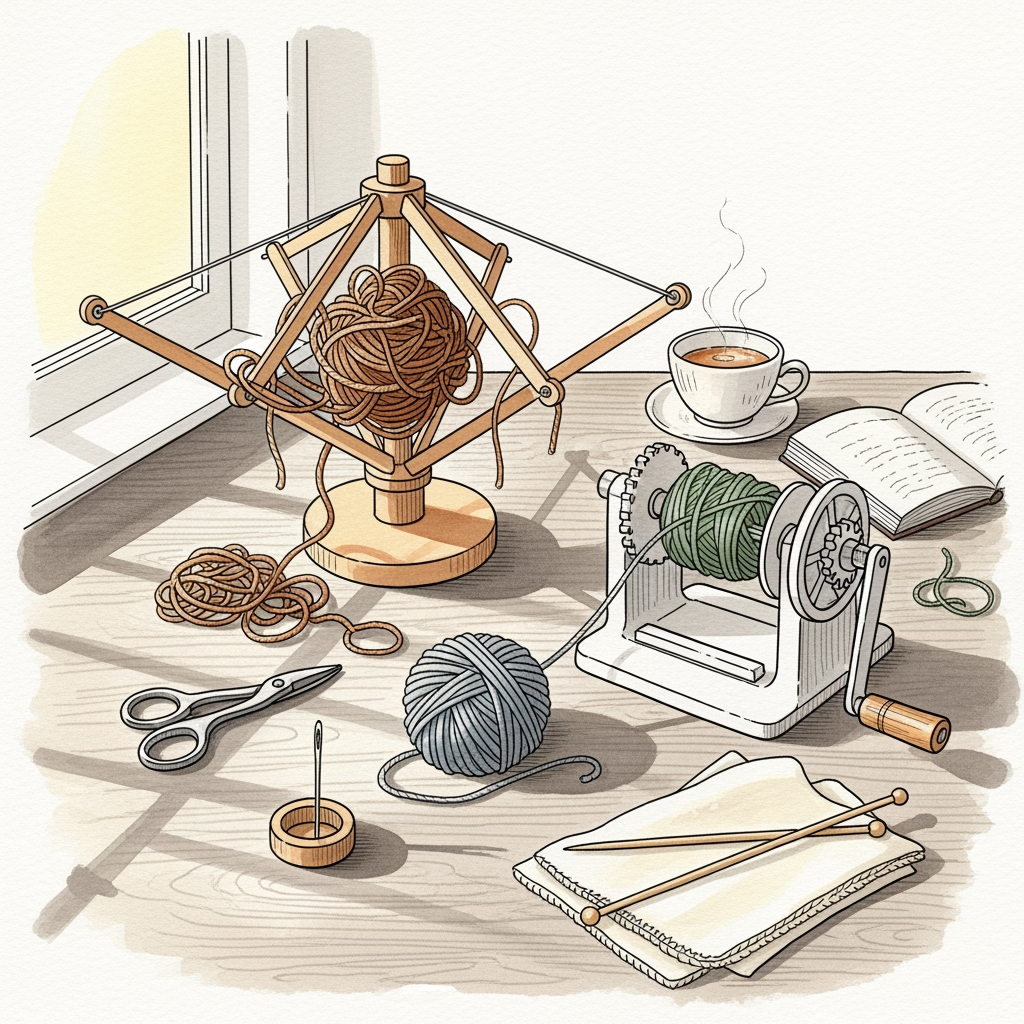
6 Best Yarn Swifts For Wool Preparation To Try
Discover the top six yarn swifts for seamless wool prep. Our guide evaluates durability and ease of use to help you wind skeins into cakes with efficiency.
Transitioning from store-bought balls to hand-dyed hanks is a rite of passage for every dedicated knitter. A quality yarn swift turns the tedious, tangle-prone chore of hand-winding into a seamless, meditative experience. Investing in the right tool prevents the dreaded "yarn barf" that ruins your momentum during a complex lace project. Here are the top contenders to help you manage your stash with professional precision.
Stanwood Needlecraft Tabletop Swift: Best Overall
The Stanwood tabletop swift is the gold standard for most home studios because it balances durability with a smooth, silent rotation. Its heavy-duty construction handles everything from delicate lace-weight silk to heavy, rustic wools without stuttering.


When you are working with slippery fibers like bamboo or mercerized cotton, the consistent tension provided by this model is a lifesaver. It stays firmly planted on your table, allowing you to wind your ball winder at a steady pace without worrying about the swift wobbling or collapsing.
The real strength here is the metal hardware, which holds up significantly better than plastic alternatives over years of heavy use. If you are a frequent buyer of indie-dyed hanks, this is the investment piece that pays for itself in saved frustration.
Amish-Style Wooden Yarn Swift: Best Sturdy Choice
Amish-style swifts are distinct because they sit horizontally on your table rather than spinning like an umbrella. They are essentially a set of wooden arms that you adjust to fit the circumference of your hank, held together by simple wooden pegs.

Because they don’t rely on complex folding mechanisms or screws, they are incredibly robust and rarely break. They are perfect for knitters who find the umbrella-style swifts intimidating or who want a tool that can be easily tucked away in a drawer when not in use.
The one tradeoff is that you must manually adjust the pegs to match the size of your yarn loop. It isn’t as "instant" as an umbrella swift, but the stability is unmatched, especially when winding large, heavy skeins of bulky yarn.
KnitPicks Yarn Swift: Best Budget Selection
If you are just starting your journey into hand-dyed yarns, the KnitPicks swift offers a functional entry point without breaking the bank. It uses a standard umbrella mechanism that opens and closes quickly, making it a great space-saver for small apartments.
It is lightweight and portable, which is ideal if you like to wind your yarn at a friend’s house or a knitting group meeting. While it lacks the heavy-duty metal components of premium models, it performs admirably for standard worsted and sport-weight wools.
Just be mindful that this model is best suited for lighter loads; avoid forcing it with excessively heavy or tangled hanks. It is a fantastic "first swift" that teaches you the mechanics of winding without requiring a major financial commitment.
Lacis Wooden Umbrella Swift: Premium Performance
The Lacis wooden umbrella swift is a beautiful piece of craftsmanship that feels like a professional tool in your hands. The wood is polished to a high sheen, ensuring that your yarn glides off the swift without catching on rough edges or splinters.
This model is particularly favored by knitters who work with high-end, delicate fibers like cashmere or mohair. The smooth rotation minimizes friction, which is essential to prevent "halo" damage or accidental felting during the winding process.
While it is a premium purchase, the longevity of the hardwood construction makes it a generational tool. If you treat the wood with occasional care, it will likely be the last swift you ever need to buy.
ChiaoGoo Yarn Swift: Best Portable Design Option
ChiaoGoo is a brand synonymous with quality needles, and their swift follows that same philosophy of thoughtful, ergonomic design. This model is exceptionally compact, making it the top choice for knitters who travel or have limited craft room storage.
Despite its small footprint, it operates with surprising fluidity. It is designed to be set up in seconds, which is a massive bonus when you’re itching to cast on a new project and don’t want to spend ten minutes wrestling with your equipment.
It handles a wide range of hank sizes effectively, though it performs best when you don’t overload it with massive, oversized sweater-quantity skeins. It is the perfect blend of portability and reliable performance for the modern, mobile knitter.
Strauch Jumbo Swift: Best For Large Skein Loads
If you frequently work with massive, 400-gram "jumbo" skeins of yarn, a standard swift will often struggle to stay balanced. The Strauch Jumbo Swift is built specifically for these large loads, featuring a wider reach and a much more stable base.

This is a specialized tool, but it is indispensable for those who buy yarn in bulk or work with heavy, rustic wools that come in large hanks. The extra size prevents the yarn from sagging or slipping off the arms, which is a common issue with smaller swifts.
It is a larger piece of equipment that requires dedicated table space, so consider your storage before buying. However, if you are tired of your swift tipping over mid-wind, this is the ultimate solution.
How to Properly Set Up Your Swift for Winding Yarn
Before you place your hank on the swift, always untwist it completely and find the two ties holding the loop together. Ensure the swift is set to a circumference slightly smaller than the hank so that the yarn is held taut but not stretched.
Place the hank onto the swift arms, then carefully remove the ties. I always recommend giving the swift a gentle spin to ensure the yarn is feeding evenly before you start turning your ball winder.
If the yarn feels too loose, expand the swift; if it feels like the yarn is being pulled tight, shrink it down. The goal is a gentle, consistent tension that allows the yarn to flow freely without snagging.
Umbrella vs. Amish Style: Choosing Your Mechanism
Umbrella swifts are the most common choice because they are fast and intuitive to use. They collapse like an umbrella, making them easy to store, and they are excellent for a wide variety of yarn weights and lengths.

Amish-style swifts are the "set it and forget it" option for those who prioritize stability over speed. They take a moment longer to adjust, but they are far less likely to tip over or suffer mechanical failure over time.
Choose an umbrella swift if you value convenience and speed, especially if you wind many different skeins in one sitting. Choose an Amish-style swift if you prefer a sturdy, low-maintenance tool that will last for decades.
Essential Tips for Preventing Yarn Tangling Issues
The number one cause of tangles is starting with a twisted hank; always shake out the yarn until it forms a clean, singular loop. If you find a knot in the middle of your hank, stop winding immediately and untangle it by hand before proceeding.
Always wind at a consistent, moderate speed. If you spin the ball winder too fast, you increase the risk of the yarn jumping off the swift and creating a massive, knotted mess.
Keep your ball winder and swift aligned so the yarn travels in a straight, unobstructed path. If the yarn has to pull at an angle, it is much more likely to snag on the swift’s arms or your own hands.
Maintenance Guide for Keeping Your Swift Smooth
To keep your swift running like new, occasionally wipe down the wooden parts with a soft, dry cloth to remove dust. If the rotation becomes stiff, a tiny drop of furniture wax or a specialized wood lubricant can work wonders on the joints.
Avoid storing your swift in areas with extreme temperature fluctuations, as this can cause the wood to warp or the metal parts to expand and contract. If you have a plastic umbrella swift, check the tension screws periodically to ensure they haven’t loosened over time.
Treat your swift as a partner in your knitting process rather than just a piece of plastic or wood. With minimal care, these tools will serve you faithfully through thousands of yards of beautiful wool.
Finding the right swift is about matching your specific knitting habits to the mechanics of the tool. Whether you prioritize portability, extreme stability, or budget-friendly performance, there is a model here to suit your needs. Remember that a well-maintained swift is the best insurance policy for your precious hand-dyed yarn. Happy winding, and may your yarn always flow smoothly from hank to cake!
