6 Best Display Hangers For Finished Shawls To Try
Discover the 6 best hangers to showcase your finished shawls. Learn how to preserve delicate fibers while creating a beautiful, organized display at home.
After spending hundreds of hours crafting a shawl, the last thing you want is for your hard work to lose its shape in the closet. Proper storage is just as vital as choosing the right yarn or mastering a complex lace chart. Many knitters focus entirely on the knitting process, only to realize their finished pieces are drooping or snagging on improper hardware. These six hanger solutions are designed to protect your fiber investment while keeping your collection organized and accessible.
IKEA KOMPLEMENT Multi-Use Hanger: Best Overall


This hanger is a staple in my studio because it mimics the way a shawl naturally drapes across your shoulders. Its multiple loops allow you to store several finished pieces without them crowding each other, which is essential when you have a growing collection of hand-knits.
The smooth, rounded edges of the loops are a major advantage for delicate fibers. There are no sharp corners or metal burrs that could snag a loose strand of mohair or a delicate silk blend.
However, because these loops are fixed, they aren’t ideal for extremely heavy, oversized blankets or heavy-gauge wool wraps. If you have a massive, chunky-knit shawl, the weight might cause it to bunch up too tightly in the loop. For your standard fingering-weight lace or DK-weight shawls, this remains the gold standard for versatility.
Richards Homewares Wooden Tie Rack: Best for Silk
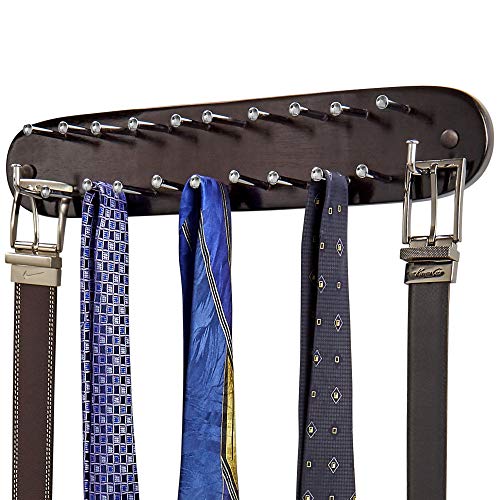
Silk is notoriously slippery and prone to developing permanent creases if folded incorrectly. This wooden tie rack provides a secure, friction-based grip that prevents your lightweight silk shawls from sliding onto the closet floor.
The wooden construction is naturally moisture-wicking and gentle on protein fibers. Unlike cheap plastic, wood won’t cause the static buildup that often plagues synthetic or silk-blend projects.
Keep in mind that the pegs are spaced closely together. This is perfect for light, airy wraps, but it can be frustrating if you try to squeeze in a bulky, textured shawl. Use this strictly for your delicate, high-drape pieces to keep them smooth and pristine.
Whitmor Over-the-Door Organizer: Best for Space

If your closet is overflowing with knitting projects, vertical storage is your best friend. This over-the-door system utilizes "dead space" to store multiple shawls in a way that keeps them visible and easy to grab.
The pockets are excellent for protecting your shawls from dust while ensuring they don’t get crushed under heavier garments. It’s a great way to rotate your collection based on the season without having to pack anything away in plastic bins.
Be aware that long-term storage in a pocket can lead to minor wrinkling. If you use this, prioritize it for shawls made of resilient fibers like superwash wool. Avoid storing loose, delicate lace in these pockets, as the constant friction against the fabric can cause pilling over time.
Household Essentials Cedar Hanger: Best for Wool
Wool loves cedar, and your hand-knitted shawls will benefit from the natural moth-repellent properties of this wood. The aroma is subtle, and the sturdy bar provides a wide surface area that prevents the "crease line" often caused by thin wire hangers.
The wide, contoured shape of these hangers effectively mimics the human neck and shoulder line. This is crucial for maintaining the structural integrity of a shawl that you’ve spent hours meticulously blocking.
While cedar is fantastic for wool, be cautious with very light-colored yarns. Sometimes, the natural oils in the wood can transfer if the wood is unfinished or if the shawl is left for years without movement. I recommend wrapping the bar in a piece of acid-free tissue paper if you are storing a white or cream-colored project.
Zober Non-Slip Velvet Hangers: Best for Lace
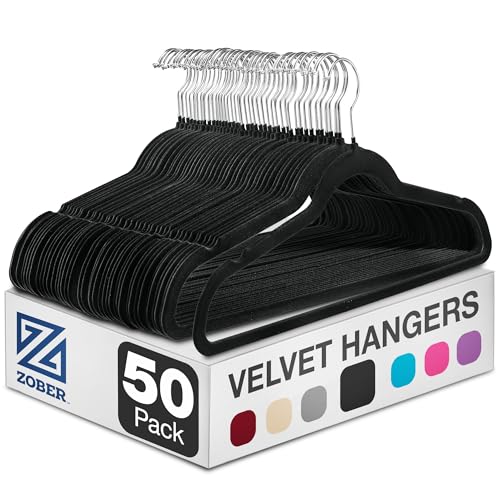
Lace shawls are notoriously prone to slipping off standard hangers, which can lead to them landing in a pile on the closet floor. The velvet coating on these hangers provides just enough grip to keep your intricate lace work exactly where you put it.
The slim profile is a lifesaver if you have a large collection and limited closet rod space. Because they are so thin, you can hang twice as many shawls as you could with bulky wooden hangers.
The trade-off is that the velvet can be too grippy. You have to be careful when removing your shawl; if you pull too quickly, you risk snagging a delicate yarn-over or a fine lace detail. Always lift the shawl up and off the hanger rather than sliding it sideways to protect your stitch work.
SONGMICS Heavy Duty Metal Hanger: Best for Large

When you’ve knitted a heavy, cabled, or oversized shawl, standard hangers will often bend or snap. These heavy-duty metal hangers are built to support the weight of dense, high-yardage projects without buckling.
The wide, rounded bar is the key feature here, as it distributes the weight of a heavy shawl across a larger surface area. This prevents the "shoulder bump" or stretching that occurs when a heavy piece is concentrated on a single point.
Make sure to check that the metal has a smooth, powder-coated finish. If there are any rough spots on the welds, they can catch on your fibers. A quick check with a pair of pantyhose—run the fabric over the hanger to see if it snags—will tell you if the hanger is safe for your handiwork.
How to Properly Hang Your Hand-Knitted Shawls
Always fold your shawl in half length-wise before placing it on the hanger to distribute the weight evenly. If you have a triangular shawl, drape the center point over the bar, ensuring the two wings are balanced on either side.
Never pull or stretch the fabric to make it fit onto a hanger. If the shawl feels tight, you are risking the long-term shape of your project, especially with fibers like alpaca or merino that have little natural memory.
If you are hanging a shawl for long-term storage, check it every few months. Re-draping it occasionally helps prevent deep, permanent creases from forming along the hanger bar.
Avoiding Stretching: Tips for Fiber Protection
- Weight Matters: Heavy, wool-blend shawls should be folded and stored flat if you aren’t using them for long periods.
- Fiber Memory: Plant fibers like cotton or linen have zero elasticity and will sag permanently if left hanging; always store these flat.
- The "Blocking" Rule: If a shawl is heavily blocked into a specific shape, hanging it can undo that work; keep it in a drawer or on a shelf.
- Gravity is the Enemy: Even the best hangers exert force; if you notice a "dip" in the center of your shawl after a week, it’s time to move it to a flat surface.
Selecting the Best Hanger Material for Yarn Type
- Wool/Animal Fibers: Use cedar or smooth wood to discourage pests and provide structural support.
- Silk/Slippery Blends: Use velvet or high-friction materials to prevent the shawl from sliding off.
- Delicate Lace: Use rounded, smooth plastic or padded hangers to prevent snags on fine, thin plies.
- Heavy/Bulky Knits: Use reinforced metal or heavy-duty wood to prevent the hanger from bending under the weight.
Frequently Asked Questions About Shawl Storage
Q: Can I hang my mohair shawls? A: Mohair is very prone to stretching and snagging. I personally prefer to store mohair flat in a breathable cotton bag to protect the halo and prevent the fibers from catching on the hanger.
Q: How often should I rotate my shawls? A: If you live in a climate with distinct seasons, rotate your collection every six months. This gives you a chance to inspect for any moth activity or dust buildup.
Q: Is it safe to use wire dry-cleaning hangers? A: Absolutely not. They are too thin, often have sharp edges, and will create permanent, distorted creases in your hand-knitted fabric.
Taking care of your finished shawls is the final, essential step in the creative process of a knitter. By choosing the right hardware based on your fiber type and project weight, you ensure that your hard work stays beautiful for years to come. Remember that while a hanger is a tool, your intuition as a maker is the best guide for how to treat your delicate handiwork. Happy knitting, and may your closet be as beautiful as your needles.