7 Best Sewing Clips For Seaming Edges To Try
Discover the 7 best sewing clips for precise edge seaming. Our guide compares top picks to help you achieve professional, secure fabric alignment every time.
Moving beyond traditional pins is a game-changer for any knitter who has spent hours wrestling with bulky sweater panels or delicate lace edgings. Sewing clips provide a secure, snag-free way to hold your work in place while you graft, seam, or finish your projects. By choosing the right tool for your specific fiber and technique, you can significantly reduce the time spent on finishing work. This guide explores the best options on the market to help you achieve a professional, polished edge every time.
Clover Wonder Clips: The Gold Standard for Seaming
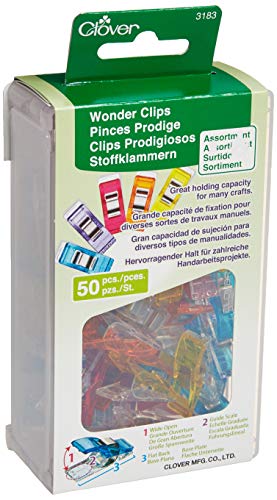

Clover Wonder Clips are the industry benchmark for a reason, offering a consistent tension that rarely slips. When you are seaming a heavy wool cardigan or joining shoulder seams, these clips provide a sturdy hold without distorting the stitch pattern.

Their flat base is a brilliant design feature, allowing the clip to sit flush against your knitting mat or table. This prevents the fabric from shifting while you work, which is vital when you are trying to align stripes or complex cable motifs.
While they are slightly more expensive than generic alternatives, the durability of the spring mechanism is unmatched. If you invest in these, you are unlikely to need replacements for years.
Quilting Sewing Clips: Best Value Multi-Pack Set
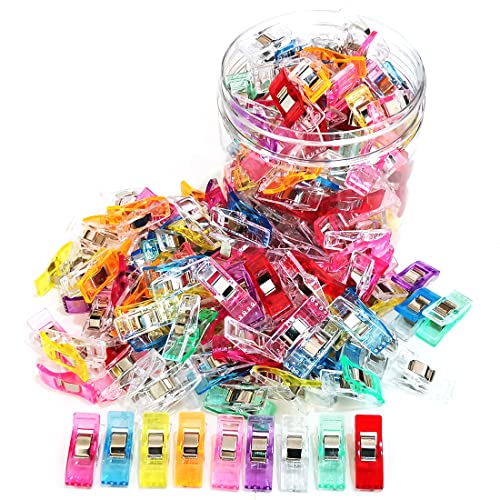
If you are a prolific knitter who often works on large projects like blankets or oversized wraps, you need a high volume of clips. Multi-pack quilting clips offer the most economical way to secure long, heavy seams without breaking the bank.
These sets usually come with a variety of colors, which can be incredibly useful for marking specific points in a garment. For instance, you can use one color to denote the start of a sleeve cap and another for the underarm gusset.
The tradeoff here is that the plastic quality can be slightly less refined than premium brands. They are perfectly functional for most knitting tasks, but you might find the occasional clip with a slightly stiffer hinge.
Dritz Sewing Clips: Precision Grip for Fine Knits
Dritz clips are designed with a slightly more aggressive grip, making them ideal for fine-gauge knits or slippery fibers like silk and bamboo. When you are seaming a lace shawl, you need a clip that won’t slide out of the delicate, open stitches.
The smaller size of these clips ensures they don’t weigh down your fabric, which is essential when working with lightweight yarns. Heavy clips can stretch out your stitches, leading to uneven seams and distorted lace patterns.
These are my go-to choice for sock knitting or delicate baby garments. They hold just enough to keep your edges aligned without leaving permanent marks on your finished fabric.
Singer Multi-Purpose Clips: Best for Heavy Yarns
When you are working with chunky, super-bulky yarns, standard clips often struggle to accommodate the thickness of the fabric. Singer Multi-Purpose clips have a wider opening that handles thick wool or roving-style yarns with ease.
The strength of the spring is calibrated to hold heavy, dense fabric layers together without snapping. This is particularly important when you are seaming a coat or a heavy-weight sweater where gravity is constantly pulling the pieces apart.
Be mindful that these are quite large. They are not suitable for fine detail work, but they are indispensable for structural seaming where you need maximum holding power.
Wondertip Mini Clips: Ideal for Delicate Lace Edges
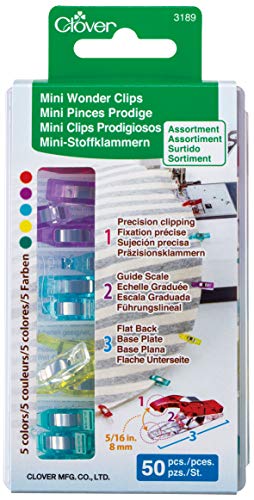
Mini clips are the secret weapon for knitters who specialize in intricate lace or fine-gauge accessories. Because they are so small, they allow you to place multiple clips along a scalloped edge without crowding your workspace.
They are unobtrusive, meaning you can leave them in place while you work on a grafting stitch without them constantly getting in your way. This is a massive improvement over pins, which can snag on delicate mohair or high-twist merino fibers.
If you struggle with "fiddly" finishing work, these mini clips will make your life significantly easier. They provide just enough tension to keep everything aligned while staying out of your sightline.
Bohin Extra-Strong Clips: Best for Bulky Projects

Bohin is known for high-quality notions, and their extra-strong clips are no exception. These are built for the knitter who isn’t afraid of heavy-duty projects like felted bags or thick, cabled outerwear.
The tension on these clips is remarkably firm, ensuring that even the most stubborn, springy wool stays exactly where you put it. You won’t experience the "creeping" seam effect that often happens when you try to join two heavy pieces of knitting.
They are an investment piece, but the build quality is superior. For projects that require hours of careful seaming, the peace of mind they provide is well worth the cost.
Hemline Assorted Clips: Perfect for Beginners

If you are just starting your journey into garment finishing, the Hemline assorted pack is a fantastic entry point. It provides a variety of sizes, allowing you to experiment and see which type works best for your specific knitting style.
Beginners often struggle with the mechanics of seaming, and having the right tools can remove a lot of the frustration. These clips are easy to open and close, making them user-friendly for those who aren’t used to handling sewing notions.
Start with this set to understand your preferences before committing to a larger collection of a single brand. You will quickly learn whether you prefer the grip of a smaller clip or the capacity of a larger one.
Why Use Sewing Clips Instead of Traditional Pins
Traditional pins are a hazard in the knitting room, both for your fingers and your yarn. A sharp pin can easily split a fiber or pull a stitch, creating a snag that is difficult to repair once the garment is finished.
Clips are safer, faster, and more efficient. They allow you to "baste" your seams without piercing the fabric, which is essential for preserving the structure of your stitches.
Furthermore, you can easily slide a clip along an edge as you progress through your seam. With pins, you have to stop, remove them, and re-insert them, which disrupts your rhythm and increases the risk of misalignment.
How to Properly Align Seams for a Professional Fit
Alignment is the difference between a homemade look and a professional finish. Start by pinning your pieces together at the major landmarks—shoulders, underarms, and hemline—before filling in the gaps with clips.
When seaming, always ensure your fabric is lying flat and not stretched. If you pull on the fabric while clipping, you will create a puckered seam that won’t lay right once the garment is worn.
Use the clips to hold the pieces in a relaxed state. If you are joining a sleeve to an armhole, use more clips around the curves to ensure the ease is distributed evenly.
Tips for Preventing Snags When Clipping Knit Fabric
Even the best clips can snag if you aren’t careful when attaching them to your work. Always look for clips with smooth, rounded edges and avoid forcing them into tight stitch patterns.
If you are working with delicate fibers like silk or mohair, be extra gentle. Instead of clipping through the fabric, try clipping the edges together by pinching the seam allowance only.
If your yarn is particularly prone to snagging, you can place a small piece of tissue paper between the clip and the fabric. This adds an extra layer of protection and ensures your beautiful handiwork remains pristine.
Finding the right sewing clips is all about understanding the weight of your yarn and the delicacy of your project. By swapping out your traditional pins for these specialized tools, you will find that your finishing work becomes faster, safer, and far more accurate. Whether you are working with bulky wool or fine lace, there is a clip designed to make your seaming process a pleasure rather than a chore. Keep a variety on hand, and your finished garments will look as professional on the inside as they do on the outside.