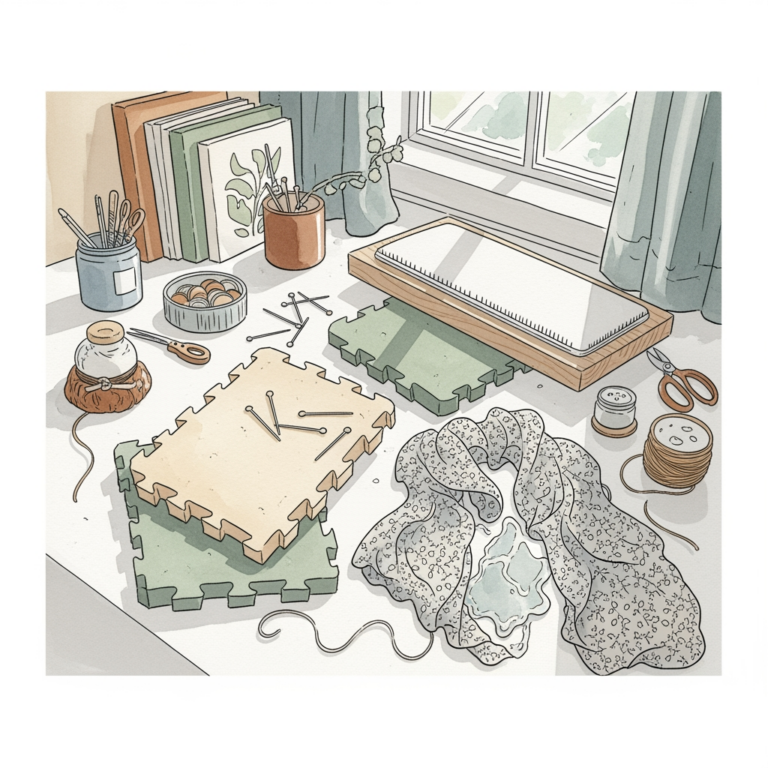
6 Best Blocking Wires For Rectangular Lace Sets
Blocking wires are essential for crisp lace edges. We review the 6 best sets for rectangular projects, focusing on durability, wire gauge, and ease of use.
Achieving professional-looking lace requires more than just careful stitching; it demands precise blocking to open up the delicate yarn overs and intricate motifs. When working on rectangular shawls or scarves, traditional pins often leave unsightly scallops along the straight edges. Blocking wires provide the necessary tension to create crisp, clean lines that truly showcase your hard work. Choosing the right set can transform a crumpled piece of knitting into a masterpiece of symmetry and drape.
Knitter’s Pride Lace Blocking Wires: Best Overall


These wires are a staple in many professional studios because they strike the perfect balance between rigidity and flexibility. The stainless steel construction ensures they won’t rust or stain your precious hand-dyed yarns, even when fully saturated with water.
The kit includes a variety of lengths, which is essential for rectangular projects that vary in size from small cowls to massive, sweeping stoles. Because they are thin, they slide through even the tightest lace patterns without distorting the fabric.
If you frequently knit with high-twist luxury fibers like silk or merino, you need a wire that won’t snag. These wires are smooth and polished, making them the most reliable choice for a wide range of lace weights.
CocoKnits Stainless Steel Blocking Wire Set
CocoKnits has designed these wires with the modern knitter in mind, focusing on ease of use and long-term durability. The set features a clever mix of flexible and rigid wires, allowing you to adapt to the specific geometry of your project.
What sets these apart is the thoughtful packaging and the inclusion of T-pins, which are necessary for anchoring the wires to your blocking mats. The wires themselves are incredibly durable, resisting the tendency to bend out of shape after multiple uses.
These are an excellent investment if you are building a "forever" knitting kit. While they are a premium option, the quality of the steel ensures they will remain straight and effective for years of blocking.
Ashford Flexible Steel Blocking Wire System
Ashford is a name synonymous with fiber craft excellence, and their blocking system reflects that heritage. These wires are particularly prized for their high degree of flexibility, which makes them ideal for pieces that have slightly curved edges or complex lace borders.
If you struggle with stiff wires that feel like they are fighting against your fabric, you will appreciate the suppleness of this system. They allow the lace to "breathe" into its final shape without forcing it into an unnatural, rigid line.
Because they are so flexible, they are also very easy to store in a compact tube. This is a practical choice for knitters who lack large, dedicated craft spaces and need tools that pack away neatly.
Lacis Stainless Steel Blocking Wire Kit
The Lacis kit is a workhorse for knitters who appreciate traditional, no-nonsense tools. These wires are known for being exceptionally straight, which is exactly what you want when you are trying to achieve a perfectly squared-off rectangular edge.
They are slightly thicker than some of the ultra-fine lace wires on the market, which gives them extra "heft." This makes them easier to handle if you have reduced dexterity or find thin wires frustrating to manipulate.
If you are working with heavier lace-weight yarns or fingering weight wool, these wires provide the structural support needed to keep the edges from bowing. They are a robust, reliable choice for the serious lace maker.
Boye Blocking Wires For Rectangular Lace Sets
Boye has been a household name in knitting for decades, and their blocking wires are a classic entry-level option. They are straightforward, affordable, and get the job done without any unnecessary bells or whistles.
These wires are best suited for smaller rectangular projects like scarves or table runners. They don’t have the extensive variety of lengths found in more expensive sets, but they cover the essentials for most standard lace patterns.
If you are just starting your journey into lace knitting, this set is a low-risk way to see if blocking wires are right for your workflow. They provide the basic tension needed to improve your project’s appearance significantly compared to hand-pinning.
Darice Professional Grade Blocking Wire Set
The Darice set is designed for the knitter who wants a professional result on a budget. These wires are functional and effective, providing the necessary tension to flatten out lace stitches and reveal the intended pattern.
While they may not have the high-end finish of luxury brands, they are perfectly adequate for blocking wools and synthetic blends. They are stiff enough to hold a straight line, which is the primary goal for any rectangular lace project.
When using these, be sure to dry them thoroughly after each use to maintain their condition. With proper care, they are a solid, reliable addition to your knitting toolkit that won’t break the bank.
Why Blocking Wires Are Essential For Lace Work
Lace knitting is essentially a series of holes and decreases; without blocking, these features remain clumped and invisible. Wires provide continuous, even pressure along the entire length of your work, which is something individual pins simply cannot achieve.
Using wires prevents the "scalloped" look that occurs when you pin lace at intervals. By threading a wire through the edge, you create a seamless, taut line that allows the lace to open up to its full potential.
- Even tension: Eliminates the "puckering" between pins.
- Time-saving: You only need to pin the wire, not every single stitch.
- Professional finish: Ensures edges are perfectly straight and symmetrical.
How To Thread Wires Through Delicate Lace Edges
Threading wires requires patience and a gentle touch, especially with fine lace. Start by laying your damp, finished piece on a blocking mat, then carefully feed the wire through the center of the edge stitches.
Avoid forcing the wire through a stitch that is too tight, as this can pull and distort the fabric. If you meet resistance, use a tapestry needle to slightly loosen the stitch before re-threading the wire.
Once the wire is through, anchor it at both ends with T-pins to maintain the desired tension. Remember that the goal is to gently guide the fabric into shape, not to stretch it to the point of breaking the yarn.
Stainless Steel Vs Coated Wires: What To Choose
Choosing between stainless steel and coated wires often comes down to the fiber you are using. Stainless steel is the gold standard because it is inert and won’t react with the moisture or the dyes in your yarn.
Coated wires, often made of plastic or nylon, are softer and less likely to leave marks on delicate fibers like silk or mohair. However, they can be less rigid and may eventually peel or degrade over time.
- Stainless Steel: Best for durability, precision, and long-term investment.
- Coated Wires: Best for delicate, fuzzy fibers that might catch on metal.
- Fiber Considerations: Always check for colorfastness before blocking dark-dyed yarns on any wire.
Essential Tips For Perfect Rectangular Blocking
Success in rectangular blocking relies on measuring twice and pinning once. Before you begin, use a measuring tape to ensure your corners are at perfect 90-degree angles.
Always block your lace while it is damp, not soaking wet, to avoid over-stretching the fibers. If you are working with delicate fibers like alpaca, be extra cautious, as they tend to grow significantly when wet and blocked.
Finally, let your project dry completely while still on the wires. Removing them too early can cause the lace to shrink back or lose the crisp edge you worked so hard to create.
Investing in a quality set of blocking wires is one of the most impactful upgrades you can make to your lace knitting practice. Whether you choose a high-end stainless steel kit or a reliable entry-level option, the improvement in your finished projects will be immediate and unmistakable. Take your time, handle your lace with care, and enjoy the transformation that proper blocking brings to your handiwork. Happy knitting!