7 Best Wooden Yarn Bowls For Delicate Fibers
Discover the 7 best wooden yarn bowls to protect delicate fibers. These smooth, snag-free tools ensure tangle-free knitting and steady tension for your yarn.
Every knitter knows the frustration of a yarn cake rolling across the floor, picking up every stray bit of lint and pet hair in its path. A quality wooden yarn bowl acts as a stationary anchor, keeping your tension consistent and your precious fibers pristine. Choosing the right vessel is about balancing weight, surface finish, and the physical mechanics of how your yarn feeds from the center. Investing in a dedicated bowl transforms the tactile experience of your craft from a constant struggle into a seamless flow.
Nagina International Rosewood Yarn Bowl: Best Overall
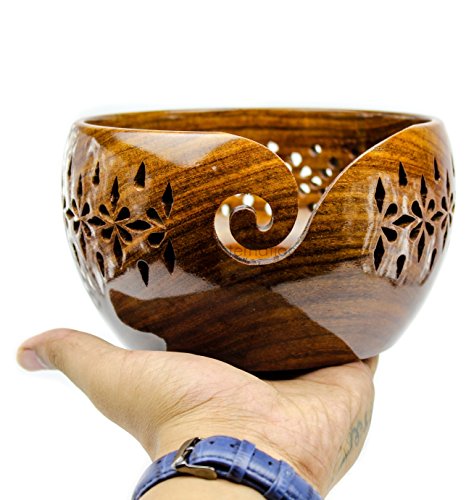

This bowl is a masterclass in weight and balance, providing the kind of heft that keeps it anchored on your side table even when you’re pulling aggressively on a stubborn yarn cake. The deep, rich grain of the rosewood isn’t just aesthetic; it’s dense, which prevents the bowl from sliding or tipping as you work.
The spiral cutout is polished to a glass-like finish, ensuring that even the most delicate, snag-prone lace weight yarns glide through without catching. If you frequently work with expensive hand-dyed singles or mohair blends, this surface quality is non-negotiable.
Ultimately, this is the workhorse of the studio. It handles everything from chunky wool to gossamer silk with equal grace, making it the most reliable investment for a long-term knitting practice.
Yarn Valet Wooden Bowl: Best for Travel and Portability

If you are a knitter who takes their project to the local cafe or on long train rides, you know the struggle of keeping your yarn clean while on the move. The Yarn Valet is designed specifically to be lightweight and compact, fitting easily into most project bags without adding unnecessary bulk.
Because it is smaller than a traditional stationary bowl, it doesn’t take up your entire workspace. It is ideal for those smaller, intricate projects like sock knitting or colorwork mittens where you don’t need to accommodate a massive 200-gram skein of bulky yarn.
While it lacks the heavy base of a larger bowl, its portability is unmatched. It is the perfect companion for the knitter who refuses to leave their needles at home.
KnitPal Handcrafted Sheesham Bowl: Best for Stability
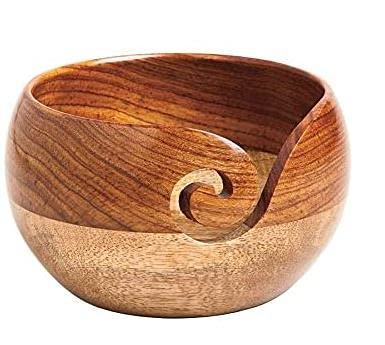
Stability is the primary concern when you are working with a large, center-pull cake that has a tendency to collapse as it gets smaller. The Sheesham wood used here is incredibly sturdy, and the bowl’s wide, low-profile footprint ensures it stays exactly where you put it.
This design is particularly beneficial for knitters who work with multiple strands held together or heavy-weight yarns. The friction created by the weight of the bowl against the table surface keeps the yarn feeding smoothly, preventing the "jerking" motion that can lead to uneven tension.
If you find yourself constantly resetting your yarn ball because it’s bouncing around your lap, this bowl is the remedy. It is a solid, no-nonsense tool that prioritizes function above all else.
Lykke Driftwood Yarn Bowl: Best for Delicate Fibers

Lykke is famous in the knitting community for their exceptionally smooth needle finishes, and that same expertise carries over into their wood-crafting. The Driftwood bowl features a unique, ultra-smooth surface treatment that is specifically engineered to protect high-twist yarns and delicate fibers like alpaca or cashmere.
When working with delicate fibers, even a microscopic splinter or a rough edge can cause pilling or fraying. This bowl is sanded and finished to such a high standard that your yarn feels like it’s floating through the air rather than being pulled through a cutout.
If your stash is filled with luxury fibers that require a gentle touch, this is the gold standard. It is a premium choice that pays for itself by keeping your yarn in pristine condition from cast-on to bind-off.
Darn Good Yarn Mango Wood Bowl: Best Sustainable Pick

Sustainability is becoming a priority for many makers, and this mango wood bowl offers a beautiful, eco-conscious alternative to traditional hardwoods. Mango wood is a byproduct of the fruit industry, meaning these bowls are crafted from trees that have reached the end of their productive life.
Beyond the ethics, the wood itself is surprisingly durable and has a unique, variegated grain that makes every bowl a one-of-a-kind piece. It offers a medium weight that strikes a nice balance between portability and stability.
It’s a great choice for the conscious knitter who wants a tool that is as beautiful as it is responsible. You get a high-quality, functional bowl that aligns with your values.
Fiber Artist Supply Co. Maple Bowl: Best Minimalist

There is something to be said for a design that doesn’t distract from the project at hand. The Fiber Artist Supply Co. maple bowl features a clean, modern aesthetic with a focus on simplicity and functionality.
The maple wood is light in color and incredibly smooth, providing a neutral backdrop that helps you see your yarn clearly, which is especially helpful when working with dark-colored mohair or black wool. The spiral is cut with precision, ensuring a clean feed every time.
This is the perfect choice for the knitter who appreciates a "less is more" approach. It performs its job quietly and efficiently without taking over your desk space.
Cocoknits Bamboo Yarn Bowl: Best Lightweight Design
Bamboo is a fantastic material for knitting tools because it is naturally lightweight, incredibly strong, and sustainable. This bowl from Cocoknits is perfect for knitters who prefer a more modern, minimalist look and want a tool that won’t weigh down their project bag.
Because bamboo is less dense than rosewood or sheesham, this bowl is very easy to move around your home. It’s a great option if you frequently switch between your favorite armchair, the kitchen table, and the sofa.
While it is lighter, it is still well-constructed and features a smooth finish that won’t snag your yarn. It’s an excellent, versatile option for knitters of all levels.
Why Wooden Bowls Protect Your Delicate Yarn Fibers
- Prevents Snagging: Unlike plastic or metal, high-quality wood can be buffed to a finish that is completely free of burrs.
- Static Reduction: Natural wood generates less static electricity than plastic, which is vital when working with synthetic-blend yarns that tend to attract dust.
- Fiber Integrity: By keeping the yarn contained, you avoid the "floor-rolling" phenomenon where yarn picks up dirt, pet hair, and debris that can degrade fiber quality.
- Controlled Tension: A smooth feed hole ensures a consistent pull, preventing the sudden tugging that can stretch out delicate fibers like silk or bamboo.
Essential Factors for Choosing Your First Yarn Bowl
When selecting your first bowl, consider the weight of your most common projects. If you knit heavy blankets with bulky yarn, you need a heavy, wide-base bowl to prevent it from sliding. If you primarily knit lace socks, a smaller, lighter bowl will suffice and be easier to store.
Also, look closely at the cutout design. Some bowls feature a simple hole, while others use a spiral "swirl" design. The spiral is generally better because it allows you to remove the yarn without cutting it, which is a lifesaver if you need to switch projects mid-ball.
Finally, consider the finish. A matte or raw wood finish might look rustic, but a polished or lacquered finish is almost always better for preventing snags. Always run your finger through the cutout; if it catches your skin, it will catch your yarn.
Proper Maintenance and Care for Wooden Yarn Bowls
Wooden bowls are living tools that require occasional attention to keep them in top shape. If the wood begins to look dry or dull, a light application of food-grade mineral oil or a specialized wood wax will restore its luster and protect the fibers.
Avoid leaving your wooden bowl in direct sunlight or near heat sources like radiators, as this can cause the wood to dry out and eventually crack. If you live in a very dry climate, a little bit of conditioning a few times a year is essential.
Lastly, never submerge your wooden bowl in water to clean it. Simply wipe it down with a slightly damp cloth and dry it immediately with a soft towel to prevent warping.
Finding the right yarn bowl is about finding a tool that disappears into your process, letting you focus entirely on your stitches. Whether you prioritize the heavy stability of rosewood or the lightweight convenience of bamboo, the right choice will protect your yarn and elevate your knitting experience. Take your time to consider your specific habits, and you will find a companion that lasts for decades of projects. Happy knitting, and may your yarn always flow smoothly from the center.