7 Best Stitch Markers For Beginner Learning
Choosing the right stitch markers simplifies knitting. We review the 7 best options for beginners, focusing on ease of use, material quality, and versatility.
Learning to knit is an exercise in rhythm, but keeping track of your progress can feel like a daunting puzzle. Stitch markers act as your personal navigation system, ensuring you never lose your place during a complex pattern repeat. Finding the right tool early on prevents frustration and helps you build the confidence needed to tackle bigger projects. These seven options represent the gold standard for beginners looking to master their craft with ease.
Cocoknits Colorful Nylon Ring Stitch Markers


These markers are the gold standard for circular knitting because they are incredibly lightweight and snag-free. Because they are made of nylon, they glide over your needles without the annoying "clinking" sound of metal markers.
They come in a vibrant array of colors, which is a massive advantage when you need to differentiate between your beginning-of-round marker and your pattern repeats. If you are working on a sweater with multiple increases, using a distinct color for the side seams makes the math much easier to visualize.
The only downside is that they are closed rings, meaning you cannot move them once they are on the needle. They are perfect for projects worked in the round, but they won’t help you if you need to mark a specific stitch in the middle of a flat row.
Clover Locking Stitch Markers for Beginners

Clover’s locking markers function exactly like tiny safety pins, making them the most versatile tool in your kit. You can snap them into a stitch to hold a dropped loop or place them on a needle to mark a specific section of your work.
For a beginner, the biggest benefit is the ability to move them mid-project. If you realize you missed an increase three rows back, you can use these to secure your work while you perform a little "knitting surgery" to fix the mistake.
Be aware that the plastic can sometimes catch on delicate, fuzzy yarns like mohair or angora. If you are working with a haloed fiber, handle these markers with care to avoid pulling or snapping your yarn strands.
Dritz Knitting Stitch Markers for Large Needles

If you are just starting out, you are likely using chunky, worsted-weight yarn on needles sized 5.0mm or larger. These Dritz rings are designed specifically for those thicker needles, ensuring they don’t crowd your stitches or cause uneven tension.
Their larger diameter prevents the "stretching" effect that can happen when you force a tiny marker onto a thick needle. When a marker is too tight, it pulls the surrounding stitches, which often results in unsightly ladders or gaps in your finished fabric.
These are simple, no-frills tools that do one job perfectly. They are an excellent choice for a beginner’s first scarf or throw blanket where the needle size is substantial and the pattern is straightforward.
Susan Bates Split Ring Stitch Markers Review

The split ring design is a clever middle ground between a closed ring and a locking pin. You simply slide the yarn through the opening of the ring, allowing you to place or remove them without having to stop and open a clasp.
They are fantastic for beginners who find the "locking" mechanism of safety-pin style markers a bit fiddly or time-consuming. Because they have no moving parts, there is nothing to break or snag on your knitting bag lining.
However, they can occasionally slip out if you are working with very slick, thin yarn. If you notice your marker falling off your work, it is a sign that the gap in the ring is slightly too wide for your current project.
HiyaHiya Assorted Removable Stitch Markers

HiyaHiya is known for quality, and their removable markers are no exception. These are shaped like small safety pins but are made with a smooth finish that glides through even the most intricate stitch patterns.
The variety pack is a smart investment because it gives you different sizes and shapes to experiment with. As you grow as a knitter, you will learn that certain markers feel better in your hand depending on the weight of the yarn you are using.
These are particularly great for lace knitting or cable work where you need to track specific repeats. Having a few different types on hand allows you to customize your workflow to match the complexity of your pattern.
Tulip Knitter’s Safety Pin Stitch Markers

Tulip is a Japanese brand that prioritizes ergonomic design, and these markers are exceptionally smooth. They are shaped to minimize the risk of snagging, which is a common complaint with cheaper safety-pin style markers.
The material is sturdy enough to hold its shape over months of use, yet gentle enough to use on luxury fibers like silk or merino. For a beginner, investing in a high-quality set like this means you won’t have to replace them as you advance.
Because they are so smooth, they are less likely to pull at the yarn when you are working quickly. If you tend to knit with a tight tension, these are a reliable choice that won’t fight against your hands.
Boye Plastic Split Ring Stitch Marker Set
Boye offers a classic, budget-friendly option that is ubiquitous in most craft stores. These split rings are durable, easy to see, and come in a generous quantity, which is helpful if you are working on a project with many repeats.
They are an excellent "starter pack" for a beginner who isn’t sure which style they prefer yet. Having a large supply means you don’t have to worry about losing a few under the couch or leaving them in a project bag.
While they may lack the premium feel of more expensive brands, they get the job done reliably. They are the workhorses of the knitting world, perfect for practice swatches and learning the ropes of pattern following.
Why Every New Knitter Needs Stitch Markers
Stitch markers are the difference between enjoying your knitting and constantly counting your stitches. When you are learning, your brain is already busy managing your tension, your needle position, and your yarn overs.
By using markers to denote the start of a round or the beginning of a cable repeat, you offload that mental labor to the tool. This allows you to relax into the rhythm of the knitting, which is where the real joy of the craft happens.
Without markers, you are far more likely to lose your place, requiring you to rip back your work and start over. Markers act as a safety net, allowing you to catch errors early before they become major structural issues in your garment.
How to Choose the Right Marker for Your Yarn
The rule of thumb is to match the weight of your marker to the weight of your yarn and the size of your needles. If you are using fine sock yarn on 2.25mm needles, a bulky plastic marker will be far too heavy and will distort your stitches.
- For Fine/Fingering Weight: Choose thin, lightweight metal or nylon rings.
- For Worsted/Bulky Weight: Sturdier plastic locking markers or larger rings work best.
- For Slippery/Satin Fibers: Avoid rough-edged markers that could cause snagging or pilling.
Always consider the "drag" factor. If you are working with a sticky wool, a smooth, slick marker will help you move through the row faster. If your yarn is very slippery, a slightly textured marker can help keep it in place.
Essential Tips for Tracking Your Stitch Count
The most important tip is to place your markers exactly where the pattern tells you to, and don’t be afraid to add extra ones if you are struggling with a specific sequence. If a pattern says "repeat from to ," put a marker at the start of that section every single time.
When you finish a row, take a quick second to look at your markers and ensure everything is still in the right spot. It is much easier to fix a misplaced marker than it is to fix a misplaced increase or decrease.
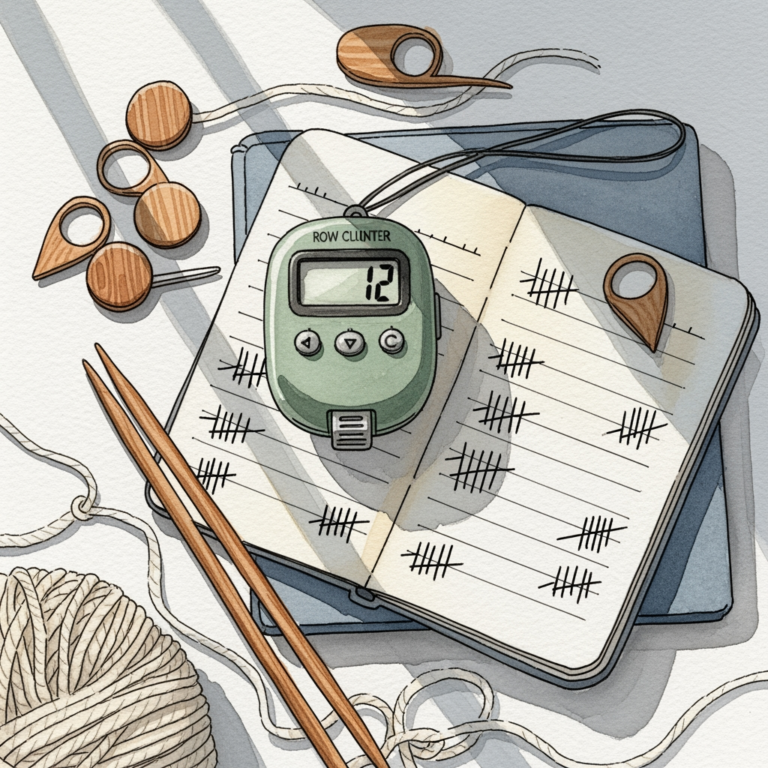
Finally, don’t rely solely on markers; keep a small notepad or a row counter nearby. Markers tell you where you are in a row, but a counter tells you which row you are on, and you need both for a successful project.
Mastering the use of stitch markers is a foundational skill that will serve you for the rest of your knitting journey. By choosing the right tool for the specific yarn and needle size you are using, you set yourself up for success and minimize unnecessary stress. Experiment with different styles, keep your kit organized, and remember that every marker placed is a step toward a finished project. Happy knitting, and enjoy the process of watching your stitches grow into something beautiful.