6 Dry Mount Sprays For Permanent Collages To Try
Discover the 6 best dry mount sprays for permanent collages. Choose the right adhesive for your art projects and create lasting displays today. Read our guide.
Creating a mixed-media collage using fiber scraps, vintage patterns, and fabric swatches requires an adhesive that stands up to the weight of different textures. Much like selecting the correct needle material for a slippery mohair or a heavy wool blend, choosing a dry mount spray depends on the structural integrity of the base and the weight of the applied elements. A reliable bond ensures that delicate swatches or intricate lace motifs remain firmly in place without puckering or yellowing over time. This guide explores six industry-standard sprays to help achieve a professional finish on any fiber-based art project.
3M Super 77: The All-Purpose Workhorse Spray


This adhesive is the industry standard for those who require a high-tack, fast-acting bond for lightweight materials. It functions much like a reliable acrylic yarn—versatile, widely available, and suitable for a vast range of everyday tasks.
When layering paper patterns onto foam board or attaching thin fabric swatches to a display, this spray provides an immediate, aggressive grip. It is ideal for the maker who changes projects frequently and needs a product that works consistently across multiple mediums.
The trade-off is the drying time and potential for bleed-through. If the material is too porous, such as a loosely spun singles yarn or thin tissue paper, the adhesive can saturate the fibers, leading to stiffness. Use it sparingly to maintain the original hand and drape of the materials being mounted.
Gorilla Heavy Duty: For Maximum Strength Collage
When the collage involves heavier elements like denim patches, thick felted wool, or textured canvas, a standard adhesive simply will not suffice. Gorilla Heavy Duty spray acts as the industrial-strength equivalent of a sturdy, multi-ply wool yarn used for a structure-heavy sweater.
It features a high-solids formula that resists the tendency to soak into porous materials. This makes it an excellent choice for mounting thick fiber art pieces that require a permanent, immovable bond to the backing board.
Because the bond is incredibly strong, there is zero room for error once the materials make contact. Position pieces carefully before pressing down, as shifting them after application is rarely possible without damaging the base or the art.
Elmer’s Craft Bond: Best for Paper and Fabric
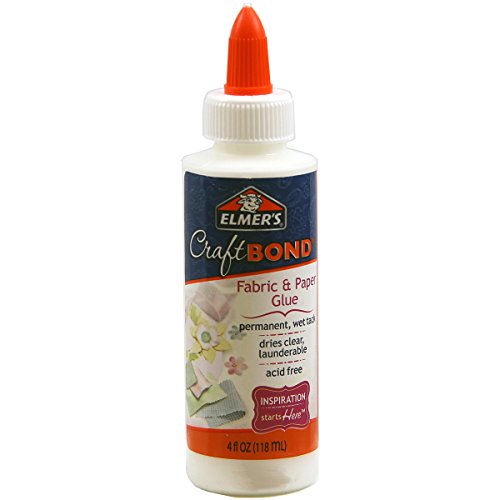
Elmer’s Craft Bond is formulated specifically for the nuances of paper and fabric, making it the most forgiving option for delicate fiber arts projects. It sits comfortably in the middle of the strength spectrum, offering enough hold for fabric collage without causing excessive stiffening.
For makers incorporating delicate lace edgings or lightweight cotton prints into their work, this spray maintains a better level of pliability than heavy-duty alternatives. It dries clear and resists the yellowing that often plagues lower-quality adhesives.
Avoid over-applying this product on sheer fabrics, as it can leave a subtle film if the layers are too thin. A light, even misting is always more effective than a heavy, soaking coat, which can alter the texture of the textile.
3M Photo Mount: The Archival-Safe Choice
Preserving a collage for long-term display requires an adhesive that will not degrade or react chemically with the fibers over time. 3M Photo Mount is the go-to for pieces that include sentimental paper clippings or vintage documents alongside fiber art.
It is designed to remain neutral, preventing the “acid migration” that causes paper to yellow and brittle over the years. Think of this as the equivalent of using high-quality wool wash to preserve the longevity of a hand-knit garment—it is an investment in the health of the materials.
The bond is permanent but allows for a few moments of repositioning immediately after application. This makes it a preferred choice for complex layouts that require precision in alignment.
Krylon All-Purpose: A Reliable Crafter’s Staple
Krylon is frequently found on the shelves of every local craft shop, serving as a dependable, budget-friendly adhesive for varied projects. It provides a consistent, reliable hold that performs well on standard cardstock, fabric, and lightweight embellishments.
It is best suited for quick, assembly-line tasks rather than high-stakes, once-in-a-lifetime art pieces. If the goal is a casual wall hanging or a school-style project, the efficiency of this spray outweighs the need for specialized archival properties.
Be aware that the nozzle can occasionally clog if not cleared after each use. Keeping the tip clean is just as essential as maintaining one’s knitting needles or cable needles—a bit of regular care ensures the tool functions perfectly when the project requires it.
Loctite General Performance: Industrial-Grade Hold
Loctite is the choice for makers who prioritize permanence above all else. This spray creates a resilient bond that is resistant to changes in temperature and humidity, which is vital if the finished collage is intended for display in rooms with shifting environmental conditions.
The high-tack nature of this adhesive means it bites into surfaces quickly and effectively. It is particularly useful for attaching synthetic fibers, which can be notoriously difficult to adhere to traditional paper or wood backings.
Exercise extreme caution with the application, as the adhesive is quite aggressive. It is best suited for flat, non-porous surfaces where a permanent, flat bond is the primary objective.
Choosing the Right Spray for Your Collage Project
Selecting the correct spray is a process of balancing the weight of the fiber against the surface of the backing. Consider the following criteria before finalizing a purchase:
- Weight of materials: Heavier felts or thick textiles require high-solids, high-strength sprays.
- Porosity: Avoid high-drip or overly wet sprays on sheer or thin fabrics to prevent visible glue spots.
- Archival needs: If the project includes heirlooms or vintage paper, prioritize sprays labeled as acid-free or archival.
- Placement precision: If the design is complex and requires adjustment, select a spray with a slightly longer open-time for repositioning.
Much like matching yarn weight to needle size, testing a small, inconspicuous scrap of material first is the most accurate way to predict the outcome. Never skip the test patch, as it reveals how the adhesive interacts with the specific fiber content of the project.
How to Get a Smooth, Bubble-Free Application
A smooth application is the secret to a professional-looking collage, preventing the bubbling and puckering that can ruin a clean aesthetic. Always spray in a sweeping motion, starting and ending off the edge of the material to ensure an even, non-drip coat.
Wait a few seconds for the adhesive to become tacky—often called the “tack-up” phase—before pressing the material onto the substrate. Pressing down from the center outward helps force trapped air bubbles to the perimeter, resulting in a perfectly flat surface.
If applying a large piece of fabric, use a brayer or a flat, smooth object to apply uniform pressure across the entire surface. This mirrors the technique of blocking a flat piece of knitting; consistent, even tension prevents unwanted warping or bunching.
Safety First: Ventilating Your Workspace Properly
Safety is non-negotiable when working with aerosolized adhesives, which often contain volatile organic compounds (VOCs). A well-ventilated area is essential, and ideally, all spraying should be done outdoors or within a professional spray booth.
Always wear a respirator mask designed for chemical vapors, rather than a standard dust mask, to protect the lungs from particulate matter. The health of the maker is just as important as the quality of the finished craft, and respiratory protection should be as fundamental as having good lighting for colorwork.
Never spray near open flames, space heaters, or hot tools. Many of these adhesives are highly flammable during the drying process, making common sense and careful placement of the workspace the best defense against accidents.
Permanent vs. Repositionable: Which Do You Need?
Most dry mount sprays are permanent, meaning they form an immediate, irreversible bond upon contact. Permanent sprays are essential for large-scale wall art or projects that will be handled, transported, or displayed long-term.
Repositionable sprays are designed to behave like a sticky note, allowing for multiple adjustments before the bond cures into a semi-permanent or permanent state. These are best used for temporary layout planning or for delicate projects where precise alignment is paramount.
Choose permanent sprays for finished art and repositionable sprays for the drafting phase of the design. Once the layout is confirmed, a light misting of a permanent adhesive can often be used to finalize the piece, providing the best of both worlds.
Selecting the right spray adhesive is a foundational skill that elevates a basic collage into a polished piece of fiber-integrated art. By matching the strength and archival quality of the spray to the specific requirements of the textiles, every maker can ensure their creations remain secure, professional, and visually stunning for years to come.