6 Best Desk Pads For Workspace Protection To Consider
Protect your desk surface with our top picks. Discover the 6 best desk pads for workspace protection and upgrade your home office setup today. Read our review.
A dedicated workspace is just as important as the quality of your yarn or the precision of your needles. A good desk pad does more than protect a tabletop; it provides a stable, cushioned surface that minimizes fatigue during long sessions of lace knitting or complex colorwork. Whether measuring swatches or organizing circular needles, the right surface can transform a chaotic desk into a professional studio. Choosing the right pad ensures that your tools remain protected and your focus stays entirely on the stitches.
OLFA Self-Healing Mat: Best for Crafters


The OLFA Self-Healing Mat is a staple for anyone who frequently uses rotary cutters for quilting or cutting fabric for bag linings. Its unique surface property allows the material to “heal” after being sliced, preventing deep grooves from forming that could catch your needles or distort your yarn.
For knitters, this mat offers unparalleled utility when it comes to precision measuring. The printed grid lines provide an instant reference for checking gauge, ensuring that those four-inch swatches meet the exact standards required for your pattern.
However, consider that the surface is relatively firm. While excellent for cutting, it may lack the softness needed for a long day of working with delicate lace weight yarns, where a softer pad might be more forgiving on the forearms.
Grovemade Leather Desk Pad: A Premium Choice

Grovemade Leather Desk Pad serves as a luxurious anchor for a high-end fiber studio. The vegetable-tanned leather offers a smooth, natural surface that develops a unique patina over time, much like how hand-dyed wool softens and changes after years of wear.
This pad provides a sophisticated aesthetic that elevates a simple knitting nook into a professional workspace. The weight of the leather keeps it firmly in place, preventing the mat from sliding while you navigate long circular cables.
Keep in mind that leather can be porous and sensitive to moisture. Avoid using this surface for wet-blocking projects, as the humidity can cause the leather to warp or stain over time.
Aothia Desk Pad: The Best Large-Format Option
The Aothia Desk Pad is a dual-sided synthetic option that excels in versatility and size. Its expansive surface area is ideal for knitters who juggle multiple pattern books, stitch dictionaries, and project bags simultaneously.
The cork-based backing prevents the pad from slipping on smooth wooden surfaces, ensuring stability when counting rows or managing intricate cable charts. Because it is synthetic, it is significantly more water-resistant than leather or felt.
Choosing this large-format option creates a dedicated “zone” for your work. It creates a boundary that keeps your needles and notions from rolling off the table and getting lost in the carpet fibers.
YSAGi Multifunctional Pad: Best Budget Pick
The YSAGi Multifunctional Pad provides a surprisingly effective solution for those who prioritize value without sacrificing basic functionality. Its thin, durable construction makes it an unobtrusive addition to any desk setup.
While it lacks the thick cushioning of premium pads, it is incredibly easy to clean. If you spill a bit of yarn dye or have a messy encounter with a stitch marker, a quick wipe restores the surface immediately.
This mat is excellent for smaller spaces where a bulky pad might feel overwhelming. It serves its primary purpose—protecting the finish of the table—while providing a consistent, smooth surface for your tools.
Graf Lantz Mosen Pad: The Best Wool Felt Mat
The Graf Lantz Mosen Pad utilizes high-quality Merino wool felt, creating a texture that feels remarkably harmonious in a space filled with natural fibers. The warmth of the wool is distinctively pleasant compared to cold vinyl or plastic.
Felt has a natural “grip” that keeps your needles and DPNs (double-pointed needles) from sliding across the desk. This is a significant advantage when you are working on a project with slick metal needles that tend to wander.
Be aware that wool felt can trap small fibers and dust. A quick, gentle vacuuming or brushing is necessary to keep it looking pristine, particularly if you are working with shedding mohair or high-halo fibers.
ClearPlex Desk Mat: Best Transparent Option
The ClearPlex Desk Mat is the ultimate tool for those who keep their charts, patterns, and conversion tables underneath their work surface. It offers a perfectly smooth, protective barrier that keeps printed instructions clean and legible.
Transparency is a major advantage when you need to keep your pattern close at hand without sacrificing desk space. You can view your instructions through the mat, keeping them safe from accidental snags or stray drops of coffee.
Because the surface is completely clear, it provides no traction compared to felt or leather. If your desk surface is particularly slick, consider adding small rubber feet to the corners to prevent the mat from shifting.
How to Choose the Right Desk Pad for Your Space
Selecting the right pad requires evaluating your specific knitting habits and the environment of your studio. Consider the size of your projects; if you are knitting large sweaters on long circular needles, you need a wider footprint.
- Size: Measure your desk, ensuring the pad fits comfortably between your monitor and the edge.
- Material: Choose based on texture preferences and cleaning requirements.
- Backing: Prioritize grippy or weighted backings to prevent sliding during intensive knitting sessions.
- Purpose: Determine if the pad is purely for protection or if it needs to double as a layout surface.
Always account for the weight of your equipment. If you use heavy desk lamps or massive stitch dictionaries, ensure the pad material is durable enough to resist permanent indentations.
Leather vs. Felt vs. Vinyl: Which Is Best?
The choice of material fundamentally changes how your workspace feels. Leather is durable and timeless but requires careful handling regarding liquids. Felt is warm and grippy, making it perfect for holding onto lightweight needles and notions.
Vinyl and synthetic pads are the most practical for high-traffic areas or environments where spills are likely. They are also the most resistant to the sharp tips of needles, which can occasionally pierce softer materials.
Consider the “tack” of the material. If you frequently use bamboo needles, a slick surface is fine; however, if your needles are polished nickel or aluminum, a grippy felt surface will provide better control.
How to Clean and Maintain Your New Desk Pad
Regular maintenance is essential to keep your workspace free of fiber buildup and debris. For synthetic or leather pads, a damp, lint-free cloth is usually sufficient for daily spot cleaning.
Wool felt requires a gentler approach. Use a soft-bristled brush to lift embedded lint or yarn ends. If a deeper clean is needed, consult the manufacturer’s specific instructions, as machine washing can cause wool to shrink or lose its shape.
Avoid harsh chemical cleaners, as they can degrade the surface of synthetic mats or dry out the natural oils in leather. Always test a small, inconspicuous area before applying any cleaning solution to the entire pad.
Can a Desk Pad Double as a Blocking Mat?
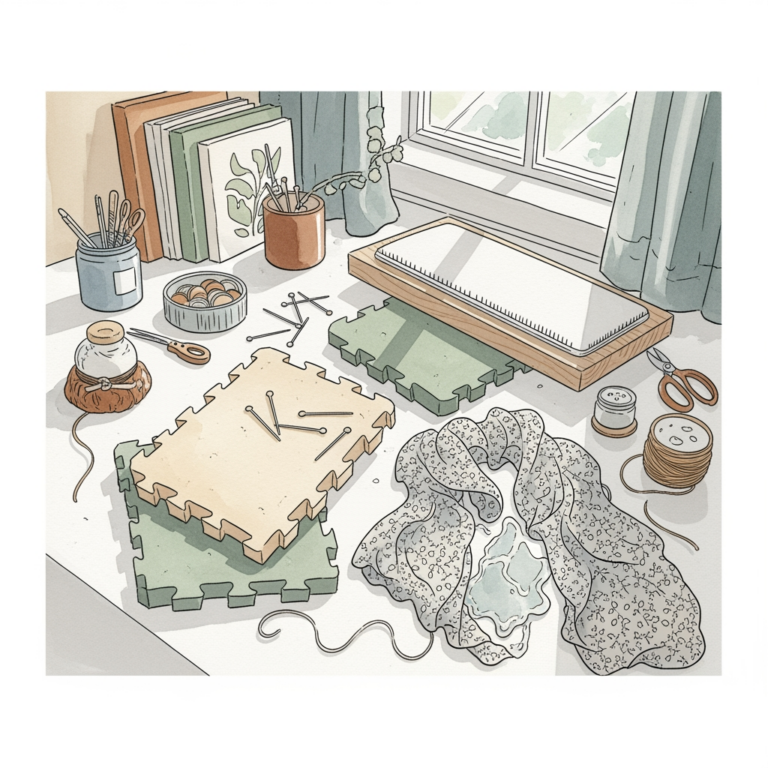
While some desk pads are made from materials like wool felt, they are generally not suitable as dedicated blocking mats. Blocking mats need to be highly porous and capable of holding stainless steel T-pins without damaging the structure of the mat.
Using a desk pad for blocking can lead to several issues. Most desk pads lack the necessary density to hold tension, and the moisture from a wet-blocked garment can ruin the finish of leather or the structural integrity of synthetic mats.
Invest in specialized foam blocking tiles for your finished projects. Save your desk pad for its intended purpose: providing a stable, clean, and professional surface for your day-to-day knitting and project management.
Investing in a quality desk pad is a small but meaningful upgrade for any dedicated crafter. By choosing a surface that complements your specific knitting style and tool set, you cultivate an environment where creativity can flourish without the distraction of a cluttered or unstable workspace. Once you find the right fit for your desk, you will likely find that your rhythm improves and your tools are better preserved for years to come.