6 Best Respirators For Glass Dust Protection To Use
Protect your health with our guide to the 6 best respirators for glass dust protection. Read our expert reviews and choose the right mask for your workshop today.
Working with glass-based decorative elements, such as beads or metallic fibers containing glass filaments, creates microscopic dust that demands serious respiratory protection. While knitting or weaving with these materials seems benign, the fine particulates can easily become airborne and irritate the lungs over extended studio sessions. Selecting the right respirator ensures that creative work remains safe without sacrificing focus or comfort. These six options represent the industry standard for filtering hazardous dust while maintaining the mobility needed for intricate fiber projects.
3M 8210 N95: Best Disposable Respirator


The 3M 8210 is the quintessential choice for occasional studio tasks where setting up a full-face system feels like overkill. It provides a reliable barrier against non-oil-based particulates, making it ideal for quick sessions of cutting glass-core threads or working with fiber-heavy metallic filaments.
Because it is a disposable unit, it requires no maintenance or filter changes. When it gets dusty from your work surface or begins to feel restrictive, simply discard it and grab a fresh one. This convenience is perfect for those who only occasionally incorporate high-glass-content materials into their fiber art.
However, the lack of a valve means moisture can build up during long, intense knitting sessions. If you find your glasses fogging while counting stitches, look for a variant with an exhalation valve to keep the view of your needle tips clear.
GVS Elipse P100: Most Compact Protection
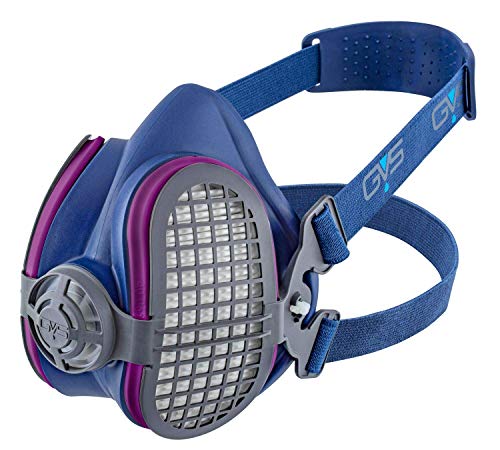
The GVS Elipse stands out for its incredibly low-profile design, which allows for a full field of vision when looking down at your hands. This is vital when working on complex lace charts or stranded colorwork where keeping eyes on the needles is essential for maintaining gauge.
The P100 filters offer the highest level of protection, capturing 99.97% of airborne particles, including the fine dust shed by delicate glass beads. It fits closely to the face, meaning it won’t bump into your project bag or yarn swift as you move around your workspace.
The tradeoff for this slim profile is a slightly tighter fit around the bridge of the nose. Test the seal carefully to ensure the structure doesn’t cause fatigue during projects that require long, uninterrupted hours of concentration.
3M 7500 Series: The Most Comfortable Option

Comfort is the primary driver for those who spend entire afternoons or weekends at their loom or knitting station. The 3M 7500 series features a soft silicone face seal that conforms comfortably to the skin, significantly reducing the “mask fatigue” often associated with heavier respirators.
The drop-down head harness allows the mask to be removed from the face without completely taking off the entire headgear. This is a game-changer when needing to pause to check a stitch count, grab a drink of water, or consult a knitting pattern without stripping off all equipment.
It is a heavier unit than disposable masks, but the weight distribution is excellent. Use this model if you have a sensitive face or if your fiber arts process involves many hours of continuous, high-focus work.
Honeywell North 7700: Pro-Level Durability

The Honeywell North 7700 is built for longevity, utilizing a high-grade silicone that resists degradation over years of heavy use. It is a workhorse for the studio that sees daily activity, such as frequent cutting of glass-threaded yarn or heavy beading.
The dual-cartridge system allows for a balanced weight distribution, preventing the mask from sagging or pulling on one side. This is particularly helpful when leaning over a table for long periods, as it maintains its position and seal despite constant movement.
Because it is so robust, it is on the heavier side compared to more streamlined options. Ensure the straps are adjusted correctly so the weight rests evenly across the head, preventing neck strain during demanding projects.
3M 6500QL: Best Quick-Latch Respirator

The Quick-Latch mechanism on the 3M 6500QL is designed specifically for those who need to move between “masked” and “unmasked” states frequently. If you are constantly stepping away from your fiber project to handle logistics or measurements, this feature saves significant time and frustration.
The rugged, molded design is built to withstand drops and knocks, which is useful in a busy workshop environment. It maintains a secure seal even when repeatedly latched and unlatched, ensuring that safety is never compromised for the sake of convenience.
The rigid construction provides a sturdy feel, but it is not as pliable as the 7500 series. If your face shape is narrow, verify that the seal sits perfectly against the jawline before committing to long-term usage.
Trend Stealth Air: Sleek, Low-Profile Design
The Trend Stealth Air is engineered to be as unobtrusive as possible, utilizing a design that tucks the filter pleats inside a sleek housing. It offers a wide field of vision, which is a major advantage when you are juggling multiple balls of yarn or managing a complicated loom setup.
The filters are designed for high efficiency with low breathing resistance, meaning you won’t feel like you are struggling for air while knitting complex cables. It feels lighter than its professional-grade counterparts, making it an excellent bridge between hobbyist gear and industrial equipment.
Because it is so compact, the filter surface area is smaller than a traditional bulky cartridge system. Monitor your breathing resistance; when it starts to feel slightly harder to inhale, it is time to replace the filters to ensure they are still pulling their weight.
How to Get a Proper Seal on Your Respirator
A respirator is only as effective as the seal it creates against the skin. Before starting any fiber task, perform a negative pressure check by covering the intake valves with your palms and inhaling sharply. The mask should collapse slightly toward your face; if you feel air leaking around the edges, adjust the straps or the nose bridge.
Facial hair is a significant barrier to a proper seal and can allow fine dust to bypass the filter entirely. If you are committed to the safety of a respirator, you must maintain a clean-shaven face or ensure the seal is positioned over smooth skin, as even a small amount of stubble can compromise protection.
Always adjust the straps while the respirator is seated correctly. Do not overtighten, as this causes discomfort and can actually distort the mask, creating new gaps.
N95 vs. P100: Which Rating Do You Need?
The N95 rating is sufficient for the majority of non-oil-based particulate hazards found in a home studio, such as general dust from glass fiber. It filters at least 95% of airborne particles, which is more than enough for intermittent contact with glass materials.
P100 filters, however, provide a higher level of filtration and are oil-proof, making them the gold standard for long-term safety. If you work with abrasive glass-based coatings or metallic yarns that release high amounts of fine particulate matter, the P100 is the safer, more robust choice.
If you are sensitive to dust or have pre-existing respiratory concerns, lean toward the P100. The additional protection provides a meaningful margin of safety that justifies the slightly higher cost of the cartridges.
Care and Maintenance for Reusable Respirators
Regular cleaning is the most important factor in extending the life of a respirator. After each project session, wipe the interior face seal with a damp, lint-free cloth to remove sweat, skin oils, and dust accumulation.
Every few weeks, perform a deep clean by removing the filters and soaking the mask body in warm, soapy water. Use a mild detergent, but ensure you rinse it thoroughly, as lingering soap residue can cause skin irritation during your next long knitting session.
Always store the mask in a sealed container or a dedicated storage bag. Keeping it out in the open allows dust to settle inside the unit, which defeats the purpose of the filtration system and potentially clogs the valves prematurely.
Understanding NIOSH Respirator Classifications
NIOSH is the governing body that sets the testing standards for respiratory protection in the United States. When you see a classification like “N95” or “P100,” it indicates how well the filter captures particles and how it handles oil-based aerosols.
The “N” stands for “Not resistant to oil,” while the “P” stands for “Strongly resistant to oil.” The numeric value (95, 99, or 100) represents the percentage of particulate filtration efficacy, with 100 being the highest possible rating (99.97%).
Always purchase respirators that are NIOSH-approved rather than generic “dust masks” from a craft or hardware store. Proper certification guarantees that the mask has undergone rigorous testing to prove it can actually block the microscopic glass dust that poses a threat to your respiratory health.
Investing in quality respiratory protection is as important as choosing the right needles or high-quality wool for your projects. By choosing the right mask for your specific fiber arts process, you ensure that the only thing you are inhaling is the joy of the craft. Keep your workspace clear, your equipment maintained, and your focus entirely on the beautiful textiles you are creating.