6 Best Applique Needles For Delicate Silks
Struggling with snags on fine fabrics? Discover the 6 best applique needles for delicate silks to ensure perfect, snag-free stitching. Shop our top picks today.
Appliquéing onto delicate silk requires a surgical level of precision to avoid permanent damage to the fabric’s fine weave. When working with luxury fibers like silk or silk blends, the choice of needle becomes as critical as the tension of the thread itself. The wrong tool can cause runs, pulls, or unsightly holes that compromise the integrity of the entire piece. Selecting the right needle ensures the thread glides through the delicate structure without distorting the silk’s natural drape.
Tulip Applique Needles #10 Big Eye: Best Glide


Tulip needles are engineered with a polished surface that reduces friction significantly when passing through dense or delicate weaves. The Big Eye feature is a game-changer for makers who struggle with threading fine silk embroidery floss or metallic threads.
The primary advantage here is the consistency of the finish. The needles are treated with a specialized plating that allows them to slide through layers of silk without grabbing or snagging the individual filaments. This prevents the “puckering” effect often seen when using lower-quality, textured needles.
Consider this needle if the project involves frequent re-threading or working with slightly thicker decorative threads. While the eye is large, the shaft remains remarkably slender. It is the ideal middle-ground for those who value ease of use alongside structural protection for their fabric.
John James Milliners Needles #11: Best Value
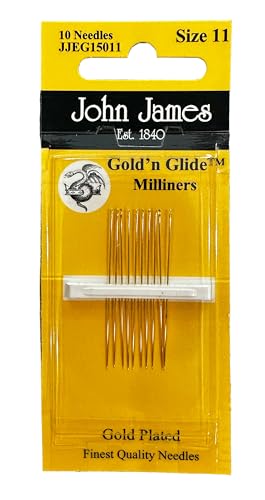
John James has long been a staple in professional sewing rooms, and their Milliners needles are a reliable workhorse. For those stocking up for large appliqué projects, these offer a consistent quality that rarely disappoints.
These needles are characterized by a long, thin shaft and a round eye, making them excellent for creating perfectly uniform stitches. Because they are cost-effective, they are ideal for makers who prefer to swap out needles frequently to ensure the point remains razor-sharp.
A dull needle is the enemy of silk appliqué; it will push through the fibers rather than piercing them cleanly. Choosing a high-value, reliable option like John James allows for frequent replacement without breaking the budget. It is a practical choice for long-term consistency in stitch quality.
Bohin Applique Needles Size 12: Finest Point

When the silk is exceptionally fine or high-count, a size 12 needle is often the only way to avoid visible puncture marks. Bohin is renowned for the extreme fineness of their high-numbered needles.
The point on a size 12 Bohin is incredibly delicate and sharp, designed specifically to slip between the fibers of the silk rather than breaking them. This is essential for maintaining the smooth, ethereal surface of high-end silk fabrics.
Because these are so thin, they do require a light touch. Avoid forcing them through multiple thick layers of stabilizer or heavy thread, as the needle can bend under pressure. They are best reserved for delicate thread-painting or fine appliqué work where the preservation of the silk’s weave is the absolute priority.
Clover Black Gold Applique No. 9: Best Finish
Clover’s Black Gold line features a unique coating that provides a remarkably smooth surface. This specialized finish is designed to resist rust and minimize drag, making it feel as if the needle is almost floating through the material.
The needle’s point is crafted to be slightly tapered, which aids in smooth penetration. The “Black Gold” plating also offers excellent visibility against light-colored silks, helping the maker keep track of the needle during intricate work.
This is a premium option for those who find that standard steel needles “stick” or “drag” during the stitching process. It bridges the gap between high-performance engineering and user-friendly ergonomics. If the goal is a seamless, professional finish, this needle is a standout contender.
Jeana Kimball’s Sharps: For Precision Work
Jeana Kimball’s needles are developed with a specific understanding of quilt-making and appliqué needs. These “Sharps” are slightly shorter than Milliners needles, providing more control over the stitch length and angle.
The shorter shaft allows for a faster, more precise rocking motion, which is ideal for those who prefer the traditional appliqué method. The rigidity of the needle ensures that it doesn’t flex excessively, allowing for very tight, controlled placement of tiny appliqué motifs.
Because these needles are designed for precision, they excel when working with complex shapes or tight curves. If the project requires navigating intricate edges or detailed floral motifs, the control provided by this length is unmatched.
Sue Spargo Milliners Needles #11: Artist Pick
Sue Spargo’s needles are favored by artists working with dimensional textures and high-contrast embroidery. They strike a unique balance between durability and flexibility, which is vital when working with varied thread weights.
These needles are robust enough to handle the occasional metallic or wool thread but slender enough to respect the delicate nature of the underlying silk. The eye is smooth and well-formed, minimizing thread fraying as the thread is pulled through the fabric repeatedly.
Using these needles allows for a fluid, expressive stitching style. They are designed for creators who want to combine traditional appliqué with artistic flair, ensuring the tool never feels like an obstacle to creativity. For those who blend different thread textures on a single silk base, this is the versatile artist’s choice.
Choosing the Right Needle Size for Your Silk
Needle sizing follows a simple rule: the higher the number, the thinner and shorter the needle. For delicate silks, always opt for a size 10, 11, or 12. A size 9 may be acceptable for heavier silk shantung, but it is often too bulky for charmeuse or organza.
- Size 10: Versatile, good for beginners, easy to thread.
- Size 11: Ideal for fine work and general appliqué tasks.
- Size 12: Reserved for the thinnest fabrics and finest threads.
Always match the needle thickness to the thread thickness. If the thread is dragging or the hole left behind is visibly larger than the thread, the needle is too thick. A thinner needle will always be gentler on the silk’s structure.
Sharps vs. Milliners: Which Needle is Better?
The debate between Sharps and Milliners often comes down to the specific stitching technique used. Milliners needles are long and uniform in thickness, which makes them superior for gathering or precise stitch placement.
Sharps are shorter, making them easier to handle for those who stitch with a short, rapid motion. They offer more leverage and less chance of bending.
If the appliqué style involves “rocking” the needle through the fabric multiple times before pulling the thread, the Milliners needle is usually more efficient. If the style is more “pick-and-pull,” the Sharps will offer better control over the needle point. Preference is personal, so experimenting with both lengths is encouraged.
Top Tips for Applique on Delicate Silks
The foundation of successful silk appliqué is the preparation of the fabric. Use a lightweight, water-soluble stabilizer to support the area being stitched, which keeps the silk from shifting or bunching.
Always use a fresh needle for every project, or even every few hours of work. A worn needle point can develop a tiny burr that will catch on silk fibers, causing immediate and permanent damage to the fabric’s sheen.
Keep your hands clean and dry to avoid oils or moisture transferring to the silk. Use a silk-weight thread that matches the weight and sheen of the base fabric to ensure the appliqué blends seamlessly into the background.
How to Prevent Snags and Puckering on Silk
Puckering usually occurs due to thread tension that is too high or a needle that is too large for the fabric. Ensure the tension on the thread is loose enough to allow the silk to lay flat after the stitch is completed.
Snags occur when the needle point is dull or the eye of the needle is too wide, causing the thread to fray and pull on the surrounding filaments. Regularly check the needle eye for rough spots and replace it immediately if any snagging occurs during a stitch.
When working with delicate silks, slow down. Appliqué is a rhythmic process, not a race. By giving the fabric time to settle between stitches, the risk of distortion is significantly reduced, resulting in a professional, clean application every time.
By selecting the right tool and respecting the unique properties of silk, you ensure that every stitch enhances rather than detracts from the fabric’s beauty. Investing in high-quality needles is a small price to pay for the longevity and professional appearance of your work.