6 Best Tapestry Needles For Embroidery Worth Owning
Find the perfect needle for your craft. Our guide reviews the 6 best tapestry needles, focusing on durability, eye size, and smooth stitching performance.
Every knitter knows the frustration of finishing a beautiful garment only to struggle with a dull or poorly shaped needle when weaving in ends. The right tapestry needle acts as an extension of your fingers, allowing you to hide tails securely without splitting your painstakingly worked stitches. Selecting the perfect tool depends as much on your yarn’s fiber content as it does on your personal dexterity. This guide breaks down the best options on the market to ensure your finishing work looks as professional as your knitting.
Bohin Bent Tip Tapestry Needles: Best Overall


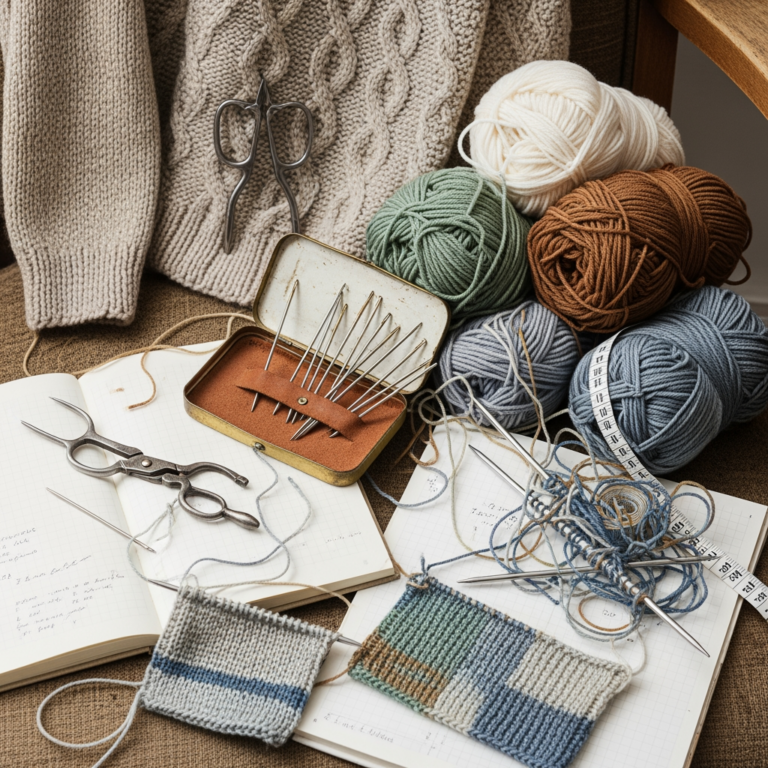
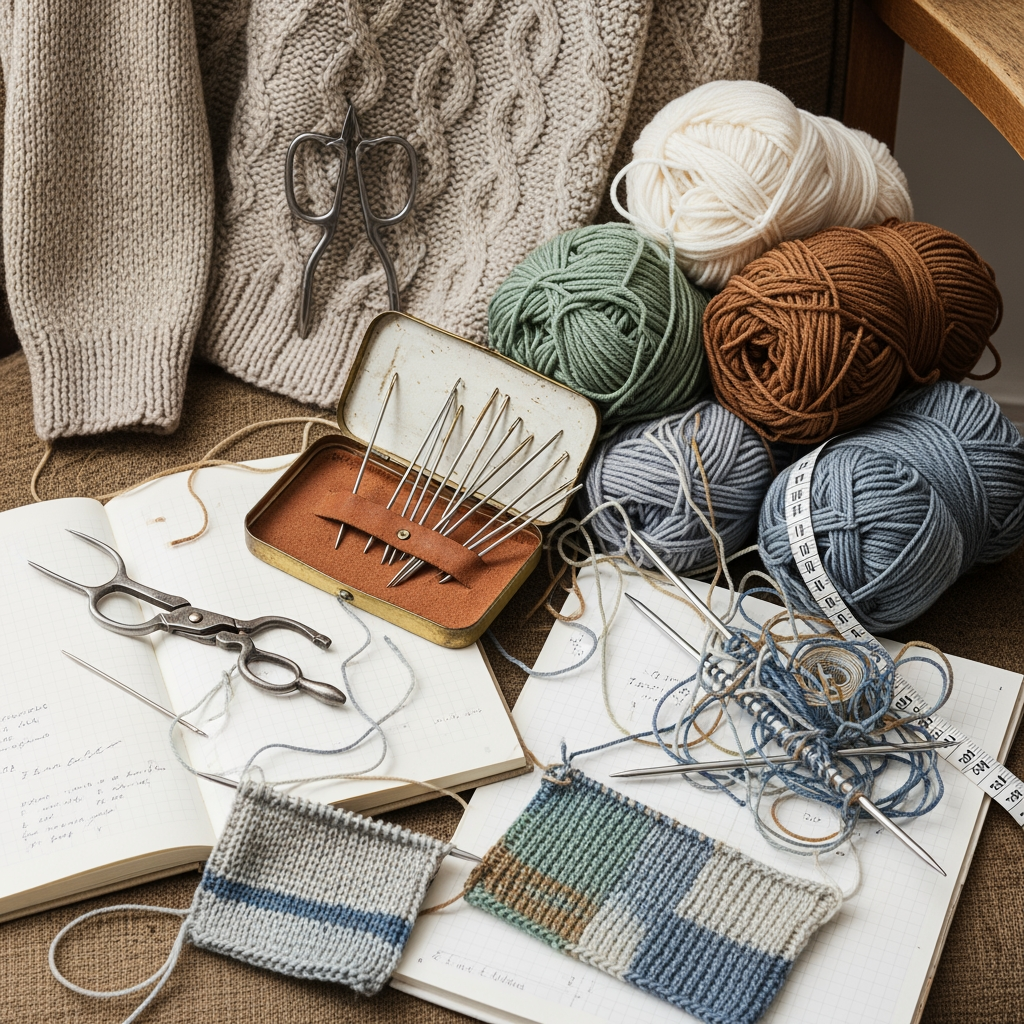
If you have ever tried to weave in ends on a dense, cabled sweater, you know how difficult it can be to navigate through tight fabric. The Bohin Bent Tip excels here because the slight curve allows you to slide the needle under stitches without piercing the yarn itself.
These needles are crafted from high-quality nickel-plated steel, providing a smooth glide that won’t snag on delicate fibers like alpaca or mohair. The bent tip acts as a natural lever, lifting the fabric slightly so you can weave your tail through the back of your stitches with precision.
While some beginners find the curve awkward at first, it quickly becomes an indispensable tool for finishing. Once you master the angle, you will find it much easier to keep your tension consistent while hiding those pesky ends.
Clover Chibi Bent Tip Needles: Best for Travel

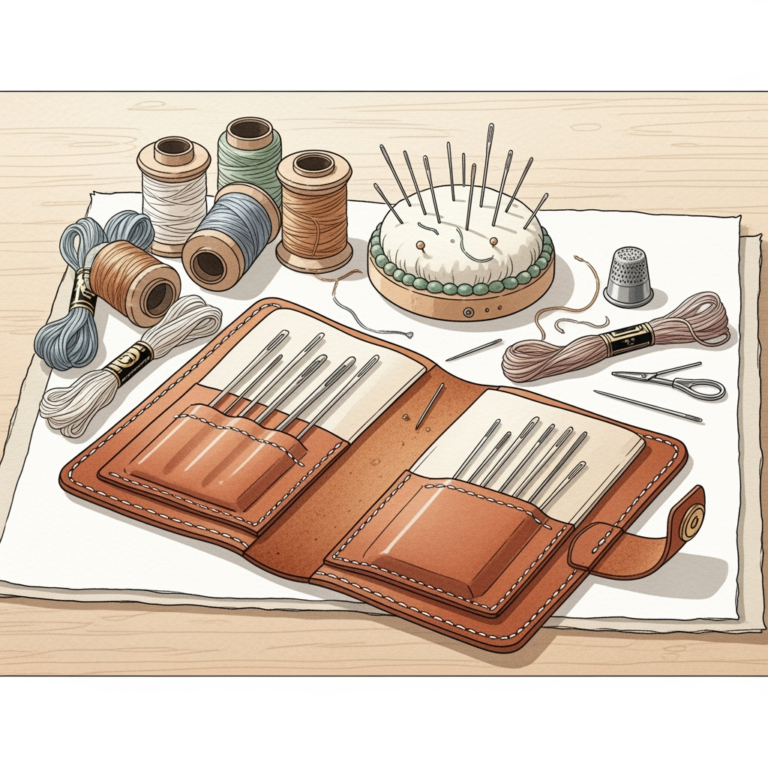
We have all been there: you are at a knit night or traveling, and you realize you have a loose end that needs securing. The Clover Chibi set is a staple for a reason, primarily because it comes in a durable, portable carrying case that keeps your needles from disappearing into the bottom of your project bag.
The needles themselves are made of flexible, soft plastic, which is a significant departure from traditional steel. This makes them incredibly lightweight and gentle on the hands, especially if you suffer from arthritis or hand fatigue after a long day of knitting.
Because they are plastic, they are not as sharp as steel needles, which is actually a benefit when you want to avoid accidentally splitting your yarn. They are perfect for bulky or super-bulky weight yarns where a finer, sharper tip might be overkill.
Tulip Hiroshima Tapestry Needles: Best Quality

When you hold a Tulip Hiroshima needle, the difference in manufacturing quality is immediately apparent. These Japanese-made needles are polished to an incredibly high standard, meaning they have virtually zero friction when passing through your knitting.
The eyes are smoothed to perfection, ensuring that your yarn doesn’t fray or break as you pull it through the eye. This is particularly important when working with single-ply yarns or luxury fibers like silk, which are prone to snapping if they catch on a rough edge.
While they are a higher investment than a standard pack of needles, they are a joy to use for heirloom projects. If you are finishing a complex lace shawl or a delicate baby blanket, these needles provide the tactile experience that matches the effort you put into the knitting.
Dritz Finishing Needles: Best Budget Option
Sometimes you just need a reliable, no-frills tool that you don’t have to worry about losing. Dritz Finishing Needles are the workhorses of the knitting world, found in almost every craft store and perfectly capable of getting the job done.
They are made of standard steel and are sturdy enough to handle everything from worsted weight wool to heavy cotton. Because they are inexpensive, it is easy to keep a few stashed in every project bag you own, ensuring you are never caught without one.
They may not have the premium finish of more expensive brands, but they are consistently straight and feature a functional eye. For the average knitter working with standard superwash wool, these will perform perfectly well for years.
Collins Yarn Darners: Best for Thick Yarns
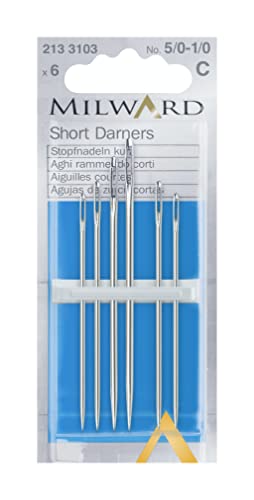
Working with jumbo or "art" yarns often leads to the problem of a standard tapestry needle eye being too small. Collins Yarn Darners feature a generously sized eye and a robust shaft, specifically designed to accommodate thicker, loftier strands.
These needles are long and sturdy, giving you plenty of leverage when pulling a thick tail through a tight seam. They are particularly useful for seaming heavy blankets or chunky cardigans where the weight of the yarn requires a more substantial tool.
Avoid using these on fine-gauge projects, as the thickness of the needle can actually stretch out your stitches. Save them for your heavy-duty projects where you need a needle that can stand up to the bulk of the fiber.
John James Gold Plated Needles: Best for Ease
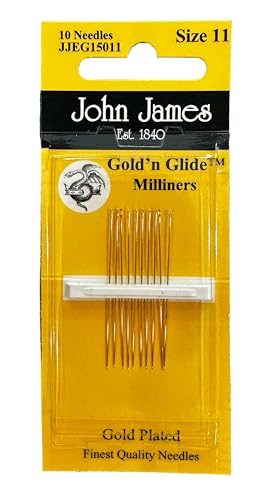
The John James Gold Plated needles are a favorite among knitters who appreciate a bit of luxury combined with high performance. The gold plating isn’t just for show; it provides a slick, low-friction surface that slides through wool like butter.
These needles are also highly resistant to corrosion, which is a nice bonus if you live in a humid climate or store your notions in a place where metal might otherwise tarnish. The point is sharp enough to navigate tight spots but rounded enough to avoid piercing your yarn strands.
Many knitters find that the gold finish makes the needle easier to see against dark-colored yarns. If you struggle with eye strain while finishing your work, the slight sheen of these needles can make a noticeable difference in your comfort.
How to Choose the Right Tapestry Needle Size
Matching your needle size to your yarn weight is just as important as matching your knitting needles to your yarn. A needle that is too thick will distort your stitches, while one that is too thin will be difficult to thread and may slip out of your work.
- Fingering/Sock Weight: Use a size 22 or 24 needle for a delicate, precise finish.
- Worsted/DK Weight: A size 18 or 20 is typically the sweet spot for these medium-weight yarns.
- Bulky/Super Bulky: Reach for a size 13 or 16 to ensure the yarn passes through the eye without undue stress.
Always look for a needle that allows your yarn to pass through the eye with only a slight amount of resistance. If you have to force the yarn through, you risk damaging the fiber before you even begin to weave.
Straight vs. Bent Tip: Which Should You Use?
The choice between a straight and a bent tip is largely a matter of the specific task at hand. Straight needles are excellent for general seaming, such as joining two flat pieces of fabric together using a mattress stitch.
Bent tips, conversely, are the masters of weaving in ends on finished garments. The curve allows you to scoop up the back loops of your stitches without turning your work over, which is a huge time-saver when you are working on a complex piece.
If you are a beginner, I recommend starting with a variety pack that includes both. You will quickly find that you reach for the bent tip for finishing and the straight tip for seaming, allowing your tools to evolve alongside your skills.
Why Eye Size and Shape Matter for Your Yarn
The eye of the needle is often the most overlooked feature, yet it dictates how much wear your yarn experiences. A long, oval-shaped eye is generally better for flat or ribbon yarns, as it prevents the yarn from twisting as you pull it through.
Round eyes are standard for most plied wools, but ensure the edges are smooth. If you feel any snagging when you thread the needle, stop immediately; that rough edge will act like a saw on your yarn, leading to breakage.
Some knitters prefer "tapestry needles with a spring eye," which allows you to pop the yarn into the eye rather than threading it. While convenient, be aware that these can sometimes snag on the interior of your knitted fabric, so test them on a swatch first.
Essential Care Tips for Your Finishing Tools
Even the best needles will eventually lose their luster or become slightly bent if not cared for properly. Always store your needles in a dry place to prevent rust, and consider keeping them in a dedicated needle case or a pincushion.
If your steel needles start to feel "tacky" or sticky, a quick wipe with a soft cloth can remove oils from your hands that accumulate over time. Never store your needles inside your knitting project for long periods, as they can pick up moisture from the fiber and develop rust spots.
Finally, don’t be afraid to retire a needle that has developed a burr or a rough tip. A damaged needle is a hazard to your hard work, and replacing a single tool is a small price to pay to protect your finished projects.
Finding your favorite tapestry needle is a rite of passage for every knitter, much like finding your preferred circular needle brand. Don’t be afraid to experiment with different shapes and materials until you find the ones that feel best in your hands. Remember that the goal is to make your finishing work as enjoyable as the knitting itself, so choose tools that bring you comfort. With the right needle in your kit, you will approach the end of every project with confidence and ease.