6 Best Purse Locks For Security To Install
Protect your valuables with ease. Discover the 6 best purse locks for security to install on your favorite bags. Shop our top recommendations and secure yours now.
Handmade bags offer a sense of accomplishment that rivals even the most complex stranded colorwork project. However, the beauty of a hand-knitted or sewn purse often leaves the contents vulnerable to spills or unwanted access. Securing these projects requires hardware that balances aesthetic appeal with structural integrity. Selecting the right lock ensures that hours of meticulous stitching remain protected and functional for years to come.
Emmaline Bags Turn Lock: Best Classic Security


The Emmaline Bags Turn Lock remains the gold standard for those seeking a professional, high-end finish. Its two-part mechanism provides a satisfying “click” that signals the bag is securely fastened.
Because this lock requires precise installation through both the outer fabric and the lining, it adds significant structural support to the flap. It works exceptionally well on structured bags, such as those made from stiffened wool felt or heavy cotton canvas.
However, consider the weight of the hardware. Using this on a lightweight, drapey linen bag might cause the fabric to sag or distort over time. Always ensure the internal backing plate is tightened firmly to prevent the metal from wobbling against delicate fibers.
Sallie Tomato Press Lock: Easiest One-Hand Use
A Sallie Tomato Press Lock shines when convenience is the primary objective. The push-button mechanism allows for effortless opening, which proves invaluable when juggling a knitting bag on a crowded subway or in a workshop setting.
This hardware is particularly forgiving for beginners because the installation process is less punishing than multi-part screw-back locks. It provides a clean, modern aesthetic that complements everything from bold geometric knitting patterns to sleek, minimalist sewing projects.
Be mindful that these locks rely on tension springs. While convenient, they can eventually lose their “snap” if the bag is consistently overstuffed. Choose this style for medium-sized bags where accessibility matters more than high-security, tamper-proof containment.
Classic Tuck Lock Clasp: Best for Briefcase Style
The classic tuck lock evokes a vintage, academic charm perfect for messenger bags or satchel-style projects. It relies on a friction-fit tongue that slides into a receiving housing, providing a secure hold that resists accidental opening.
This style is ideal for projects using heavy-duty materials like waxed canvas or denim. Since the lock hardware is large, it creates a focal point on the bag, making it a great choice for showcasing premium finishes like antique brass or gunmetal.
The trade-off is the precision required for the installation of the receiving plate. If the tongue does not align perfectly with the slot, the resulting struggle to close the bag will lead to frustration during daily use. Take the time to measure and mark placement with a heat-erasable pen before making any permanent cuts.
Keyed Padlock Clasp: Top Pick for Anti-Theft
When peace of mind is the priority, a keyed padlock clasp serves as the ultimate deterrent. This hardware features a small metal loop that accommodates a physical padlock, effectively locking the bag shut.
This is the preferred choice for knitters who travel frequently with expensive equipment, such as interchangeable needle sets or hand-dyed silk yarns. It adds an industrial, utilitarian edge that looks intentional rather than cumbersome.
Do not overlook the strength of the bag’s connection points. A lock is only as strong as the fabric it anchors; if the attachment area is not reinforced with sturdy interfacing or leather, the entire lock assembly can pull away from the bag body under pressure.
Heavy-Duty Magnetic Snap: Most Secure Invisible Look
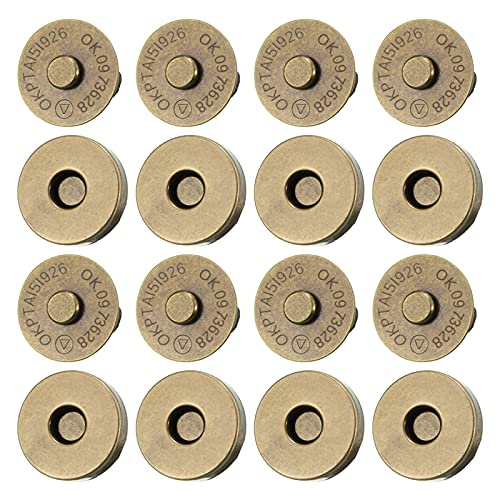
Magnetic snaps are the invisible heroes of bag making. They offer a clean exterior appearance, as the hardware is hidden behind the fabric layers, leaving the bag’s surface sleek and uninterrupted.
For a secure hold, always opt for “heavy-duty” or “high-strength” magnets. Standard craft-store magnets are often too weak to hold a bag shut once it is filled with yarn, scissors, and project journals, leading to a frustrating experience where the flap constantly pops open.
Placement is critical with hidden snaps. Since you cannot see the magnets to align them, use a small piece of double-sided basting tape or a dab of washable glue to hold the components in place while you finalize the stitching. This prevents the magnets from shifting during the assembly process.
Latching Gate Ring Closure: Best Modern Aesthetic
Latching gate rings are currently trending for their modern, hardware-heavy appearance. They function like an oversized carabiner, latching over a D-ring or a fixed tab to keep the bag securely closed.
These are exceptionally durable because they are typically made from solid cast metal rather than stamped steel. They offer a tactile, industrial feel that pairs beautifully with chunky knit textures and oversized silhouettes.
Because the mechanism is exposed, these closures do not offer the same “hidden” security as a magnetic snap. They work best on top-opening bucket bags or slouchy totes where the weight of the bag itself helps maintain the closure’s tension.
Choosing a Lock for Your Fabric vs. Knit Bag
The structural integrity of the base material dictates the hardware choice. A knitted bag, even when felted or backed with fabric, lacks the stability of woven material and requires extra consideration.
- For Knitted Bags: Always add a stiff, non-stretch stabilizer like Pellon Peltex at the site of the lock installation.
- For Fabric Bags: Use a heavy-duty interfacing such as SF101 or high-density foam to prevent the weight of the lock from distorting the bag’s shape.
- For Leather/Faux Leather: Use screw-back hardware, as prongs can eventually tear through the grain of the hide.
If you are working with a delicate lace or intricate cable pattern, avoid locks that require large holes or heavy hardware. Opt for smaller, lighter closures that do not disrupt the delicate tension of your stitches.
Essential Tools for Installing Your Purse Lock
A successful installation requires more than just the lock hardware itself. Precision tools prevent damage to both the bag and the expensive hardware pieces.
- A sharp awl or leather punch: Use these to create clean holes without fraying the fabric edges.
- A sturdy screwdriver: Many high-quality locks feature tiny screws that require a precision set to avoid stripping the heads.
- A setting tool or anvil: If your lock uses compression rivets, a proper setting tool is non-negotiable to achieve a professional, secure attachment.
- A small piece of leather or thick canvas: Keep this on hand to place between the pliers and the lock face to prevent scratching the finish during installation.
How to Reinforce Fabric for a Secure Lock Fit
No matter how high-quality the lock is, it will fail if the material around it tears. Reinforcement is the most overlooked step in the bag-making process.
Start by placing a scrap piece of stiff interfacing or a small square of heavy leather between the fabric layers where the lock will be installed. This acts as a washer, distributing the pressure of the metal hardware across a larger surface area rather than a single point of fabric.
For heavier hardware, consider using a layer of iron-on stabilizer followed by a final stitch-through reinforcement. This prevents the “puckering” effect often seen when heavy metal hardware is forced through light-to-medium weight fabric.
Turn Lock vs. Press Lock: Which Is Right for You?
The choice between a turn lock and a press lock often comes down to the intended use of the finished project. A turn lock offers a higher level of security and a tactile, classic experience that feels substantial in the hand.
A press lock is built for the knitter on the go, offering speed and ease of access when your hands are full of projects. If you prioritize security and are making a structured, formal bag, choose the turn lock.
If you are creating a daily carry-all for workshops or commuting, the press lock is the superior functional choice. Neither is inherently better; both satisfy different needs within a well-planned project.
Securing your handmade bag is the final, vital step that transforms a craft project into a reliable, everyday accessory. By choosing hardware that respects the properties of your materials and the functional demands of your lifestyle, you ensure the longevity of your handiwork. Take the time to reinforce your installation sites, and you will find that your finished bag is as secure as it is beautiful.