6 Best Archival Stamping Pens For Journaling
Discover the 6 best archival stamping pens for journaling. Improve your scrapbook designs with these smudge-proof, long-lasting tools. Shop our top picks today!
Journaling about yarn projects requires tools that offer the same reliability as a well-calibrated needle set. Much like tracking gauge swatches or documenting dye lots, archival stamping pens ensure that project notes remain legible for years to come. These pens are the unsung heroes of a maker’s notebook, preventing the fading or smudging that ruins carefully recorded pattern modifications. Choosing the right tool requires understanding how ink interacts with paper, just as one understands how twist impacts the drape of a finished garment.
Sakura Pigma Micron: Best Overall for Fine Lines
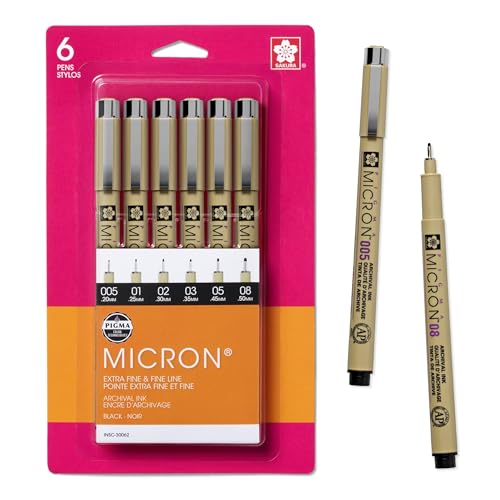

The Sakura Pigma Micron is the industry standard for precision, much like a 2.0mm bamboo needle is the staple for fine lace work. Its consistent ink flow ensures that every stitch count and row measurement remains crisp on the page.
Because the pigment ink is chemically stable, it won’t bleed or feather, even on thinner notebook paper. This is essential when jotting down complex lace charts or detailed decreases where clarity is non-negotiable.
If precision is the priority for your project notes, this pen provides the most reliable performance. The broad range of nib sizes allows for detailed notations, though the finer tips require a light hand to prevent snagging on textured paper surfaces.
Faber-Castell Pitt Pen: Best for Rich India Ink

Faber-Castell Pitt pens utilize high-quality India ink, which provides a deep, saturated black that mimics the visual weight of dark-dyed wool. The ink is waterproof and permanent, meaning it won’t dissolve if a stray drop of tea lands on your journal while knitting.
These pens are exceptionally lightfast, ensuring that notes on color combinations or fiber blends don’t fade under studio lighting. They feel sturdy in the hand, similar to the heft of a high-quality rosewood needle.
Be aware that these pens can be slightly wetter than others. Use them on heavier paper stock to prevent the ink from ghosting through to the other side of your page.
Staedtler Pigment Liner: Top Choice for Rulers
Stability is the hallmark of the Staedtler Pigment Liner, making it the ideal choice for drawing straight lines for project grids or yarn inventory tables. The long, metal-clad tip is designed specifically for use against straight edges and templates.
Much like a metal knitting needle provides a predictable, low-friction surface, these pens offer a consistent glide. The ink is lightfast and water-resistant, keeping your technical sketches and stitch patterns preserved through years of use.
The barrel is ergonomically shaped to reduce hand fatigue during long journaling sessions. If you are drafting your own patterns, this is the most professional tool for the task.
Marvy Uchida Le Pen: Great for Daily Journaling
The Marvy Uchida Le Pen offers a sleek, slim profile that feels comfortable for quick daily entries. While not as rugged as industrial drafting pens, it is perfect for documenting daily progress or writing brief notes on yarn behavior.
The ink is quick-drying, which is a major advantage for left-handed crafters or those who tend to flip through their journals rapidly. It allows for a more fluid, expressive writing style that feels natural when reflecting on a finished sweater.
While the nib is slightly more flexible than a traditional archival pen, it remains remarkably precise. It is an excellent choice for a secondary, everyday pen in your crafting kit.
Copic Multiliner SP: Best Refillable Archival Pen
The Copic Multiliner SP is an investment-grade tool that features a durable aluminum body and replaceable nibs. For the dedicated journaler, this represents the “forever tool” equivalent of a set of high-end interchangeable circular needles.
Refilling the ink or swapping out a worn nib saves both money and plastic waste in the long run. The archival ink is compatible with Copic markers, allowing for creative color-coding of your fiber stash without fear of smearing.
The initial cost is higher, but the durability is unmatched. Choose this pen if you plan on keeping a multi-year project diary that requires heavy, daily use.
Zebra Sarasa Clip: Best Archival Gel Pen Option
The Zebra Sarasa Clip is a departure from fiber-tip pens, offering a smooth, vibrant gel ink that is surprisingly archival. Many knitters prefer the feeling of a gel pen for writing, as it requires less pressure than technical pens.
The ink is water-resistant and fade-resistant once dry, making it a reliable choice for general project logs. It is particularly useful if you prefer to write on thicker, textured papers where a fine felt tip might catch.
Always verify the specific “Sarasa Clip” labeling, as only certain models contain the archival pigment ink. This is a versatile, affordable addition to any project bag.
What Does “Archival Quality” Actually Mean?
Archival quality refers to a material’s ability to resist deterioration over time. For a pen, this means the ink must be acid-free, chemically neutral, and lightfast.
Much like choosing a high-quality, long-staple cotton yarn over a low-grade alternative, archival ink prevents the “yellowing” or “fading” of your notes. Without these properties, your documented pattern adjustments could become illegible within a few short years.
Always look for the “archival” or “pigment-based” designation on the packaging. This ensures your project history remains as durable as the garments you knit.
Choosing Your Pen: A Guide to Nib Size and Type
Choosing a nib size is similar to choosing a needle size based on your yarn weight. Fine nibs (0.05mm to 0.1mm) are ideal for dense, intricate lace charts and small-font project logs.
Medium nibs (0.3mm to 0.5mm) are better suited for general journaling, sketching, and writing notes that need to be legible at a glance. Always consider the texture of your paper when selecting a size; rougher, handmade papers often require a slightly bolder, more robust nib.
If your handwriting is large or your notes are sporadic, a wider nib provides better ink saturation. Adjusting your nib to your writing style is just as important as adjusting your needle size to your personal tension.
Pigment vs. Dye Ink: Which Is Right for You?
Pigment inks contain solid color particles that sit on top of the paper fibers, while dye inks soak deep into the paper. For archival purposes, pigment ink is the clear winner because it is more resistant to light and environmental factors.
Dye inks might offer more vibrant colors, but they are prone to fading and can bleed when exposed to humidity. Given the damp environments in which many knitters work—whether steaming a blocked shawl or sitting in a humid craft room—pigment ink is the safer, more durable choice.
Stick to pigment-based pens to ensure that your records do not vanish over time. Think of dye ink as a fugitive dye and pigment ink as a colorfast, professional-grade yarn.
How Paper Type Affects Pen Performance and Bleed
The interplay between ink and paper is just as significant as the relationship between fiber content and needle material. Thinner, absorbent papers will cause ink to “feather,” potentially ruining the clarity of your writing.
Heavier, coated, or fountain-pen-friendly papers provide a stable base that prevents bleed-through and ghosting. If you notice your pen dragging, the paper surface may be too textured, requiring a wider nib to achieve a smooth line.
Test your pen on a corner of your notebook before committing to a full page of notes. Matching the right pen to your paper quality ensures that your documentation remains clean and readable, just like a well-blocked project holds its shape.
Investing in the right archival pen is the best way to safeguard the history of your knitting journey. By understanding the properties of your ink and the surface of your paper, you ensure that every pattern note and yarn detail remains as enduring as your craft.