6 Best Layout Templates For Balanced Page Compositions
Design visually stunning websites with our 6 best layout templates for balanced page compositions. Explore these professional frameworks and start building today.
A well-designed knitting pattern does more than list instructions; it acts as a silent instructor, guiding the maker through every stitch and transition. When the layout is cluttered or logically fragmented, even the most experienced knitter can lose their place in a complex lace repeat. Achieving a balanced page composition requires a strategic blend of visual hierarchy, clear typography, and intentional white space. Selecting the right software ensures that the final document is as functional at the workbench as it is beautiful on the screen.
Adobe InDesign: Best for Professional Designers


Adobe InDesign serves as the industry standard for those looking to produce high-end, editorial-quality knitting patterns. It offers unparalleled control over typography, object placement, and complex page geometries.
For patterns involving multi-column layouts, large photography, and sophisticated table structures, InDesign provides the precision needed to avoid the “cramped” look that plagues amateur designs. It handles large-format files with ease, ensuring that high-resolution images of intricate cabling or yarn textures remain sharp without slowing down the editing process.
The learning curve is significantly steeper than other options, requiring a commitment to understanding master pages and paragraph styles. However, for designers building a brand or publishing collections, this investment pays off in professional-grade consistency.
Canva: Easiest for Quick, Beautiful Layouts
Canva offers an intuitive, drag-and-drop environment perfect for designers who prioritize speed and aesthetic appeal over complex technical publishing tools. Its library of templates provides a solid foundation for those without a background in graphic design.
The platform excels at creating visually balanced pages through its simple alignment tools and vast font selection. Because the interface is web-based, it allows for easy collaboration and quick adjustments, which is ideal for those who need to update pattern errata on the fly.
While it is excellent for visually driven layouts, it lacks the advanced typographic controls and automated numbering systems of professional software. It is a fantastic starting point for simple accessory patterns, but it may prove frustrating for dense, multi-page garment instructions.
Affinity Publisher: The Best Adobe Alternative
Affinity Publisher has emerged as a powerful, one-time-purchase alternative to subscription-based design software. It bridges the gap between amateur tools and professional suites by offering robust features without the ongoing monthly cost.
This software handles text-heavy patterns exceptionally well, allowing for seamless flow between columns and pages. It is particularly adept at managing long documents, making it an excellent choice for full-length books or comprehensive pattern collections that require a high degree of layout stability.
For the designer who wants to move beyond the limitations of basic word processors, Affinity offers a sophisticated feature set that doesn’t feel overwhelming. It represents a mature choice for those seeking professional output without committing to the Adobe ecosystem.
Stitch Fiddle: Best for Integrated Charting
Stitch Fiddle is built specifically for the fiber arts, functioning as both a layout tool and a technical engine for creating charts. It removes the guesswork involved in drawing cables or lace symbols from scratch.
The integration of charting and pattern writing is its greatest strength, as it allows symbols to be imported directly into the text layout. This synchronization minimizes errors between the written instructions and the graphical representation, a common point of failure in handmade patterns.
Because it is specialized, the layout options are more restrictive than general design software. It is best used as a supplement for the technical portions of a pattern, which can then be exported into a more flexible design program for final formatting.
EnvisioKnit: For Complex, Custom Designs
EnvisioKnit is the gold standard for designers focusing heavily on stranded colorwork, mosaic knitting, and intricate geometric charts. It provides high-level control over every stitch symbol, including the ability to create custom keys and legends.
The software excels at managing color palettes and repeat patterns, ensuring that charts are mathematically accurate and easy for the end-user to follow. For the complex projects that require a high volume of visual data, this tool ensures clarity that generic programs simply cannot replicate.
It is less focused on editorial layout and more on technical drafting. Users should expect to export their charts into a separate design tool to finish the document layout.
Google Docs: The Best Free Starter Option
Google Docs is the most accessible tool available for getting thoughts onto a page. While it lacks professional design flourishes, it is surprisingly capable for simple, single-page pattern templates.
By utilizing table structures without borders, designers can create clean, readable layouts that mimic professional formatting. It is the perfect training ground for those who are just beginning to formalize their patterns and need a collaborative, cloud-based platform.
The limitation lies in its inability to handle complex imagery or advanced typography. If the design needs call for high-fashion photography or elaborate page decorations, a more robust publishing tool will eventually be necessary.
Key Elements of a Knitter-Friendly Pattern
A pattern is only as good as its readability. A balanced composition must lead the eye naturally from the materials list to the finishing instructions.
Every pattern should lead with clear, accessible information. This includes a high-level summary of the project, including gauge, yardage, and the necessary tools such as needle material and cable length.
Bullet points are essential for breaking up dense lists of abbreviations or materials. If a knitter cannot find the needle size or yarn weight within three seconds of opening the page, the layout has failed its primary duty.
Creating Knitting Charts That Are Easy to Read
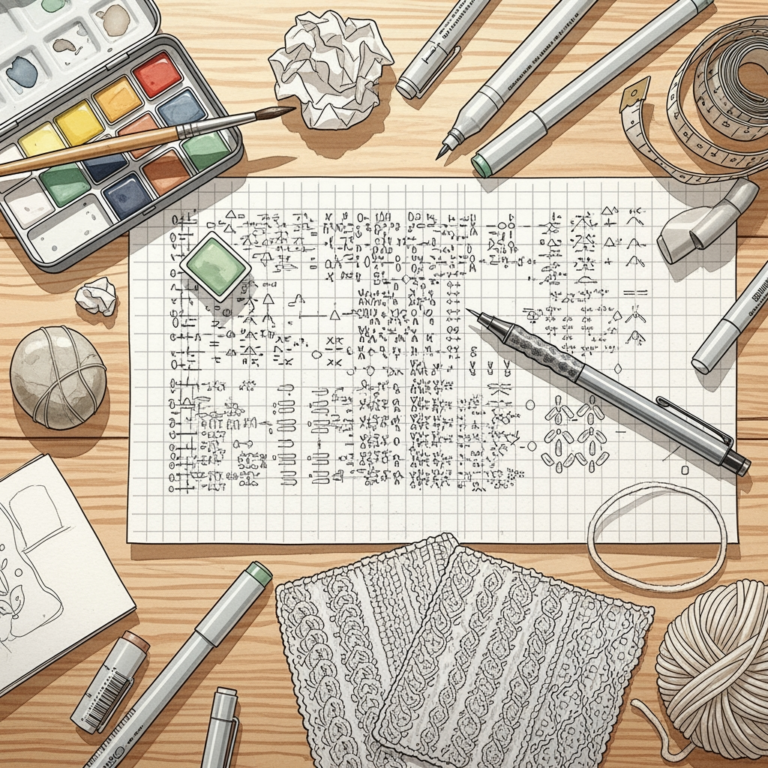
Charts are a shorthand for visual learners, but they must be laid out with high contrast. Use a clear, sans-serif font for any text within the chart, and ensure the grid lines are distinct from the symbols themselves.
Symbol legibility is non-negotiable. Ensure that complex symbols, like those for double-decreases or cable crosses, are large enough to be identified even in low lighting.
Consistency is the hallmark of a professional chart. If a “k2tog” (knit two together) symbol is used, it must remain the same throughout the entire document and match the provided legend perfectly.
Choosing Fonts and Sizing for Readability
Typography is the most overlooked element of knitting patterns. Avoid overly decorative fonts, as they become difficult to decipher when printed in small sizes or viewed on a mobile screen.
Stick to clean, legible serif or sans-serif fonts. For the main body text, a size of 10-12 points is generally comfortable, while instructions for complex techniques may benefit from slightly larger, bolded text to draw the eye.
Always prioritize line spacing, also known as leading. A generous margin and sufficient space between lines of instructions help the eye track the correct row, preventing the dreaded “lost-my-place” scenario.
Mobile vs. Print: Formatting for Both Uses
The modern knitter often carries a tablet or phone to the couch, but many still prefer a printed page at their workbench. A responsive, balanced layout considers both viewing experiences simultaneously.
Digital layouts benefit from single-column designs that prevent excessive zooming and panning. For print, prioritize wide margins that allow for pencil annotations, as many knitters like to check off completed rows manually.
Always test a layout on a small screen before finalizing. If a chart requires horizontal scrolling, it will frustrate the user; in such cases, consider breaking the chart into smaller, logical sections that fit within a portrait-oriented mobile view.
Proper pattern layout is the bridge between a brilliant design concept and a successful finished project. By choosing the right software and adhering to principles of visual clarity, patterns become essential tools rather than sources of frustration. Regardless of the tool chosen, the ultimate goal remains the same: empowering the knitter to focus on the joy of the craft.