
6 Best Lint Removers For Dark Wool Fibers That Work
Keep your dark wool clothes looking pristine with our top 6 picks for lint removers. Discover the best tools that effectively lift fibers and shop our list now.
There is nothing more disheartening than finishing a labor-intensive wool sweater only to see it develop a halo of fuzz and pills after just a few wears. Dark-colored wool fibers are particularly unforgiving, as every stray particle of lint and every microscopic snag highlights imperfections against the deep, saturated backdrop. Choosing the right tool requires an understanding of how different fibers—from long-staple merino to rustic highland wool—react to friction. This guide evaluates the most effective methods to restore your knitwear to its original, polished glory without compromising the structural integrity of the yarn.
Conair Fabric Defuzzer: The Go-To Electric Shaver


The Conair Fabric Defuzzer remains the industry standard for a reason: it balances power with an adjustable depth guard. This feature is vital when working with wools that have varying loft, as it prevents the blade from cutting too close to the surface and thinning the fabric.
When operating this device on dark garments, keep the motion light and circular. Applying too much pressure can cause the spinning blades to bite into the yarn itself, especially on areas where the stitch definition is already loose or uneven.
- Best for: Standard, machine-washable wools and tight-knit sweaters.
- Safety Tip: Always test on an inconspicuous hem before tackling the front chest area.
This tool is a workhorse for busy knitters who need a quick refresh before heading out. However, use it sparingly, as aggressive shaving over years can gradually remove fiber content and lead to thinning.
The Laundress Sweater Stone: Best for Fine Cashmere
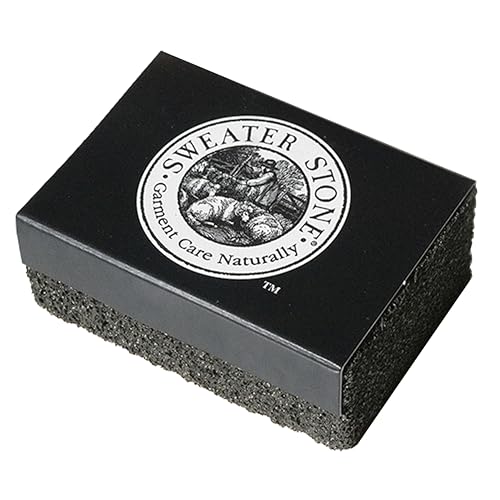
Sweater stones are essentially porous, volcanic pumice blocks designed to gently pull pills away from the fabric surface rather than slicing them off. They are the safest option for delicate, expensive fibers like cashmere or fine, single-ply angora blends.
Because there are no sharp metal blades involved, the risk of “looping” or cutting a vital strand of yarn is virtually non-existent. You simply stroke the stone over the garment in one direction, letting the abrasive texture lift the pilling away.
- Best for: Luxury fibers, soft brushed mohair, and loosely spun yarns.
- Tradeoff: It takes significantly more time and physical effort than an electric shaver.
When dealing with dark cashmere, the stone works exceptionally well because it captures fine, flyaway fibers that electric shavers often miss. It is the gold standard for maintaining the hand-feel of your most precious projects.
Gleener Fuzz Remover: The Most Versatile Manual Tool

The Gleener is unique because it features three interchangeable edges, each designed for a different weight of fabric. This level of customization allows you to tackle anything from bulky, cabled wool coats to thin, lace-weight merino tops.
By swapping the edge, you change the intensity of the de-pilling process. The gentlest edge is perfect for those fragile, haloed yarns that would snag instantly on a motorized blade, while the heavy-duty edge handles stubborn, dense pills on rustic wools.
- Key Advantage: It operates without batteries or power cords, making it perfect for travel or quick fixes in the knitting bag.
- The Bottom Line: If you own a diverse collection of knitwear and want one tool to rule them all, this is the most logical investment.
Manual removal using the Gleener provides the best tactile feedback for the user. You can feel exactly how much resistance the fabric is offering, which prevents over-processing.
Philips Fabric Shaver: The Best High-Power Option
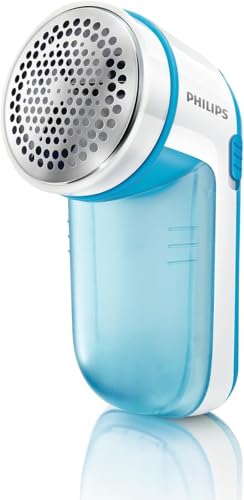
The Philips model is frequently favored for its high-speed motor and expansive shaving head, which covers more surface area in less time. For a large, cabled sweater knit from worsted-weight wool, this tool makes the job feel like minutes rather than hours.
The main benefit here is the consistent speed of the blades, which prevents the “choppy” look that slower, battery-drained units can leave behind. On deep navy or charcoal fibers, consistency is key to ensuring the garment looks uniform rather than patchy.
- Performance: Exceptional at removing dense, matted pilling that occurs under the arms or at the cuffs.
- Caveat: The high power requires a steady hand; don’t hover in one spot for too long or you risk wearing down the fiber density.
This is the tool for the knitter who values efficiency and maintains a wardrobe of durable, everyday woolens. It excels at reviving a well-loved sweater back to a like-new state.
Dritz Sweater Comb: A Simple, Budget-Friendly Pick

Sometimes the most effective solution is the simplest one. The Dritz Sweater Comb is a small, plastic tool with a metal mesh screen that catches pills as you rake it across the wool fabric.
It is remarkably effective for light, surface-level fuzz that gathers on the chest or shoulders of your favorite garments. Because of its tiny size, it is ideal for keeping in a purse or a project bag for immediate care during the winter months.
- Constraint: It is not designed for heavy-duty, deep-pilled fabric.
- Recommendation: Use it as a maintenance tool between major treatments to keep dark wool looking sharp.
For the price, it is an essential item for any knitter. While it won’t replace an electric shaver for a full renovation of an old sweater, its portability makes it a winner.
Kent Clothes Brush: Best for Surface Lint Removal

Not every issue on a dark wool garment is a pill; often, it is just dust, pet hair, or stray lint. A high-quality boar bristle clothes brush is the traditional, non-destructive way to maintain the nap of your woolens.
Brushing should be a regular ritual for any serious knitter. It realigns the fibers of the yarn, which actually helps prevent the tangling that eventually forms into pills.
- The Technique: Brush in a gentle, rhythmic motion, following the direction of the knit.
- Why it Matters: Unlike shaving, brushing adds life to the garment by removing debris and smoothing the fiber cuticle without removing any material.
If you invest in high-quality wool, treat it like a luxury item. A good brush is an investment that preserves the drape and appearance of your sweaters for decades.
How to Choose the Right Tool for Your Wool Knit
Selecting the right tool depends entirely on the fiber composition and the construction of the knit. For soft, loosely spun, or “fuzzy” yarns like alpaca or mohair, avoid motorized blades entirely, as they will pull and distort the delicate halo.
- Hard-wearing, tightly plied wool: Suitable for electric shavers and the heavy-duty Gleener edge.
- Soft, single-ply or cashmere: Strictly reserved for sweater stones or light manual brushing.
- Synthetic-blend yarns: These tend to pill more aggressively and often require the consistent power of an electric shaver.
Gauge also plays a role; a loose, lace-weight sweater is much more susceptible to damage than a dense, double-knit woolen garment. When in doubt, start with the gentlest method possible and only increase the intensity if the pills remain stubborn.
Using a Lint Remover Without Damaging Your Yarn
The biggest mistake is applying too much pressure while de-pilling. When using an electric shaver, let the weight of the device do the work; do not press it into the fabric, as this creates a “valley” in the knit density.
Always work on a flat, firm surface, such as a blocking board or a table covered with a towel. If you hold the sweater in your lap while shaving, the fabric will stretch and sag under the blade, leading to uneven cuts or accidental holes.
- Avoid the seams: Never run a shaver directly over a seam or a cable junction, as the height difference between the stitches makes these areas highly prone to being snagged by the blades.
- Work with the grain: Just like grooming hair, moving in the direction of the knit helps maintain the integrity of the fiber.
If you hear the machine change pitch, stop immediately. That sound indicates that the blade has caught a thicker part of the yarn, and continuing could result in a sheared-off stitch.
Preventing Pilling on Your Favorite Wool Sweaters
Pilling is caused by friction, so the best way to manage it is to reduce wear in high-stress areas. Avoid wearing rough textures, like denim jackets or cross-body bag straps, over your favorite wool sweaters, as this is the primary cause of pilling.
Washing habits also play a huge role. Using a high-quality wool wash and washing your garments inside out inside a mesh bag will significantly reduce the surface friction that leads to unsightly lint.
- Storage Matters: Fold your heavy wool sweaters rather than hanging them, as hanging can stretch the fabric and distort the stitch tension over time.
- Rest Periods: Wool is a natural fiber that needs time to recover its shape. Avoid wearing the same sweater two days in a row to allow the fibers to settle.
Finally, keep your garments lint-free by brushing them regularly. A garment that is already cluttered with dust and debris is much more likely to attract and hold onto new pills.
Electric Shaver vs. Sweater Stone: Which is Best?
The choice between an electric shaver and a sweater stone comes down to speed versus preservation. An electric shaver provides a fast, clean finish that mimics the look of a brand-new garment, but it does so by physically removing small amounts of wool fiber with every pass.
A sweater stone, by contrast, is far more conservative. It is a slow, meditative process that respects the life of the fiber and is virtually incapable of damaging your hard work.
- Use the Shaver for: Quick restoration of mass-market woolens or daily-wear sweaters that have become heavily matted.
- Use the Stone for: Heritage sweaters, hand-knits made from luxury fibers, and items you hope to pass down to future generations.
There is no singular “best” tool, but there is a best tool for the specific project in your hands. By keeping both a high-quality electric device and a manual stone or comb in your kit, you are prepared for any fiber challenge.
Maintaining your dark wool knitwear is an act of stewardship that honors the time you spent at the needles. By understanding the mechanical differences between shaving and brushing, you can extend the beauty of your sweaters for years to come.

