7 Best Quick Dry Fabric Glues For Set Decoration
Discover the 7 best quick dry fabric glues for set decoration to secure props efficiently. Read our expert guide and choose the perfect adhesive for your project.
Creating a professional-looking set requires more than just high-quality textiles; it demands reliable bonding agents that can withstand the rigors of studio environments. Whether mounting elaborate lace displays or constructing structural felt backdrops, the right adhesive transforms raw materials into durable installations. Understanding the chemistry behind these glues ensures that delicate fibers remain intact while heavy-duty fabrics stay perfectly in place. This guide explores the most effective quick-dry options designed to hold up under the unique pressures of set decoration.
Beacon Fabri-Tac: The Set Decorator’s Go-To


Fabri-Tac functions as the industry standard for those who require an immediate, permanent hold. Unlike water-based glues that can cause puckering or distortion in natural fibers like wool or silk, this solvent-based formula remains remarkably stable.
It excels when attaching trim or decorative embellishments to knitted panels that are already blocked and shaped. Because it is thick and grabs quickly, it prevents the creeping or sliding often encountered when working with slippery synthetic blends.
Keep in mind that the solvent-heavy nature of this glue means it can occasionally leave a residue if used too liberally. Apply with precision using a toothpick to avoid saturation of the fabric, which could lead to stiffened spots where you want movement.
Aleene’s Quick Dry Fabric Fusion: Best Value

When working on large-scale set installations where budget and volume are critical, Aleene’s provides a cost-effective, high-performance alternative. It is a permanent, wash-safe formula that offers significant flexibility once cured.
This adhesive is particularly useful for bonding heavier fabrics like denim or canvas onto structural frames. While it has a slightly longer set time than solvent-based options, it allows for minor adjustments during placement, which is helpful when alignment is tricky.
Avoid using this on very lightweight, sheer knits, as the heavier consistency can show through the weave. Stick to mid-weight to heavy-weight textiles to achieve the best results without compromising the aesthetic of the project.
Gorilla Fabric Glue: For Heavy-Duty Bonds
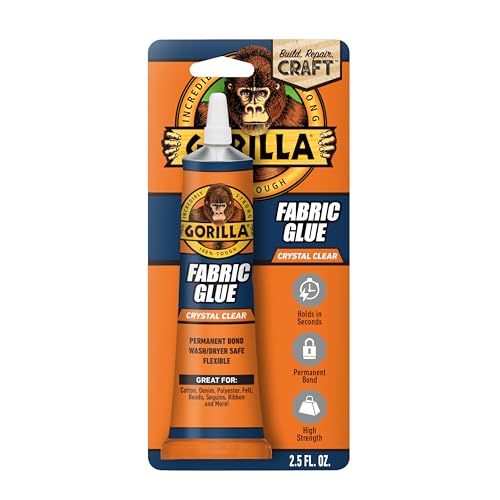
Gorilla Fabric Glue is engineered for strength, making it ideal for high-traffic areas on a set where fabric might endure pulling or repeated friction. It is designed to bond multiple layers of fabric together with an industrial-grade tenacity.
The glue remains flexible, meaning it will not crack or brittle under pressure—a common failure point in inferior adhesives used on knit fabrics. It is particularly adept at securing seams or hems that will be handled frequently during set transitions.
Note that this product is not a “fast-grab” adhesive and requires clamping or pinning while it cures. Utilize binder clips or sewing pins to maintain pressure during the drying process to ensure the bond reaches its full potential.
3M Super 77 Spray: For Large Fabric Panels
When covering large plywood flats or foam core boards with fabric, a liquid glue often leads to an uneven, bumpy finish. 3M Super 77 Spray provides an even, misty application that coats broad surfaces consistently.
The spray is aggressive and adheres instantly, which is perfect for covering large surface areas efficiently. It avoids the heavy saturation that often leads to “bleeding” through to the front of decorative fabrics.
Always perform a test spray on a scrap piece to check for potential discoloration or fabric absorption. Use in a well-ventilated space to prevent the fine mist from settling on nearby delicate materials or tools.
E6000 Fabri-Fuse: Unbeatable Flexibility
E6000 Fabri-Fuse is the preferred choice when the finished project needs to retain its drape and softness. Many adhesives harden into a stiff plastic-like layer, but this formula stays soft and pliable even after a full cure.
This makes it the perfect match for knitted projects or garments that need to move naturally on a mannequin or model. It bonds well to a variety of surfaces, including wood, plastic, and metal, bridging the gap between fabric and set structure.
Be aware that it has a longer dry time compared to other options. Plan for an overnight cure to ensure the bond is fully settled before moving or repositioning your decorative work.
Dritz Liquid Stitch: For Quick Hem Repairs
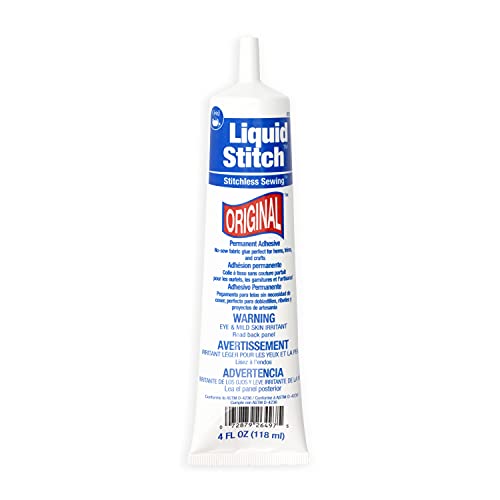
Dritz Liquid Stitch is a quintessential tool for rapid, on-the-spot alterations that don’t involve a sewing machine. It is designed specifically for hemming and minor repairs, offering a clean finish that is nearly invisible on most fabrics.
It is ideal for quick fixes on set, such as securing a loose curtain hem or fixing a fraying edge on a prop. Its applicator tip is designed for control, allowing for thin, precise lines that won’t ruin the drape of the fabric.
Do not use this for structural support or heavy-duty load-bearing tasks. Treat it as a temporary or light-duty solution intended to replace a needle and thread for finishing touches rather than construction.
Permatex Fabric Repair: Most Durable Option
Permatex is primarily known for industrial and automotive applications, which makes it an excellent choice for set decorators needing an extreme-duty adhesive. It is highly resistant to heat, moisture, and vibration, ensuring that props remain intact for the duration of a shoot.
This adhesive stands up to the kind of wear and tear that would cause standard craft glues to fail. It is the best choice for props that will be moved, stored, or handled extensively over multiple production days.
Because of its industrial nature, it is less forgiving than standard fabric glues if applied incorrectly. Work in small sections and wipe away any excess immediately, as this glue is designed to stay exactly where it is placed.
Choosing Your Glue: Liquid vs. Spray Adhesive
The choice between liquid and spray adhesives often comes down to the surface area and the nature of the bond required. Liquid glues are superior for pinpoint accuracy and structural strength on small edges or heavy overlaps.
Spray adhesives excel at flat, wide coverage where maintaining the original texture of the fabric is the priority. If the goal is to keep the fabric looking crisp and uniform, sprays are usually the better investment.
Consider the material weight: heavy upholstery fabrics often require the controlled density of a liquid glue, while thin, decorative knits or linings benefit from the light touch of a spray. Match the adhesive viscosity to the fabric weight for the most professional result.
Tips for a Clean and Strong Fabric Glue Bond
Successful bonding starts with proper preparation of the surface. Ensure that your fabric is clean, dry, and free of dust or oils, as these can significantly weaken the adhesive bond over time.
Always conduct a patch test on a scrap piece of your specific fabric to ensure the glue does not cause discoloration or melting. Many synthetic fibers, such as high-performance polyester or acrylics, can react poorly to certain chemical solvents.
Finally, manage the drying process by providing adequate pressure and time. Avoid rushing the curing phase, as even the best glues require a specific window to form the chemical cross-links that ensure a permanent, durable connection.
Safety First: Ventilating Your Workspace
Most quick-dry fabric glues rely on chemical solvents to provide their rapid bonding capabilities. These solvents release volatile organic compounds (VOCs) that can be harmful when inhaled in confined, unventilated settings.
Always operate in an area with a constant flow of fresh air or use an exhaust fan to draw fumes away from your workspace. If you find yourself working with these materials regularly, wearing an appropriate respirator mask is a non-negotiable safety step.
Keep all adhesives tightly capped when not in use to prevent the drying out of the product and the unnecessary release of fumes. Prioritize your long-term health by treating these chemicals with the respect and caution they demand.
By selecting the right adhesive for the job, set decorators can ensure that their textile designs remain secure, visually appealing, and professional throughout the life of the production. Whether opting for the high-strength flexibility of E6000 or the rapid utility of Fabri-Tac, balancing the needs of the material with the specific demands of the project is the key to a successful build. Always prioritize testing and safety to maintain both the integrity of the fabric and the health of the workstation.