7 Best Craft Workbench Lamps For Visibility To Try
Boost your precision with our 7 best craft workbench lamps. Read our expert reviews to find the perfect lighting solution for your projects and shop today.
Knitting with dark-colored mohair or attempting a complex cable pattern under standard overhead lighting is a recipe for eye fatigue and dropped stitches. Proper illumination transforms a frustrating struggle into a fluid, enjoyable process by revealing stitch definition and texture. Selecting the right lamp requires balancing light intensity, color temperature, and maneuverability to match the specific demands of the craft. These seven lighting solutions address the diverse needs of fiber artists, ensuring every loop is visible and precise.
OttLite Dual Head LED Lamp: Best Overall View


Dual-head lamps offer a distinct advantage by allowing light to converge from two directions, effectively eliminating the harsh shadows that obscure stitch detail. When working with fine, dark-colored yarn, those pesky shadows often hide the difference between a knit stitch and a purl stitch.
The ability to adjust both heads independently ensures that light hits the needles from the perfect angle, regardless of how the hands are positioned. This design is particularly beneficial for those working on complex patterns like brioche or lace, where every single yarn-over must be perfectly placed.
While these lamps occupy a bit more desk surface, the trade-off in visibility is worth the footprint. It remains the gold standard for crafters who demand clarity without constant adjustment.
Brightech Litespan LED Lamp: Best Budget Pick
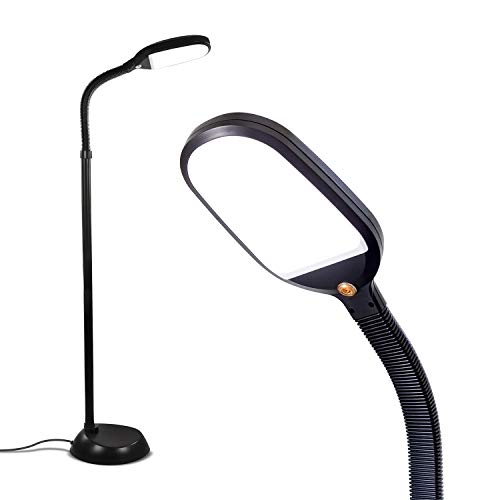
Reliable, bright lighting does not always require a massive investment, provided the lamp offers consistent light quality. This floor lamp model excels by providing a high-output beam that mimics natural daylight, which is essential for accurate color matching when working with hand-dyed yarns.
Because it features a flexible neck, the light can be directed exactly where the needles meet the yarn. This is vital when the ambient light of a room shifts as the sun sets, preventing the dreaded “after-dark” knitting slump.
Budget options sometimes sacrifice build quality, so keep an eye on the base stability. If the lamp is positioned on a thick rug, ensure the weight is centered to prevent wobbling during intense knitting sessions.
Neatfi XL Magnifying Lamp: Best for Lacework

Magnification is the secret weapon for knitters struggling to count rows in intricate lace patterns or identifying a mistake in a dropped stitch. The extra-large lens on this model provides a wide field of view, meaning the knitting does not have to be perfectly centered beneath the glass to remain clear.
When working with gossamer-weight lace or silk blends, the added visual clarity prevents the frustration of squinting at tiny loops. It acts as an extension of the eyes, making it easier to spot a missing yarn-over before reaching the end of the row.
Be aware that magnifying lamps require a period of adjustment for depth perception. Keep the lamp stable and at a consistent height to maintain focus and prevent dizziness during long knitting marathons.
Glocusent Neck Reading Light: Best for Travel

For the knitter who enjoys working while traveling, on public transit, or in bed, a neck light offers unparalleled portability. Unlike stationary lamps, the light source moves directly with the head, keeping the needles constantly illuminated regardless of movement.
These lights are lightweight and unobtrusive, which is a significant factor when wearing them for hours. They are ideal for projects with simple, repetitive stitches that do not require constant, high-intensity visual inspection of the fabric.
However, note that neck lights lack the power of a dedicated desk lamp for intricate colorwork or complex textures. Reserve these for travel knitting or basic stockinette projects where convenience outweighs high-detail illumination.
BenQ e-Reading LED Desk Lamp: Premium Choice
High-end lighting technology makes a measurable difference in reducing eye fatigue during marathon knitting sessions. The BenQ model offers a wider light range than typical desk lamps, illuminating the entire project surface rather than just a small spot.
This wide-angle illumination is a game-changer for those working on large-scale projects like blankets or oversized sweaters. It prevents the need to frequently move the light source as the fabric grows larger and heavier on the lap.
The premium cost reflects the durability and specialized flicker-free technology built into the unit. If knitting is a daily ritual rather than a casual hobby, investing in this level of quality is a practical move for long-term ocular health.
Verilux SmartLight Floor Lamp: Best for Armchairs

Floor lamps are essential when the favorite knitting spot is a deep, comfortable armchair away from any flat desk surfaces. The Verilux model features a slim profile and adjustable height, making it easy to slide behind furniture without taking up valuable floor space.
The specific light spectrum emitted by these lamps is engineered to reduce glare, which is especially important when using slippery needles or glossy yarns like mercerized cotton. Glare can create visual artifacts that make it hard to see the stitches, leading to unnecessary mistakes.
Focus on the height adjustment feature to ensure the lamp can reach over the top of an armchair. Position the lamp slightly to the side to avoid casting shadows from the body directly onto the knitting needles.
Tomons Swing Arm Desk Lamp: Best for Small Spaces
A classic swing-arm design is ideal for knitters with limited desk space who need a lamp that can be tucked away when not in use. The articulated joints allow for a wide range of motion, letting the lamp reach over bulky projects and retreat when it is time to clear the workspace.
Because this model uses a standard bulb socket, it offers the freedom to choose the exact color temperature that suits individual eyes. Some knitters prefer a cooler, blue-toned light for high-contrast visibility, while others find a warmer, yellowish tone more comfortable for long-term work.
Ensure the clamp or base is securely fastened to the table surface, especially if using a heavy-duty arm. A wobbly lamp is an unnecessary distraction that can break a knitter’s rhythm.
Light Temperature and Lumens: What Knitters Need
Understanding light measurements is crucial for picking a lamp that won’t distort yarn color. Lumens measure the actual brightness, and for knitting, a range of 800 to 1,000 lumens is generally ideal for detailed work.
Color temperature, measured in Kelvin (K), dictates the “warmth” of the light. * 2700K – 3000K (Warm White): Soft and cozy, but can make it hard to distinguish between similar colors like navy and black. * 4000K – 5000K (Daylight/Cool White): The industry standard for fiber arts; it provides the truest color representation. * 6000K+ (Cool/Blue): Can feel sterile and might cause eye strain over extended periods due to harsh blue light.
Aim for a neutral “daylight” setting (around 5000K) for accurate color work. This prevents the shock of finishing a project only to find the color palette looks different in natural light.
Desk vs. Floor vs. Neck Lamps: Which Is for You?
The choice of lamp style depends entirely on the physical environment of the knitting space. Desk lamps work best for those who maintain a permanent, organized knitting station with a flat surface for chart reading.
Floor lamps offer the most versatility for those who knit in living room seating, where surfaces are scarce or too far away. They provide consistent, high-reaching light without requiring a heavy clamp or desk mount.
Neck lights represent a niche but necessary tool for the nomadic knitter. While they cannot replace the power of a dedicated floor or desk lamp, they provide a reliable, hands-free solution when working in unconventional or dimly lit environments.
Reducing Eye Strain: How to Position Your Lamp
Proper positioning is just as important as the quality of the light itself. To minimize shadows, position the light source to the side of the dominant hand, angling it downward toward the tip of the needles.
If the lamp is placed directly in front, the hands and forearms will create shadows on the work. If it is placed directly behind, the light might cause glare against the needles or create a silhouette effect that makes the yarn difficult to see.
Take breaks every 30 to 60 minutes to shift the gaze toward a distant point. This simple practice resets the eye muscles and helps maintain focus during long, detailed sessions, regardless of how excellent the lighting happens to be.
Investing in a dedicated craft lamp is an investment in the longevity of the knitting hobby. By prioritizing visibility and ergonomics, the transition from simple garter stitch to complex lace becomes a journey of clarity and comfort. Select the model that best fits your space and pattern difficulty, and the projects will surely reflect the increased precision.