6 Best Hat Forms For Drying Handmade Headwear
Keep your handmade hats in perfect shape with our guide to the 6 best hat forms for drying. Choose the right tool for your project and shop our top picks today.
Achieving a professional finish on handmade headwear requires more than just careful stitches and high-quality yarn; it demands proper structural support during the drying process. Improperly dried hats often lose their shape, suffer from distorted stitch patterns, or end up with a stretched-out brim that ruins the intended silhouette. Selecting the right hat form ensures that intricate cables pop, lace motifs open up correctly, and the final fit remains consistent with the original pattern measurements. By understanding the mechanical properties of various blocking tools, makers can elevate their finished work from homemade to heirloom-quality.
Block-N-Pop Inflatable Hat Form: Best for Travel


The inflatable hat form is a practical solution for knitters who frequently travel to workshops or retreats. Its primary advantage lies in portability; once deflated, the tool occupies virtually no space in a project bag.
When inflated, these forms provide a surprisingly sturdy structure that mimics the curvature of a human head. The air-filled surface is gentle, making it ideal for delicate fibers like cashmere or fine merino that might snag on rougher materials.
However, the lack of rigidity means these are not suitable for heavy-duty shaping or intense steam blocking. If the goal is to gently set the shape of a lightweight beanie or beret, this tool excels. It is a secondary, specialized piece of equipment rather than a primary workstation tool.
Classic Styrofoam Wig Head: The Budget-Friendly Pick

The Styrofoam wig head remains a staple in many knitting studios due to its affordability and widespread availability. Its greatest strength is the anatomical realism, which provides a better sense of how a hat will actually sit on a wearer than a simple dome.
These forms are excellent for displaying finished pieces or for light blocking of standard wool hats. Because the surface is porous, pins can be inserted directly into the foam to hold lace points or cable motifs in place during the drying process.
Be aware that these forms are not indestructible. Over time, the foam will degrade, creating “pitting” that can snag yarn, and they can be difficult to clean if mold or dust accumulates. For long-term use, consider covering the head with a smooth fabric or plastic wrap to protect the integrity of the knit fabric.
Daruma Wooden Hat Shaper: An Heirloom-Quality Tool
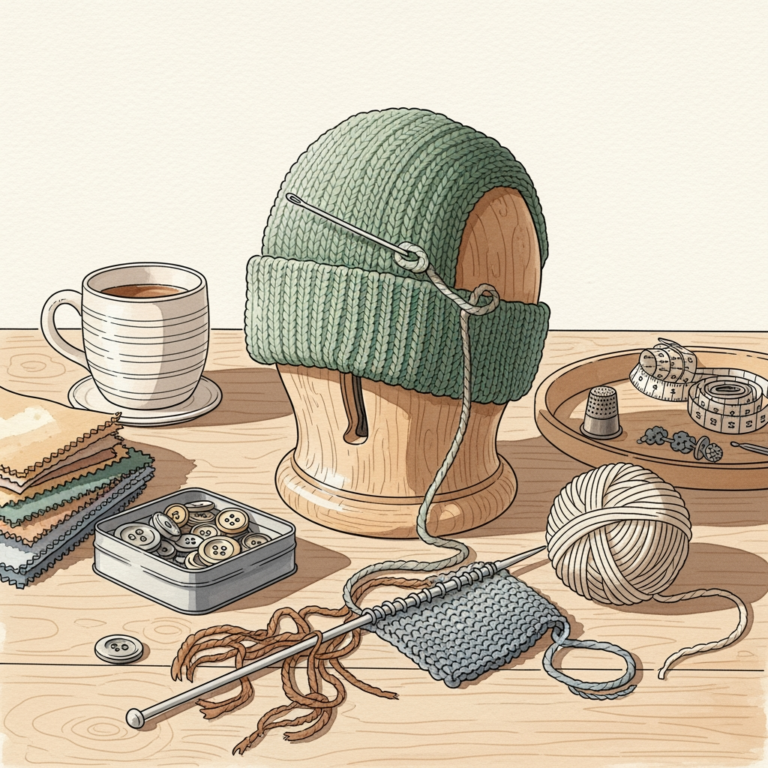
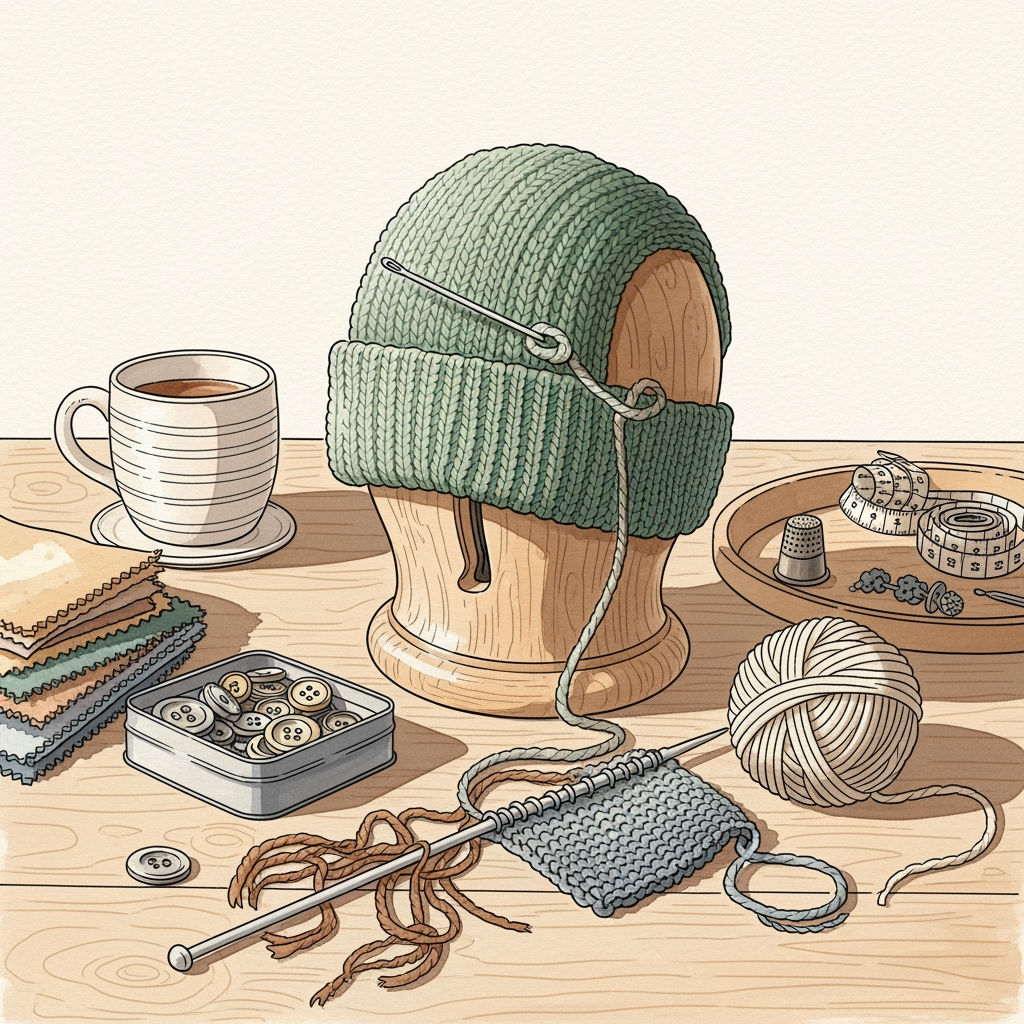
For those who view hat making as a serious craft, the wooden hat shaper is the gold standard. These tools are typically crafted from finished, non-porous wood, ensuring they will not warp or splinter when exposed to moisture.
The surface of a quality wooden shaper is sanded to a smooth finish, preventing friction that could damage delicate fibers. Unlike synthetic options, wood provides a stable, heavy base that will not tip over during the blocking process.
While the price point is significantly higher than foam or plastic, the investment is justified for those who knit hats regularly. They are durable enough to last a lifetime and add a touch of professional aesthetic to any workspace.
Molded Plastic Hat Dome: Best for Heavy Wet Blocking
Molded plastic domes are designed for the rigors of heavy wet blocking, where a hat is soaked, saturated, and then stretched firmly into place. These forms are completely impervious to water, meaning there is no risk of the form absorbing moisture or harboring mildew.
The smooth, rigid surface is ideal for hats that require intense structural manipulation, such as felted wool or hats knit with heavy-gauge yarn. Because they are often hollow, they allow for better airflow beneath the hat, which can speed up the drying process significantly.
The main tradeoff is the lack of head-like contours. These forms provide a perfect sphere, which is excellent for basic beanies but may not offer the necessary shape for hats with a distinct crown or brim structure.
Hat-a-Tat Adjustable Hat Stretcher: For All Sizes
An adjustable hat stretcher serves a dual purpose as both a drying form and a sizing tool. If a hat comes off the needles slightly too small, these mechanical devices allow the maker to apply controlled tension to reach the desired circumference.
The design relies on internal mechanisms that expand the wood or plastic segments outward. This is particularly useful for superwash wool, which can sometimes grow unexpectedly during the wash, or for correcting gauge inconsistencies.
Exercise caution when using these to aggressively stretch a hat. Too much tension can permanently damage the elastic properties of ribbing or distort the stitch pattern, so always aim for gentle, incremental adjustments over several hours.
The KnitPro Blocking Dome: Modern and Functional
The KnitPro blocking dome integrates modern engineering with the specific needs of the fiber arts community. These tools are often collapsible or modular, allowing for easy storage without sacrificing the stability needed for reliable blocking.
They are designed specifically for the varying tensions encountered in stranded colorwork or complex cable patterns. By providing a uniform, smooth surface, they ensure that the tension across the hat remains even as the item dries.
They represent a middle ground between the budget-friendly foam head and the professional wooden shaper. For the majority of projects, the functional design and consistent sizing make this a highly reliable choice for the dedicated maker.
How to Match a Hat Form to Your Fiber and Project
Choosing the right form depends entirely on the fiber content and the stitch architecture of the piece. Delicate fibers like alpaca or silk require soft, non-snagging surfaces, while hardy wools can handle the firmer pressure of a plastic or wooden form.
- Superwash Wool: Needs a form that holds it firmly, as these fibers often expand when wet.
- Alpaca and Mohair: Require a gentle, smooth form to avoid fiber breakage and halo distortion.
- Cabled or Lace Patterns: Benefit from a form that allows for pinning to properly set the stitch definition.
If the pattern involves complex stitch textures, prioritize a form that offers enough surface area for pinning. Without the ability to secure the points, the intricate details of the lace or cables will remain compressed during drying.
Measuring for a Perfect Fit: Sizing Your Hat Form
A common mistake is assuming that a “one size fits all” form will work for every project. Accurate measurements start with the intended wearer’s head circumference; a standard adult hat is typically blocked to 21–23 inches.
When sizing, always consider the amount of negative ease built into the pattern. If a hat is designed to fit snugly, the form should match the intended wearer’s head size exactly; if it is a loose, slouchy style, a slightly larger form can help achieve the desired aesthetic.
Always keep a flexible measuring tape in the workspace. Verify the circumference of the hat against the form before the blocking process begins, as adjustments are significantly harder once the yarn has dried in a set position.
Wet Blocking vs. Steaming: Which Method Is Best?
Wet blocking involves fully immersing the garment in water and a gentle wool wash, which allows the fibers to relax completely. This is the gold standard for shaping because it ensures that every stitch is saturated, providing the most dramatic change in drape and size.
Steaming is a faster, more targeted approach that uses heat to shape the fabric without full immersion. This method is preferred for delicate projects where full saturation might cause excessive growing, or for quick touch-ups on finished items.
The choice comes down to the desired result. If the hat needs structural correction, choose wet blocking; if the goal is simply to polish the final finish and open up the stitch texture, steaming is the more efficient path.
DIY Hat Blocking: Clever Household Alternatives
For those not ready to invest in dedicated tools, household items can serve as excellent makeshift forms. A clean, overturned mixing bowl is often the perfect diameter for a standard adult hat and offers a stable, non-porous surface.
Balloons are another popular alternative, as they can be inflated to the exact circumference of the wearer’s head. However, ensure that the balloon is high-quality and thick; cheap balloons can pop under the weight of wet wool, potentially ruining the project.
Remember that any DIY surface must be moisture-resistant. Always cover improvised forms with a clean, light-colored towel or a plastic bag to ensure the fiber does not pick up colors or textures from the underlying material during the drying process.
Selecting the appropriate hat form is the final, essential step in honoring the hours spent behind the needles. By balancing the needs of the fiber, the requirements of the stitch pattern, and the desired fit, any knitter can achieve a polished, professional look. Invest in the tool that aligns with your most frequent projects, and the results will speak for themselves in the longevity and drape of your handmade headwear.