6 Best Ball Winders For Tangle-Free Yarn Storage
Stop wrestling with messy skeins. Discover the 6 best ball winders for tangle-free yarn storage and keep your craft supplies organized. Read our expert guide now.
Tangled skeins are the nemesis of a productive knitting session, transforming an hour of blissful lace work into a frantic bout of detangling. Investing in a quality ball winder turns messy hanks into organized, center-pull cakes that sit steadily on a tabletop. Choosing the right tool depends on the volume of your stash, the weight of your yarn, and the frequency of your winding sessions. This guide explores the market’s top contenders to ensure the focus remains on the stitches, not the frustration.
Knit Picks Ball Winder: The Best Overall Choice
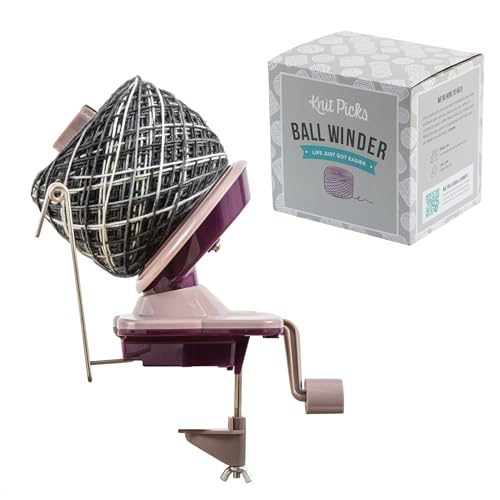

The Knit Picks ball winder is widely considered the industry standard for the casual-to-frequent hobbyist. It strikes a balance between portability, ease of assembly, and reliable mechanical function for standard worsted and fingering weight yarns.
This device excels because it is straightforward and dependable for everyday use. It utilizes a simple clamp system that secures firmly to most standard tabletops, providing the stability needed for a smooth wind.
While it handles most projects with grace, it is not designed for massive, multi-skein lace projects that exceed 100 grams. If the yarn is too thick or the cake grows too large, the gears can struggle, requiring a slower, more deliberate hand.
Stanwood 10-Ounce Winder: Best for Large Skeins

For those who purchase yarn in generous hanks or bulk bags, a standard winder often hits its limit before the yarn is fully wound. The Stanwood 10-ounce model is engineered to handle substantial yardage without requiring a mid-winding reset.
The large capacity makes it ideal for bulky wools or oversized skeins that would otherwise require multiple smaller cakes. Because it can manage more weight, it saves time and prevents the hassle of joining yarn mid-project.
Be aware that the sheer size of the cakes produced requires a sturdy surface. Ensure the table is stable, as the momentum of a large, dense cake can cause lighter folding tables to vibrate or shift during operation.
U-nitt Metal Winder: The Best Budget-Friendly Pick

Plastic gears are common in entry-level winders, but they can wear down or strip with heavy, long-term use. The U-nitt metal winder introduces durability at an accessible price point, making it a wise investment for someone just beginning their journey.
The metal construction provides a reassuring weight and longevity that plastic alternatives lack. It feels substantial in the hand and resists the common breakage points found in cheaper, all-plastic gear housings.
While the build is superior, it is important to remember that maintenance is still necessary. Occasionally check the tension wire and the gear alignment to ensure the mechanism remains fluid and does not catch during high-speed winding.
Nancy’s Knit Knacks: The Ultimate Heavy-Duty Winder
Nancy’s Knit Knacks is the professional choice for knitters who wind yarn daily or manage significant stash rotations. This equipment is built for speed, volume, and high-frequency use, standing up to the rigors of a busy studio environment.
These winders are robust, often featuring components that can be repaired or replaced rather than discarded. If the goal is a “buy-it-once” tool that will handle anything from cobweb-weight mohair to super-bulky roving, this is the gold standard.
The primary tradeoff is the footprint and the price, as this is a professional-grade machine meant for permanent desk space. It is an investment, but for those with large stashes and little patience for gear failure, the reliability is worth the premium.
Lacis In-Line Winder: Best Compact for Small Spaces

Small apartments or limited craft corners often make large, bulky equipment a storage nightmare. The Lacis In-Line winder features a space-saving design that tucks easily into a knitting bag or a small drawer.
Because the design is compact, it is exceptionally portable for taking to retreats or knitting guild meetings. It provides a quick way to wind a specific hank of yarn on the go without the need for a permanent, clamped-down station.
The tradeoff for portability is capacity and stability. It lacks the massive cake size of the larger Stanwood or Nancy’s models, and it requires careful placement to ensure it doesn’t tip over during the winding process.
Stanwood Wooden Winder: Best for Aesthetic Appeal
Some knitters prefer tools that serve as decorative pieces when not in use. The Stanwood wooden winder offers a sophisticated, classic look that stands apart from the typical utilitarian white-plastic aesthetic.
Beyond the visuals, the wood housing provides a different tactile experience and a sturdy feel that many find preferable to plastic. It is a high-performance tool that does not sacrifice function for its high-end appearance.
Keep in mind that wooden components require a bit more care regarding environment. Avoid storing this winder in damp basements or extreme temperature fluctuations, as natural materials can warp or shift over time.
How to Choose the Right Ball Winder for Your Stash
Selecting a winder starts with an honest assessment of your yarn habits. A person who primarily buys pre-wound balls rarely needs a heavy-duty model, whereas a knitter who buys large, artisanal hanks requires a high-capacity, durable machine.
Consider these factors when narrowing down the selection: * Total Yardage: Does the yarn usually come in 50g, 100g, or 500g skeins? * Yarn Weight: Are you winding lace, fingering, or super-bulky yarns? * Storage Space: Is the winder a permanent fixture or something that needs to be packed away? * Frequency: Will the winder be used weekly or once a year?
A metal-gear winder is generally the best long-term bet, regardless of the brand. It prevents the frustration of stripped plastic teeth, which is the most common reason for equipment failure.
Manual vs. Electric Winders: A Knitter’s Guide
Manual winders offer a tactile connection to the process, allowing for total control over the tension and speed of the cake. This is often safer for delicate, hand-spun, or fragile singles that could snap if fed into a machine too quickly.
Electric winders provide massive time savings for large stashes. They are the clear winner for those who need to wind many skeins in a single sitting, such as when prepping for a large sweater project.
The middle ground is a manual winder that is smooth enough to operate with little effort. A high-quality manual winder with good bearings often feels faster and more precise than a low-quality electric motor.
Pairing Your Winder with a Swift for Best Results
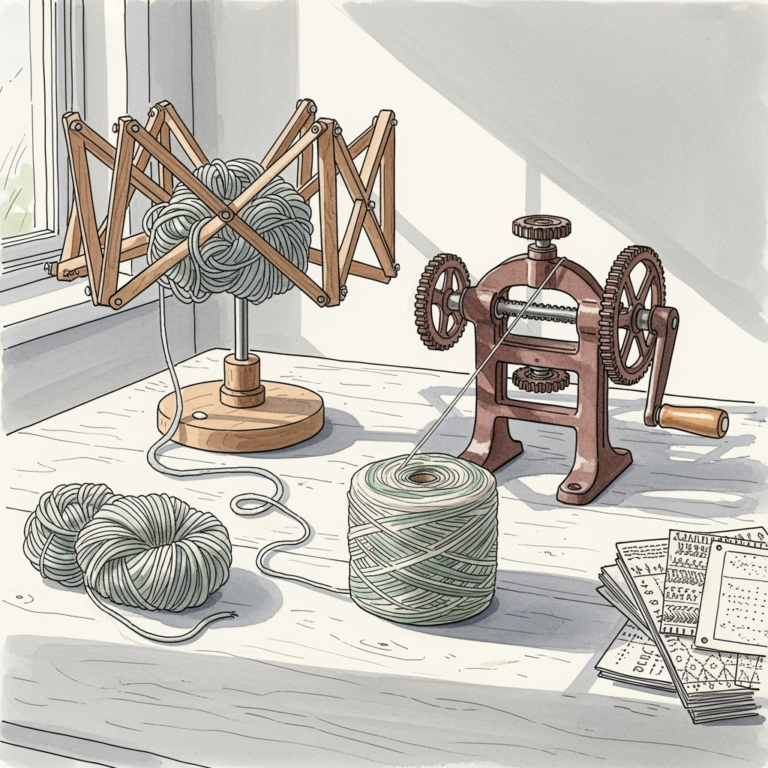
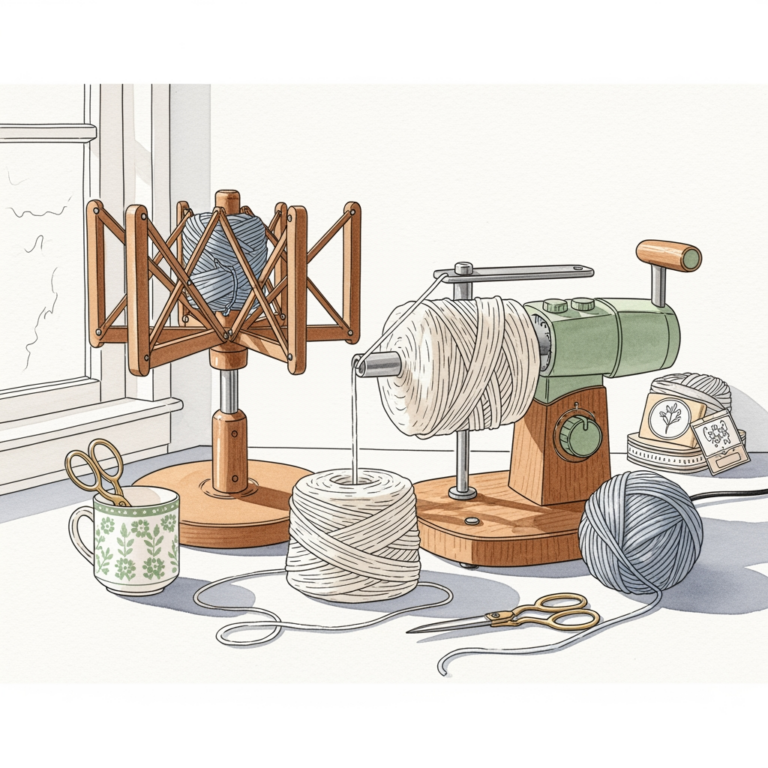
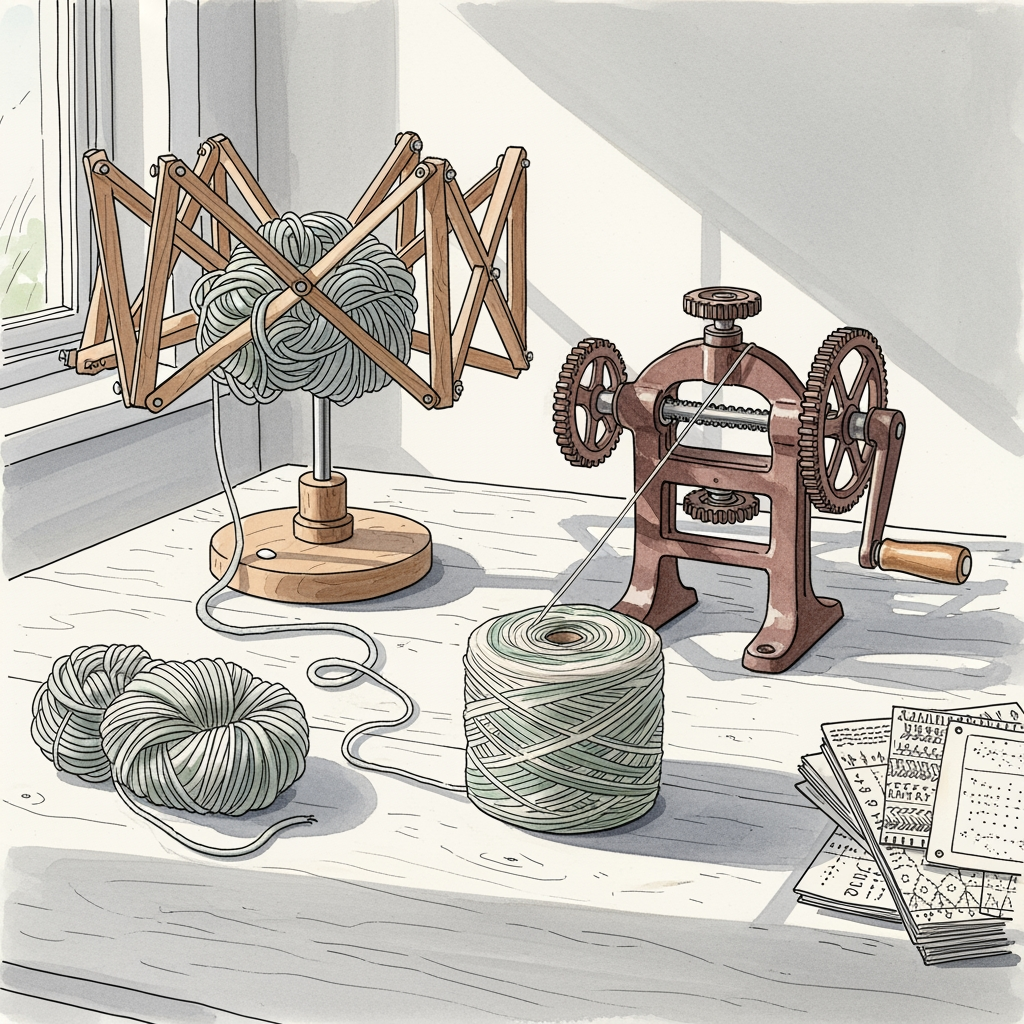
A ball winder is only half of the equation; a swift is the essential partner that prevents yarn from becoming a tangled mess. The swift holds the hank in a circular loop, allowing it to spin freely as the winder pulls the yarn.
Never attempt to wind from a loose hank placed over your chair or a friend’s hands. The lack of controlled tension will inevitably lead to snags, knots, and wasted time.
Wooden umbrella swifts are standard, but tabletop Amish-style swifts are excellent for those with limited space. Ensure the swift is positioned far enough away from the winder to allow for smooth feeding without sharp angles that increase friction.
How to Wind the Perfect Center-Pull Yarn Cake
To create a perfect cake, start by securing the yarn tail through the winder’s hook and onto the center post. Begin winding very slowly, ensuring the first few rotations are even and tight against the base of the winder.
Maintain consistent, light tension with your free hand as the yarn moves from the swift to the winder. If the yarn is too tight, it will stretch the fibers and lose its “bounce,” especially in elastic wools; if it is too loose, the cake will collapse.
When the winding is complete, tuck the inner tail into the center of the cake and the outer tail under a strand to keep it from unraveling. Always wait a few hours before using the yarn to allow the fibers to relax back to their natural state after the winding process.
Investing in a quality ball winder and swift combination is one of the most transformative changes a knitter can make. By removing the friction of the preparation process, you ensure that every yard of yarn is treated with care and remains ready for the needles. Happy knitting.