
6 Best Hobby Knives For Cleaning Glue Seams To Try
Struggling with messy plastic models? Discover the 6 best hobby knives for cleaning glue seams effectively and achieve professional, flawless results today.
When construction projects involve bonding fiber elements or stiffening intricate accessories, glue residue often becomes an unwanted byproduct. A clean seam is the difference between a professional-grade fiber art piece and one that looks haphazardly assembled. Utilizing a precision hobby knife allows for the surgical removal of dried adhesive without compromising the integrity of delicate yarn or fabric structures. Choosing the right tool ensures that the tactile finish of the work remains soft and consistent, free from brittle, unsightly glue spots.
X-Acto #1 Knife: The Classic Choice for Precision


The X-Acto #1 is the industry standard for a reason, offering a lightweight, pencil-like profile that mimics the ergonomics of a crochet hook. Its slim metal handle allows for the kind of fine motor control necessary when scraping dried adhesive off fine wool or synthetic blends.
Because the handle is slender, it minimizes fatigue during long sessions of cleaning seams on large projects like felted bags or structured hats. The collet mechanism provides a secure hold on blades, ensuring they do not slip while navigating tight corners or delicate fiber textures.
However, the simplicity of the design means the handle can become slippery if hands are prone to moisture or oils. For those who prioritize a lightweight tool over aggressive grip, this knife remains the top choice for detailed edge work.
Fiskars Heavy-Duty Craft Knife: Great Ergonomics

Fiskars integrates a soft-grip handle that significantly reduces the strain on the palm when cleaning extensive glue lines. For knitters working with dense materials like heavy canvas linings or thick, stiffened tapestry, this added comfort prevents hand cramping.
The blade change process on the Fiskars model is notably swift and requires no extra tools, which is helpful when switching between fine detail work and heavier scraping. The wider handle provides a stable fulcrum, allowing for more pressure to be applied without the knife rolling in the hand.
While the wider grip is excellent for comfort, it can sometimes obscure the view of the blade tip in very tight, recessed areas. It is the superior option for those who favor comfort during long, tedious cleaning sessions.
Olfa AK-4 Art Knife: Best for Intricate Details

The Olfa AK-4 features a unique cushion grip and a weighted balance that feels substantial in the hand. This balance helps in maintaining a steady, consistent pressure, which is vital when removing glue from fragile, airy fibers like mohair or lace-weight silk.
A standout feature is the anti-roll design, ensuring the knife does not slide off the workstation and accidentally nick the fabric. It also offers a wider variety of blade shapes, which is advantageous for tackling different types of adhesive residue, from stubborn cyanoacrylate to flexible fabric glues.
The tool is slightly heavier than its counterparts, which provides stability but may require a period of adjustment for those accustomed to ultra-light tools. It is an investment in precision for those who frequently work on high-stakes, detailed fiber projects.
Excel Blades K1 Knife: The Best Value Hobby Knife
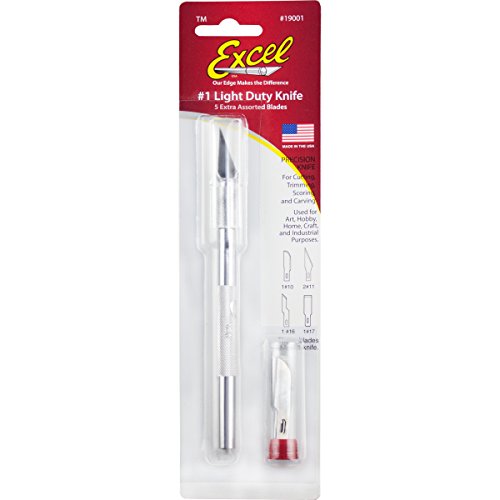
The Excel Blades K1 is remarkably similar to the classic X-Acto #1, providing a reliable and inexpensive entry point for those building a craft kit. It holds a blade with enough tension to handle the light scraping needed to clean up seams on cotton or acrylic yarn projects.
Its simplicity is its greatest strength, as there are fewer parts to fail or loosen over time. While it lacks the ergonomic bells and whistles of more expensive models, it provides the exact same functionality for basic residue removal.
If the goal is to keep costs low without sacrificing performance, the K1 is a utilitarian workhorse. Just be prepared to potentially wrap the handle in grip tape if long-term use leads to hand fatigue.
Cricut TrueControl Knife: For a Secure No-Roll Grip
The Cricut TrueControl Knife features a unique locking mechanism that secures the blade, preventing the “blade wiggle” that can plague cheaper alternatives. For someone meticulously cleaning a seam, this lack of movement provides immense confidence, ensuring every stroke is deliberate and safe.
The handle is designed with an anti-roll shape and a rubberized grip that feels secure even during intensive tasks. It also features a “snap-lock” blade changing system that keeps hands away from the sharp edge, a feature that prioritizes user safety above all else.
While it is priced at a premium compared to basic hobby knives, the added safety and stability are worth the cost for those dealing with expensive, delicate fibers. It is arguably the most user-friendly design for those who are nervous about working with razor-sharp tools.
Slice Precision Cutter: The Safest Ceramic Blade
The Slice Precision Cutter uses a finger-friendly ceramic blade that is significantly safer than traditional steel. Because ceramic blades are much harder than steel, they stay sharp longer and are far less likely to accidentally slice through the fibers beneath the glue.
This is an excellent choice for beginners or those working with extremely delicate, high-twist yarns where a single accidental snip could ruin the entire piece. The design is compact, acting more like a stylus than a traditional knife, which encourages a precise, light touch.
The trade-off is that ceramic blades are brittle and can chip if dropped on a hard surface. They are not intended for heavy-duty prying or aggressive scraping, making them best suited for light, surgical glue removal.
How to Choose the Right Blade for Your Project
Choosing the correct blade shape is just as important as selecting the handle. A classic #11 pointed blade is ideal for piercing and picking at small glue clumps, while a curved #10 blade is better for scraping flat surfaces without digging into the fabric.
- Pointed Blades: Best for digging glue out of small gaps or individual stitches.
- Curved/Chisel Blades: Best for leveling out flat glue seams on felt or heavy backing.
- Ceramic Blades: Best for low-risk, surface-level scraping where fiber damage must be avoided.
Always match the blade to the tenacity of the adhesive and the density of the fiber. If the fiber is soft and lofty, use the absolute lightest touch and a sharp, pointed blade to avoid pulling at the yarn strands.
Essential Safety Tips for Working With Craft Knives
Treat every hobby knife as a high-stakes tool by always cutting away from the body and ensuring the workspace is clutter-free. Never attempt to force a cut; if the glue is not coming off, it is better to soften it with a gentle heat source or a damp cloth rather than using excessive, dangerous force.
Always cap the knife when not in immediate use, even if stepping away for only a few seconds. If a blade slips, it is often due to a dull edge, so replace blades frequently rather than fighting with them.
Keep a dedicated waste container nearby for used blades so they do not end up loose in a work bag or trash bin. Prioritizing safety prevents both personal injury and accidental damage to the project itself.
Technique: How to Clean Glue Without Harming Fabric
When removing glue, treat the area as you would a delicate garment repair. Start by softening the dried glue with a bit of steam or a tiny amount of moisture if the fiber type allows, then use the blade at a low angle to gently lift the adhesive away from the fibers.
Avoid using a deep “digging” motion, as this risks severing the plies of the yarn. Instead, use a “shaving” motion, working slowly from the edges of the glue patch toward the center.
Check the piece frequently under good lighting to ensure no fibers are being accidentally trimmed. If a strand begins to fray, stop immediately and use a tapestry needle to push the fiber back into the structure before continuing.
Blade Care: Changing and Disposing of Used Blades
A dull blade is a dangerous blade, as it requires more pressure and is prone to slipping unexpectedly. Change your blade the moment you notice it dragging, catching on the fibers, or requiring more than a light touch to clear the adhesive.
To dispose of blades safely, use a dedicated sharps container or a sturdy metal tin clearly marked for recyclables. Never throw loose blades into a kitchen or general office trash can where they could cut someone or poke through a trash bag.
Keeping a small stock of replacement blades ensures that the project momentum is never interrupted. Regularly wipe down the handle with a cloth to remove any adhesive residue that could accumulate and make the tool slippery over time.
Selecting the right tool for cleaning glue seams transforms a tedious task into a controlled, restorative process for any finished project. By prioritizing safety and precision, the integrity of your hard-earned stitches remains perfectly intact.

