7 Best Knitting Machine Accessories For Beginners
Upgrade your crafting setup with our top 7 knitting machine accessories for beginners. Discover the essential tools you need to level up your projects today.
Knitting machines remove the manual labor of stitch formation, yet they require precise orchestration of yarn flow and tension to function correctly. While a machine can crank out a scarf in minutes, the difference between a professional-looking fabric and a tangled mess often comes down to the accessories employed. Beginners often assume the machine is a standalone tool, but the right supporting gear transforms the experience from frustrating to fluid. Investing in targeted upgrades early on prevents common mechanical pitfalls and helps build consistent, high-quality results.
Electronic Finger Row Counter: Hands-Free Tracking


Lost counts are the primary reason projects end up uneven or incorrectly sized. Manually pressing a clicker often disrupts the rhythm of cranking the machine handle, leading to skipped rows or missed pattern changes.
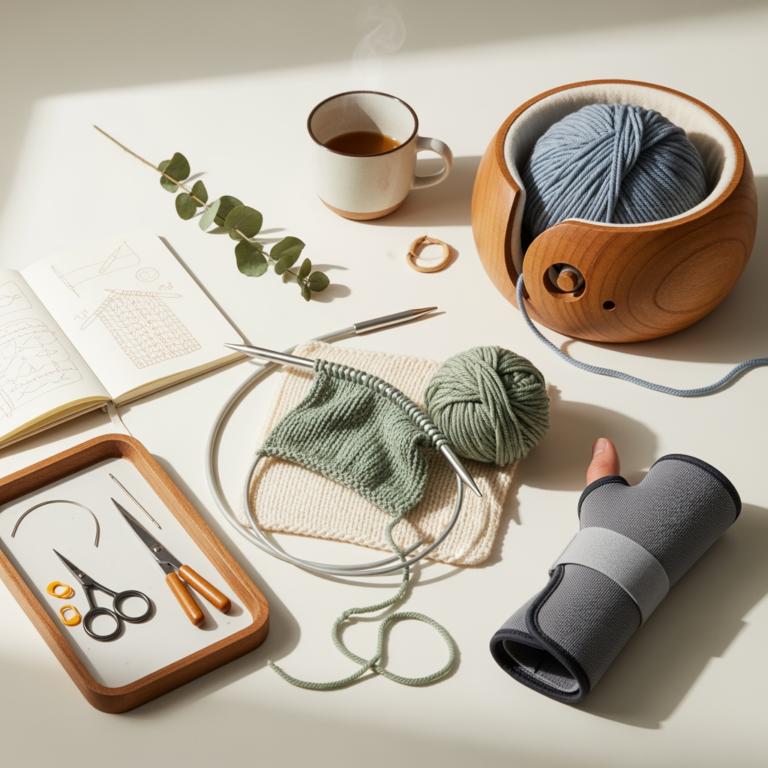
An electronic finger row counter rests securely on the hand, allowing for quick toggling without interrupting the momentum of the machine. This ensures that every rotation is captured accurately, which is vital when working on structured projects like sweaters or fitted hats.
For complex patterns that require increases or decreases at specific intervals, this device is indispensable. It removes the guesswork and allows the maker to focus entirely on maintaining steady tension and yarn placement.
Stanwood Yarn Winder: Make Perfect Center-Pull Cakes

Machine knitting relies heavily on smooth, consistent yarn feeding. If yarn is pulled directly from a store-bought skein, it will likely tangle, snag, or create uneven tension as the machine pulls it through the guide.
A ball winder transforms unruly skeins into compact, center-pull cakes that sit still on the table while the machine works. This eliminates the jerking motions that occur when a skein flops around, which is a common cause of dropped stitches.
When selecting a winder, prioritize one with a metal gear system for longevity. Plastic gears can strip under the resistance of thicker or slightly sticky yarns, leading to a subpar winding experience.
Addi Express Weighted Clips: For Even Fabric Tension

Consistent downward tension is the secret to a professional finish on any circular or flat knitting machine. Without proper weight, stitches will become loose, inconsistent, or fail to latch onto the needles entirely.
Weighted clips attach to the bottom of the knitting as it emerges from the machine, providing the necessary pull to seat each stitch firmly. This is particularly important when working with slippery fibers like cotton or bamboo, which tend to “float” off the needles if left unweighted.
These clips allow for localized weight distribution, which is superior to the bulky, one-size-fits-all weights often included with base machine models. By applying tension exactly where the fabric is forming, the risk of “tuck stitches”—where the needle fails to release the previous loop—is significantly reduced.
Susan Bates Latch Tool: The Ultimate Stitch Saver

Dropped stitches are an inevitable part of machine knitting, especially for those still mastering the speed and tension of the carriage. Recovering these loops without unraveling the entire project requires precision and the right tool.
A high-quality latch tool acts as an extension of the finger, allowing for the easy picking up of individual stitches. The latch mechanism is designed to capture the dropped yarn and pull it through the existing loop, securing the structure of the fabric without creating visible distortions.
Avoid generic, flimsy hooks that lack a smooth, reliable latch mechanism. A tool with an ergonomic handle ensures that even intricate repairs can be made comfortably, saving hours of corrective work after a mechanical mishap.
Addi Express Tension Unit: For Smoother Yarn Flow

Inconsistent tension is the leading cause of “laddering” or varying stitch sizes in machine-knitted fabrics. Many machines lack a sophisticated guide, forcing the operator to rely on manual yarn guiding, which is rarely perfectly uniform.
The tension unit regulates the flow of yarn by adding variable resistance, ensuring that the yarn enters the needle bed at the exact same density every time. This creates a balanced fabric that looks hand-knitted rather than haphazard.
Using a tension unit is particularly beneficial when switching between different yarn weights. It allows the knitter to dial in the perfect amount of drag, preventing the machine from over-feeding or snapping the yarn during high-speed cranking.
Yarn Valet Cone Holder: Tangle-Free Yarn Feeding

Feeding yarn directly from a ball on the table often introduces unnecessary drag or friction. A cone holder elevates the yarn source, allowing it to feed vertically into the machine’s tension system with minimal resistance.
This tool is essential for those who use yarn bowls or cakes, as it keeps the source stationary and centered. By smoothing the path from the cake to the machine, the likelihood of a sudden snag causing a dropped stitch is drastically minimized.
Look for a holder with a weighted base to ensure it doesn’t tip over as the machine pulls the yarn. Stability is key; a wobbling yarn source will introduce ripples in the finished fabric’s gauge.
Clover Chibi Bent Tip Needles: Weave Ends In Fast
Finishing is the most overlooked stage of machine knitting, yet it is where projects are secured or ruined. Weaving in ends with standard straight needles is cumbersome and can cause the yarn to split or the fabric to pucker.
The bent tip of these needles allows for easy maneuvering through stitches, sliding under the loops without piercing the yarn fiber. This preserves the integrity of the fabric and results in a clean, professional finish that is virtually invisible.
Keep a set of these needles near the machine at all times to handle tail-weaving immediately after casting off. The sooner the ends are secured, the less likely they are to snag or work themselves loose during future wear or washing.
Must-Have vs. Nice-to-Have Machine Accessories
Not every tool on the market is essential for every knitter. The “must-haves” focus on structural integrity and mechanical success, while “nice-to-haves” prioritize convenience or niche project requirements.
- Must-Have: Yarn winder, tension unit, and latch tool. These directly prevent mechanical errors and improve fabric quality.
- Nice-to-Have: Specialized row counters, decorative guide attachments, and luxury carry cases. These improve the user experience but are not strictly necessary for the machine to function.
Beginners should prioritize investing in the must-have list first to build a solid foundation. Once technical skills are consistent, consider adding convenience tools to streamline the workflow for specific, repetitive projects.
Which Yarn Types to Avoid on a Knitting Machine?
Machine knitting is far more selective about yarn than hand knitting. Certain fibers will cause constant jamming, needle breakage, or extreme wear on the machine’s plastic components.
- Avoid: Extremely fuzzy mohair, highly textured bouclé, or yarn with erratic thick-and-thin sections. These fibers snag on the delicate needle latches.
- Use: Smooth, evenly spun acrylic, wool, or cotton blends. These glide through the guides and knit off the needles without catching.
Always check the ply of the yarn; a consistent, smooth-plied yarn is the gold standard for machine knitting. If a yarn feels “sticky” or “hairy” to the touch, it is best reserved for hand knitting needles.
Solving Common Problems: Dropped Stitches & Tension
Dropped stitches are rarely the machine’s fault; they are usually a consequence of speed, tension, or yarn choice. When a stitch drops, stop immediately and use the latch tool to carefully re-knit the row up to the current level.
Tension issues often manifest as “laddering,” where the fabric looks loose and uneven. If this occurs, check the yarn path for snags, ensure the weighted clips are properly positioned, and consider slowing the cranking speed.
Remember that machine knitting is a mechanical process requiring patience. If a project consistently drops stitches, re-thread the machine entirely and check that the yarn is feeding freely. Small, incremental adjustments to tension and speed almost always solve the problem.
Mastering the machine is an iterative process of refining your mechanical setup and learning how different fibers behave under tension. With the right tools and a disciplined approach to yarn preparation, you will quickly find that the machine becomes an extension of your own creative process. Focus on consistency over speed, and the results will speak for themselves.