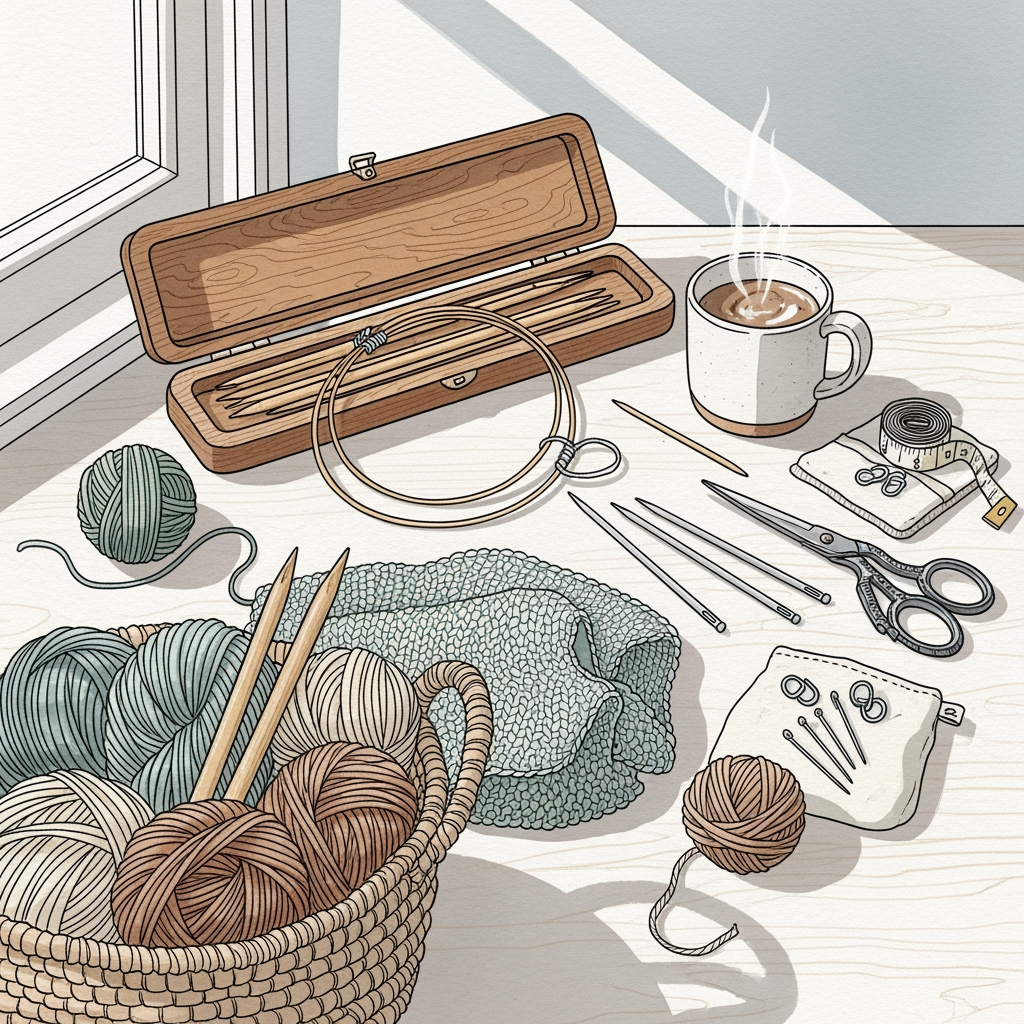
7 Best Wooden Knitting Needles For Beginner Learners
Discover the top 7 wooden knitting needles for beginners. Learn why these smooth, lightweight tools are essential for mastering your first stitches with ease.
Stepping into the world of knitting can feel overwhelming when you are staring at a wall of different needle materials and sizes. Many beginners make the mistake of choosing cheap, slick metal needles that cause their yarn to slide off constantly. Wooden needles provide the perfect amount of grip to help you control your stitches while you build muscle memory. These seven selections are chosen to help you find your rhythm and enjoy the process of creating your first handmade garments.

KnitPicks Caspian Birch: Best Overall Choice
These needles are a favorite because they strike an ideal balance between a polished surface and enough "tooth" to keep your yarn in check. The vibrant, laminated birch wood is incredibly strong, meaning you are unlikely to experience the snapping that can occur with thinner, cheaper wooden options.
For a beginner, the tapered point is the real highlight here. It is sharp enough to get into tight stitches for increases or decreases, but not so aggressive that it splits your yarn fibers. This makes them versatile enough to grow with you as you move from simple garter stitch scarves to more complex patterns.
Because they are laminated, they have a slightly smoother feel than raw bamboo, which helps with speed as you get more comfortable. If you find your yarn is slipping too much, these provide just enough friction to keep your tension consistent. They are a reliable, durable workhorse for any beginner’s kit.
Lykke Driftwood Needles: Best Smooth Finish
Lykke needles are crafted from strong birch and finished with a unique grey stain that feels almost like polished stone. They are significantly smoother than standard bamboo, making them an excellent transition tool if you eventually want to move toward metal needles.
The beauty of the Driftwood series lies in the consistent join between the needle and the cord. If you are using circular needles, you need a smooth transition so your yarn doesn’t snag; Lykke excels at this. A snagging join is the fastest way to lose your motivation when you are just learning the knit stitch.
These needles are warm to the touch, which helps prevent hand fatigue during long practice sessions. While they are smoother, they still offer more control than stainless steel. They are a premium investment that will likely remain in your knitting bag for years to come.
Clover Takumi Bamboo: Best for Beginners
Clover Takumi needles are the gold standard for many who are picking up their first pair of needles. They are lightweight, flexible, and possess a natural grip that is almost impossible to beat when you are struggling to keep your stitches from sliding off the ends.
The light color of the bamboo is a hidden benefit for beginners. It provides a high-contrast background against darker yarns, making it much easier to see exactly where your needle needs to go. When you are learning to read your stitches, visibility is just as important as the feel of the tool.
It is worth noting that bamboo can sometimes be a bit "grabby" with certain fibers, like cotton or sticky wool blends. If you feel like you are tugging too hard to move your stitches, try using a little bit of wax or simply focus on relaxing your grip. They are incredibly affordable, making them a low-risk way to start your journey.
Knitter’s Pride Ginger: Best Ergonomic Feel
Knitter’s Pride Ginger needles are designed with a unique, warm-toned wood that feels exceptionally comfortable in the hands. They are slightly heavier than bamboo, which some knitters find helps with the rhythmic "thrum" of knitting, providing better tactile feedback.

The tapered, smooth tips are engineered for efficiency, allowing you to move through your stitches with minimal effort. This ergonomic design is vital if you find that your hands cramp easily when you are learning to hold your yarn. Proper tension shouldn’t require a death grip, and these needles encourage a lighter touch.
These needles are finished with a water-based varnish that feels very natural. While they are a bit more expensive than standard options, the quality of the wood and the precision of the tip shaping make them a joy to use. They are a perfect choice if you want a tool that feels as good as it looks.
Addi Olive Wood Needles: Premium Quality

Addi is renowned for engineering, and their Olive Wood needles are a testament to that reputation. These needles are crafted from high-quality, sustainable olive wood, which has a distinct, dense grain that makes them very durable and resistant to warping.
The finish on these needles is achieved through natural oils rather than heavy varnishes. This gives them a unique, tactile feel that is neither too slick nor too grippy. It is a sophisticated experience that rewards a knitter who is starting to appreciate the nuances of different wood types.
Because the wood is so dense, the tips can be made quite sharp without being fragile. If you are interested in trying finer yarns, like a fingering-weight wool for socks, these needles offer the precision you need. They are an investment piece, but one that feels like a luxury in your hands.
Lantern Moon Ebony: Best Luxury Option
Lantern Moon needles are crafted from ebony, one of the densest and most luxurious woods available. The dark, polished surface is incredibly smooth, offering a knitting experience that feels almost like gliding through the stitches.
These are best suited for the beginner who wants to start with the best possible equipment. The liquid silk finish is achieved through extensive hand-polishing, which ensures there are no rough spots to catch your yarn. It is a high-end tool that makes the act of knitting feel like a meditative, premium experience.
While they are expensive, they are also exceptionally beautiful and durable. If you are the type of learner who values aesthetic quality and premium tools, these will provide a lifetime of use. Just be aware that because they are so smooth, they may require a bit more attention to tension than a grippier bamboo needle.
Brittany Birch Needles: Best Sustainable Pick

Brittany needles are made in the USA from sustainably harvested birch, and they have a classic, simple design that many knitters adore. They are not overly processed, meaning they retain a lovely, natural wood grain that provides excellent grip for beginners.
The simplicity of the design is their greatest strength. There are no fancy coatings or complex joins to worry about; they are just solid, reliable tools. For a beginner, this lack of distraction allows you to focus entirely on your technique and the formation of your stitches.
They are particularly good for working with slippery fibers like alpaca or silk, where you need a bit of extra friction to prevent dropped stitches. By choosing these, you are supporting sustainable manufacturing while getting a tool that is perfectly suited for learning. They prove that you don’t need bells and whistles to have a high-quality knitting experience.
Why Wood Needles Are Best for New Knitters
- Tactile Feedback: Wood provides a warmth and a slight "drag" that helps you feel the movement of the yarn, which is essential for developing muscle memory.
- Controlled Tension: The natural friction of wood prevents the "slinky effect" often seen with metal needles, where stitches slide off the tip unexpectedly.
- Hand Health: Wooden needles are lighter and warmer than metal, which can help alleviate the tension and cramping common in new knitters.
- Versatility: From wool to acrylic, wood handles almost any fiber type with ease, making it the most forgiving material for a learner.
Understanding Needle Sizing and Your Yarn
The size of your needle determines the size of your stitches and the overall drape of your project. Most yarn labels include a recommended needle size, which is a great starting point, but it is not a rigid rule. If your fabric feels too stiff, you might need to go up a size; if it feels like a loose, holey mesh, you might need to go down.
Beginners often struggle with "tight" knitting because they are nervous about dropping stitches. If you find yourself constantly fighting to get the needle into the loop, don’t be afraid to size up. A slightly larger needle can make the learning process much less physically demanding while you master the basic movements.
Essential Tips for Caring for Wooden Needles
- Avoid Moisture: Never soak your wooden needles, as they can warp or swell. If they get dirty, wipe them down with a slightly damp cloth and dry them immediately.
- Prevent Splintering: If a needle develops a rough spot, use a very fine-grit sandpaper or a brown paper bag to gently buff the area until smooth.
- Storage: Store your needles in a cool, dry place away from direct sunlight, which can dry out the wood and make it brittle over time.
- Conditioning: Occasionally, you can rub a tiny amount of beeswax or wood wax into the needles to keep them smooth and prevent them from drying out.
Choosing your first set of wooden needles is an exciting milestone that sets the tone for your entire knitting journey. Remember that your preference for "grip" versus "slip" may change as your skills evolve, so don’t be afraid to experiment with different brands as you grow. The best needle is the one that feels comfortable in your hands and makes you want to pick up your project every single day. Happy knitting, and enjoy the beautiful, rhythmic process of creating something with your own two hands.