
6 Best Edge Paints For Colorful Leather Trim Options
Discover the 6 best edge paints for vibrant leather trim projects. Enhance your custom crafts with our expert recommendations. Shop these top-rated picks today!
Leather trimming is the final, essential step in elevating a handmade accessory, much like blocking a lace shawl or choosing the perfect bind-off for a sweater. A clean, colorful edge provides a professional frame that protects raw leather fibers from fraying over time. Selecting the right paint is as critical as choosing the correct needle size for a specific yarn weight. These six options offer distinct finishes that cater to the diverse needs of leather crafters, from hobbyists to seasoned professionals.


Giardini Basic: The Professional’s Top Choice

Giardini is widely regarded as the industry standard, offering a level of adhesion and flexibility that is difficult to replicate with consumer-grade alternatives. Think of it like a high-twist merino yarn that holds its stitch definition perfectly even after years of wear.
This paint is highly pigmented, meaning it covers the fibrous edge of the leather in fewer coats. It maintains a rubbery texture once cured, which is essential for projects that will see frequent movement, such as a leather-handled knitting bag or a sturdy project tote.
Because it is designed for professional use, it requires a steady hand and a bit of patience during the drying phase. It is not the fastest option, but for longevity, there is no substitute.
Fenice Edge Paint: For a Luxury Gloss Finish

Fenice provides a refined, sleek aesthetic that mirrors the polished look of high-end boutique accessories. It mimics the sensation of knitting with slick nickel-plated needles; the surface is smooth, non-tacky, and incredibly consistent.
The glossy finish is particularly effective for formal leather goods where a matte, textured edge might look out of place. It layers well, allowing for a build-up that results in a perfectly rounded, “domed” edge that feels soft to the touch.
While the finish is beautiful, it is less forgiving than matte paints if the leather surface is not prepped perfectly. Like working with a delicate silk-mohair blend, the final result depends entirely on the preparation of the underlying base.
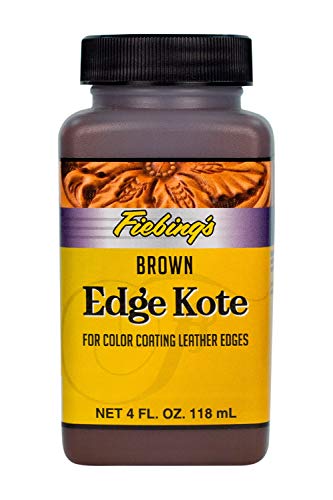
Fiebing’s Edge Kote: Best for Easy Application
Fiebing’s is the reliable, entry-level workhorse for crafters who need a straightforward solution without a steep learning curve. It is much like a standard acrylic yarn—widely available, easy to handle, and predictable in its performance.
The formula is thinner than professional-grade paints, making it exceptionally easy to apply with a simple wool dauber or a specialized edge pen. It dries quickly to a semi-gloss finish, which is perfect for small hobby projects that do not require industrial-grade durability.
While it lacks the extreme flexibility of more expensive brands, it is the ideal choice for those who are just beginning their leatherworking journey. It takes the stress out of the finishing process so focus can remain on construction.
Angelus Paint: Unmatched Color Customization
Angelus is famous for its vibrant color palette, offering a spectrum of hues that allows for endless creative expression. If the goal is to match a hand-dyed yarn color exactly to a leather trim, this is the brand that will make it happen.
Because these paints are highly mixable, it is easy to create custom shades to complement a specific leather or thread color. The paint is highly opaque, providing excellent coverage even on dark or oily leathers.
However, keep in mind that this is primarily an acrylic-based leather paint, so it can become stiff over time. It works best on rigid leather items rather than soft, collapsible goods that need to fold and bend repeatedly.
Tandy Eco-Flo: The Best Water-Based Option
Tandy Eco-Flo is the go-to for crafters who prefer working with environmentally friendly, low-VOC materials. It behaves similarly to plant-based fibers like linen or cotton; it is natural, functional, and lacks the harsh chemical odor of solvent-based finishes.
Being water-based, cleanup is effortless, requiring only soap and water rather than specialized solvents. It provides a decent finish that holds up well for items like belts, cuffs, or wallet edges that don’t face constant, heavy-duty abuse.
It may require more coats to achieve a truly smooth surface compared to professional synthetic paints. It is a fantastic choice for those who work in home-based studios and value air quality and ease of maintenance.
Uniters Edge Paint: Durability for Heavy Use
Uniters is engineered for items that undergo significant stress, such as heavy-duty straps or travel gear. This paint is incredibly durable, maintaining its bond with the leather even under constant friction or fluctuating temperatures.
The texture is dense and smooth, allowing for a professional-grade finish that resists cracking and peeling better than almost any other option. It is the tactical equivalent of a durable, high-twist wool sock yarn—built to withstand the rigors of daily use without losing its integrity.
The trade-off for this durability is a slightly more viscous consistency, which can be tricky for beginners to apply evenly. Practice on scrap leather is highly recommended to master the application speed required for a perfect result.
Choosing the Right Edge Paint for Your Leather
Selecting the correct paint involves balancing the desired aesthetic with the physical demands of the project. A stiffer paint may provide a cleaner look on a belt, but it will crack on a leather project bag that folds and twists.
- For soft goods: Always prioritize flexible, rubberized paints like Giardini.
- For rigid goods: You have more freedom to use stiffer, high-gloss acrylics.
- For color matching: Stick to brands with mixable palettes like Angelus.
Consider the environment as well. If the leather piece is intended for outdoor use or travel, prioritize durability over the initial aesthetic appeal of the finish.
Essential Tools for a Clean Edge Paint Finish
A quality finish is rarely achieved with paint alone; the tools used for application are just as important as the paint itself. Just as you wouldn’t use 2.25mm needles for a super bulky yarn, you must match your applicator to the leather thickness.
- Edge Creasers/Burnishers: Necessary for compressing the edge before applying paint.
- Edge Rollers: Used to lay down a smooth, even bead of paint in a single pass.
- High-grit Sandpaper (400-1000): Crucial for sanding between coats to ensure the finish is glass-smooth.
Investing in a few dedicated tools will significantly reduce the time spent fixing uneven layers or drips. A steady hand is helpful, but the right tool does the heavy lifting.
How to Prep Leather Edges Before You Paint
Proper edge preparation is the “blocking” of the leatherworking process. If the edge is fuzzy or uneven, no amount of paint will hide it; the paint will simply cling to the loose fibers and look messy.
Start by trimming the edge flush so the layers of leather are aligned. Then, sand the edge thoroughly with medium-grit sandpaper to remove any loose fibers or unevenness.
Finally, apply an edge slicker or a burnishing agent to compress the fibers tightly. A well-burnished edge creates a sealed, smooth base that allows the paint to sit on top rather than soaking in unevenly.
Edge Paint FAQ: Fixing Common Application Issues
Drips and uneven layers are common frustrations, but they are easily resolved with patience and proper technique. If a bead of paint develops a drip, do not try to wipe it off while wet; let it dry, sand it smooth, and reapply a thinner layer.
Peeling or cracking is almost always a sign of poor adhesion caused by surface oils or insufficient sanding. Always clean the leather edge with a degreaser before starting, and ensure the surface is completely dry before applying the first coat.
Lastly, do not rush the drying time between layers. If the paint is tacky when the next layer is applied, the finish will be prone to bubbling and streaks. Patience during this stage is the difference between a amateur-looking project and a true heirloom-quality piece.
With the right paint and a methodical approach to preparation, leather trimming becomes a satisfying, meditative conclusion to your project. Take your time, test your materials on scrap, and enjoy the process of perfecting those final details.