7 Best Decorative Clasps For Non-Stretch Accents To Try
Elevate your next project with these 7 best decorative clasps for non-stretch accents. Discover the perfect hardware to secure and style your designs today.
Choosing the right closure for a hand-knitted garment is just as critical as selecting the perfect yarn weight or needle size. A well-chosen clasp transforms a simple shawl or cardigan from a homemade item into a finished, professional-looking piece. Because non-stretch accents do not share the elasticity of the surrounding stitches, the placement and hardware choice must account for tension and weight distribution. Making the wrong selection can lead to sagging fabric, dropped stitches, or premature wear on delicate fibers.
Jul Designs Leather Toggle: Best for Modern Knits


Leather toggles offer a refined, architectural finish that pairs exceptionally well with bulky-weight wools and dense, structured stitch patterns. These closures are typically designed to be sewn onto the garment, providing a sturdy anchor point that doesn’t rely on the fabric’s own elasticity to stay closed.
Because they are pre-punched for stitching, they simplify the application process for knitters who may feel intimidated by hardware. These toggles excel in cold-weather accessories like oversized cowls or heavy, cabled cardigans where a traditional buttonhole might stretch out or lose its shape over time.
Be aware that leather requires specific care during the laundry process. Always check if the toggle is removable, or be prepared to hand-wash the garment separately to prevent the leather from hardening or bleeding dye into the fibers.
Celtic Pewter Cloak Clasp: Best Ornate Statement

Pewter clasps bring a historical, heirloom quality to a project, making them the ideal choice for heavy-weight triangular shawls or circular vests. These pieces often feature intricate metalwork that serves as the centerpiece of an outfit rather than just a functional fastener.
Since these clasps can be quite heavy, it is vital to pair them with yarns that have high structural integrity, such as wools with a tight ply or a blend containing nylon. Avoid using these on flimsy lace or single-ply yarns, as the weight of the metal will cause the fabric to pull and distort under the clasp’s pressure.
When installing, consider adding a small decorative backing on the inside of the garment to distribute the weight. This simple step prevents the metal from wearing holes through the delicate knit structure.
Dritz Frog Closure: Most Widely Available Option
Frog closures are the quintessential choice for light-to-medium weight garments, especially those featuring delicate lace work or fine gauge stockinette. These fabric-based fasteners are lightweight, flexible, and mimic the movement of the garment itself, which prevents the “stiff patch” look common with metal hardware.
These closures are incredibly easy to find and offer a wide range of colors to match or contrast with your yarn. They are the most forgiving option for a beginner, as they do not require precise alignment of heavy metal components.
While they are excellent for day-to-day wear, remember that their lifespan is shorter than that of metal or leather alternatives. Over time, the fabric braiding may pill or fray, so select a high-quality braided cord if you intend for the garment to be a long-term wardrobe staple.
TierraCast Toggle Clasp: Best for Delicate Shawls
TierraCast toggles are the gold standard for finer gauge projects, such as fingering or lace-weight silk blends. Their low profile ensures they do not distract from the drape of the garment while providing a secure closure for light accessories.
These clasps come in a variety of non-tarnish finishes, which is a major advantage for knitters working with light-colored, natural fibers. Since they are smaller and lighter than traditional toggles, they will not weigh down a delicate lace edge.
Always evaluate the toggle bar length in relation to the loop size. A good rule of thumb is that the bar should be at least double the width of the loop opening to ensure the clasp does not accidentally slip open during movement.
Sew-On Magnetic Clasp: Best for a Minimalist Look
If the goal is an invisible closure that preserves the clean lines of a garment, hidden magnetic clasps are the solution. These are typically sewn between two layers of fabric or hidden behind a facing, leaving the exterior of the knit completely uninterrupted.
They are perfect for modern, minimalist silhouettes where buttons or toggles would clutter the aesthetic. The snap-like feel of a quality magnetic closure provides a satisfying tactile experience every time the garment is put on.
The main trade-off is the strength of the magnet versus the thickness of the fabric. Test the magnet through the intended layers of your project before sewing; if the fabric is too thick, the magnets will not connect securely, leading to frustration during wear.
Carved Horn Toggle: Best for Rustic & Boho Styles
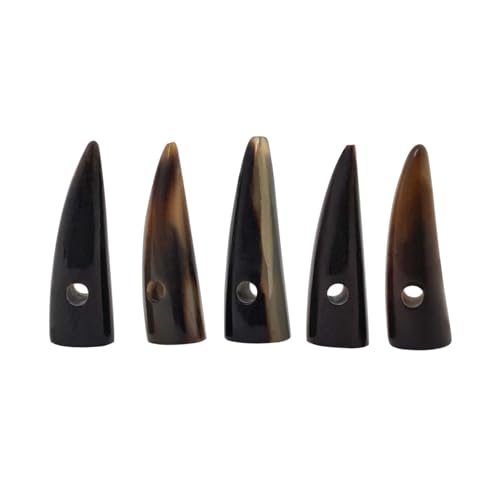
Carved horn toggles introduce an organic, tactile element that complements rustic, earthy yarn choices like wool-alpaca blends or wool-linen mixtures. These pieces often have unique variations in color and texture, adding a one-of-a-kind feel to handmade sweaters.
These toggles are naturally durable and lightweight, making them easier to manage on heavier garments than solid metal alternatives. They suit high-neck cardigans or wrap sweaters perfectly, as they withstand the daily tugging involved in fastening.
As with any natural material, expect some variability in size and shape. Plan your buttonhole or loop spacing based on the actual toggle you have in hand, rather than relying on a generic pattern measurement.
Filigree Clasp: Best for Elegant & Heirloom Pieces
Filigree clasps offer a vintage, sophisticated finish that elevates lace shawls, evening wraps, or boleros. Their delicate, openwork appearance complements the intricacies of hand-knitted lace, creating a harmonious balance between the metal and the fiber.
These pieces often function as both a clasp and a brooch, providing versatility for how you style your garment. However, because they are delicate, they are best suited for garments that see occasional, dressier use rather than daily wear.
Ensure you choose a metal finish that won’t react with the chemicals in your wool-wash detergent. Stainless steel or high-quality plated brass are generally safer bets for long-term storage and maintenance of your heirloom pieces.
How to Securely Attach a Clasp to Your Garment
Securing a clasp requires more than just a few loops of thread; it demands a technique that mimics the strength of the knit itself. Always use a strong, non-stretching thread that matches the color of the yarn, such as a sturdy cotton or a bonded nylon.
Start by creating an anchor point that spans several stitches rather than catching just one or two. This prevents the weight of the clasp from tearing a single loop of yarn. Use a whip stitch to secure the base, moving through the fabric from the inside out to ensure the thread remains hidden.
Consider adding a small square of interfacing or ribbon behind the spot where you attach the clasp. This creates a hidden, reinforced “bridge” that supports the weight and prevents the garment from stretching out of shape at the stress point.
Reinforcing Fabric for a Heavy Clasp: Pro Tips
Heavier clasps, such as large pewter or solid metal toggles, can quickly pull a hole in a knitted garment if not properly supported. Before attaching the hardware, evaluate the density of your stitch.
If the area is loose or lacy, crochet a small reinforcement patch using the same yarn or a matching thinner strand to double the fabric density. You can also sew a small button to the inside of the garment, aligned with the clasp on the outside, to act as a backing plate.
This distributes the tension across a wider area of the knit. By sandwiching the fabric between the exterior clasp and the interior button, you eliminate the risk of the hardware “poking through” the soft knit over time.
Choosing Clasp Weight: Matching Metal to Fabric
Matching the weight of your hardware to the weight of your yarn is the most overlooked step in the finishing process. As a general rule, the more drape your yarn has, the lighter your clasp needs to be.
Use this simple hierarchy to guide your decision: * Lace/Fingering Weight: Use delicate TierraCast or lightweight sew-on snaps. * DK/Worsted Weight: Opt for moderate-weight frog closures or filigree clasps. * Bulky/Chunky Weight: Utilize sturdy leather toggles or large-scale carved horn options.
Avoid the temptation to use a heavy, ornate clasp on a light-weight garment just because it looks beautiful in the package. If the metal pulls the fabric downward more than the yarn can support, the clasp will ultimately ruin the shape and fit of the garment.
Mastering the balance between aesthetics and structural reality is what separates a novice project from an expert one. By carefully considering the weight, material, and attachment method of your chosen clasp, you ensure that your hard work stays secure and beautiful for years to come.