6 Best Fiber Storage Racks For Inventory Display
Organize your workspace efficiently with our top 6 picks for fiber storage racks. Compare the best inventory display solutions and upgrade your shop setup today.
A sprawling yarn stash is the hallmark of a dedicated maker, but finding a balance between accessibility and preservation is a constant challenge. When fiber begins to overtake living spaces, the search for structured storage shifts from a luxury to a necessity. Proper organization not only protects delicate natural fibers from environmental damage but also ensures that inspiration remains within reach for the next project. These storage solutions provide the necessary framework to transition a collection from a chaotic pile into a functional, beautiful inventory.
IKEA KALLAX Shelf Unit: The Ultimate Modular System


The KALLAX series remains the gold standard for fiber organization due to its uniform, square cubbies. Each cube is perfectly sized to hold several sweater-quantity bags, making it easy to group yarn by project or fiber type.
Its popularity in the knitting community stems from the ability to keep yarn contained yet visible. By utilizing bins or open shelving, inventory can be sorted without the frustration of tangled skeins or hidden gems buried at the bottom of a bin.
The primary tradeoff is depth; if the unit is placed against a wall, yarn pushed to the back can be forgotten. Consider adding fabric inserts or lightweight baskets to pull out full project quantities at once, rather than digging through individual balls.
Amazon Basics 4-Shelf Unit: Best for Bulk Storage

For those managing substantial stockpiles or spinning fiber collections, heavy-duty wire shelving is the most efficient choice. These units offer high weight capacities, ensuring that dense wools and bulkier yarns do not cause shelves to sag over time.
Open wire construction provides excellent airflow, which is critical for preventing moisture buildup in natural fibers like wool or alpaca. If stored in a basement or a cooler room, this circulation helps maintain the integrity of the fibers against mold or mildew.
Because the shelving is open, it offers zero protection against dust or sunlight. Always cover the top of the yarn piles with acid-free tissue paper or a light cloth to prevent fading and fiber degradation from ambient light.
IKEA SKÅDIS Pegboard: Top Pick for Wall Display

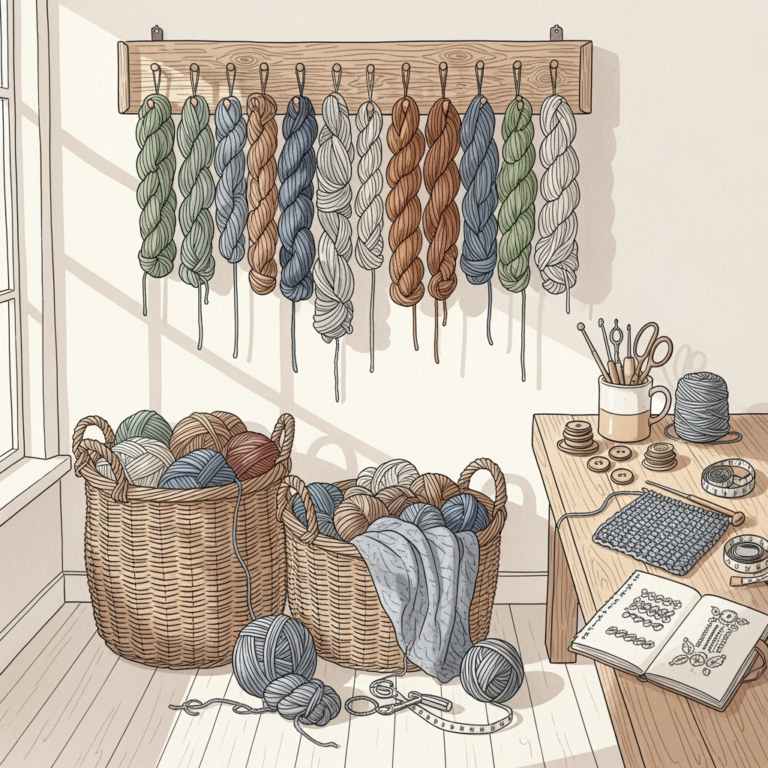
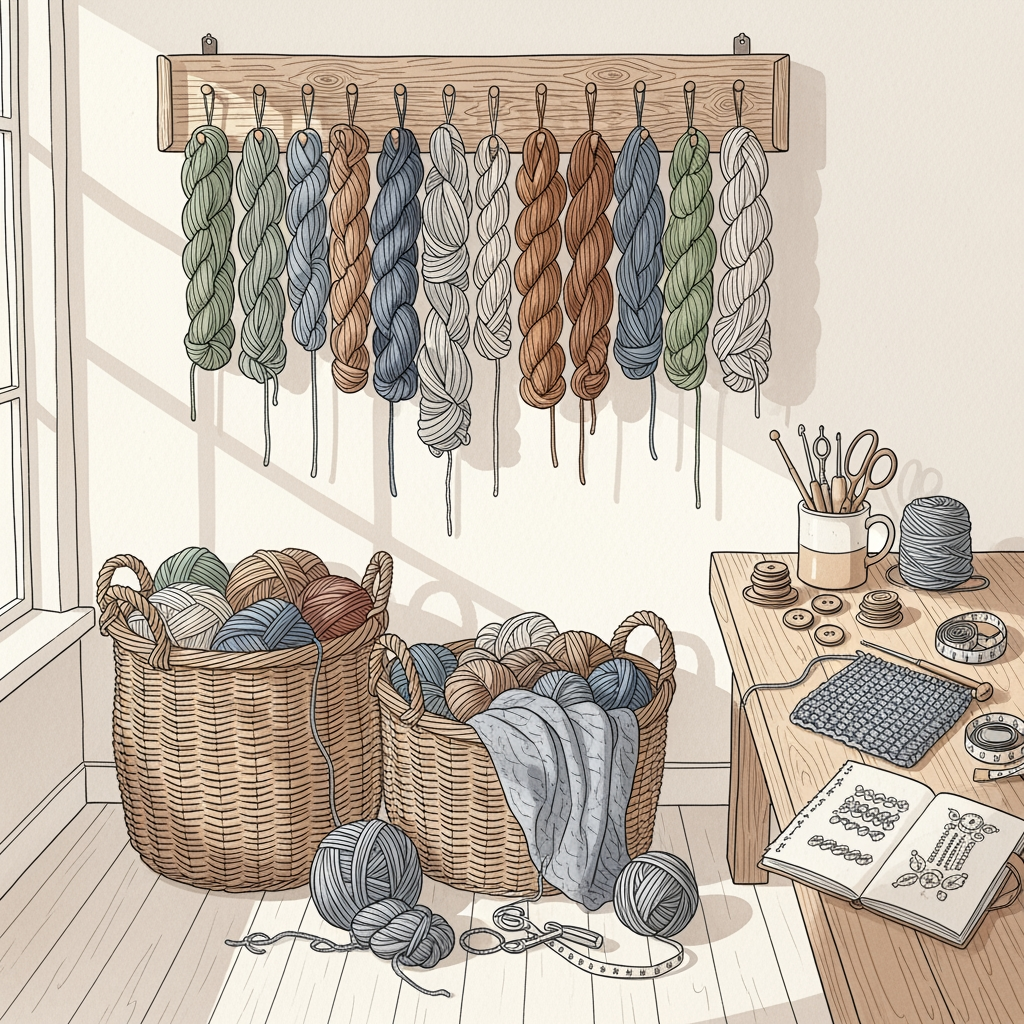
The SKÅDIS pegboard is an ingenious way to showcase precious hand-dyed skeins while keeping workspace surfaces clear. By utilizing hooks and elastic cords, individual hanks can be hung to prevent the compression that often occurs in stacked bins.
Visual display helps keep the stash curated and prevents accidental over-purchasing. When every skein is visible, it is far easier to identify gaps in color palettes or weight, such as realizing a lack of fingering weight yarn for a lace-patterned shawl.
Be mindful that hanging yarn long-term can occasionally cause the fiber to stretch slightly under its own weight. Reserve this method for active project yarn or special skeins that will be used soon, rather than long-term archival storage.
Yamazaki Home Rolling Cart: Sleek and Mobile Choice
A rolling cart provides the ultimate flexibility for makers who move between different rooms to knit. It is ideal for storing current works-in-progress, circular needles, and a few essential notions, keeping them mobile during long knitting sessions.
The tiered design allows for vertical sorting without claiming a large footprint in the room. Smaller baskets can be added to the shelves to keep tiny items like stitch markers, cable needles, or tape measures from migrating to the floor.
While the mobility is a significant advantage, these units are typically smaller and intended for active stash rotation rather than total inventory storage. Use the cart as a “ready-to-go” station for current projects, rather than a home for a permanent collection.
The Container Store 4-Tier Shelf: For Pro Studios
For the serious enthusiast or professional crafter, high-quality tiered shelving offers a polished, furniture-grade solution. These units provide stability and aesthetic appeal, elevating the stash from a storage issue to a design element in the home.
The refined materials, such as finished wood or sturdy steel, are often more durable than basic plastic or wire options. They provide a secure environment where weight distribution is even, reducing the risk of fiber crushing or tangled ends.
The main consideration here is the investment cost. These units are better suited for those who are committed to a specific organizational workflow and want a permanent home for their materials that complements their interior décor.
Wayfair Basics Bookcase: A Budget-Friendly Classic
A standard bookcase is a versatile, low-cost option for storing yarn in various formats, from boxed kits to loose skeins. The adjustable shelf heights allow for customization, accommodating everything from small balls of embroidery floss to large, fluffy skeins of bulky wool.
When selecting a bookcase, opt for solid backing or ensure it sits flush against the wall to prevent dust from accumulating behind the yarn. If the shelves are deep, use the “front-loading” method to ensure that older inventory stays at the front for use before newer acquisitions.
Be aware that mass-produced particle board can be prone to bowing if overloaded with heavy wool. Place heavier, denser yarns on the bottom shelves and reserve the lighter, more delicate fibers or notions for the top, ensuring stability and safety.
How to Choose a Rack for Your Fiber Stash Size
- Small Stash: Focus on visibility and accessibility; a small shelf or wall display prevents “hidden” yarn.
- Medium Stash: Utilize modular systems like cubbies, which allow for growth and categorized groupings.
- Large Stash: Prioritize heavy-duty, open shelving that supports high weight loads and provides air circulation.
- Dynamic Stash: If your projects change frequently, consider mobile storage carts to keep materials near your knitting chair.
Protecting Your Yarn From Pests, Dust, and Sun
Natural fibers, especially wool, are vulnerable to moths and carpet beetles if not properly maintained. Store yarn in tightly sealed containers or vacuum-sealed bags if it will remain untouched for more than a few months.
Sunlight is another silent threat, as UV rays can fade beautiful hand-dyed colorways in as little as a few weeks. Always position storage racks away from direct windows or use UV-blocking shades to protect the vibrancy of the dye.
If using open shelving, consider keeping the yarn in breathable cotton or mesh bags. These allow the fiber to breathe while creating a physical barrier against dust, which can eventually work its way into the twist of the yarn.
Organizing Your Stash: By Color, Weight, or Fiber?
Sorting by weight is the most practical approach for anyone who frequently starts new projects. Knowing exactly where the fingering weight resides compared to the worsted or chunky allows for rapid planning when a new pattern catches the eye.
Sorting by fiber type is essential for those with specific material needs, such as separating superwash wools from delicate plant fibers like linen or cotton. This prevents accidental mixing during a high-heat wash or a quick-gauge check.
Sorting by color is a purely aesthetic choice that makes for a stunning visual display. While it doesn’t offer the same practical utility as weight or fiber sorting, it can be a massive source of inspiration and creativity for the knitter.
Wall-Mounted vs. Freestanding: Which is for You?
Wall-mounted storage is the superior choice for rooms with limited floor space or for those who want to keep yarn out of the reach of pets and young children. By moving storage upward, the floor remains clear for feet and project bags.
Freestanding units, however, offer the benefit of being reconfigurable. As a collection grows or as the room layout changes, freestanding shelves can be shifted or rearranged to suit the needs of the workspace.
Consider the structural integrity of your walls versus the stability of your floor space before committing. If you choose a wall-mounted option, ensure you are anchoring it into studs, as a heavy collection of wool can be deceptively dense.
Creating a dedicated space for your yarn collection turns the act of knitting into a more intentional and enjoyable process. By selecting the right storage for your specific stash, you preserve your materials and keep your creative flow uninterrupted. Choose the system that fits your current needs, but always keep an eye toward how your fiber collection might evolve in the seasons to come.