7 Best Textile Adhesives For Non Iron Patches To Try
Discover the 7 best textile adhesives for non-iron patches. Learn how to secure your designs permanently with our expert guide. Read the full review here now.
Adding a decorative patch to a finished knit garment can instantly modernize a worn-out sweater or conceal a stubborn snag. However, the unique, porous nature of yarn fibers requires specialized adhesives that won’t stiffen the fabric or compromise the drape of your hard-earned stitches. Selecting the right product depends entirely on the fiber content, weight, and intended use of the item. This guide explores the most reliable textile adhesives, ensuring your patches remain secure without damaging delicate wool, cotton, or synthetic blends.
Beacon Fabri-Tac: Best All-Purpose Adhesive


Beacon Fabri-Tac is a staple in many sewing kits because it behaves much like a hot glue gun without the heat. Its primary advantage is that it does not soak into the fibers excessively, preventing the tell-tale “hard spot” that often ruins the feel of a soft alpaca or merino garment.
This adhesive excels when applying patches to accessories like tote bags or heavy-duty wool felt hats. Because it dries relatively quickly, it allows for immediate handling, which is helpful if you are working on a piece that requires precision placement on a curved surface.
Keep in mind that it remains somewhat flexible, but it is not intended for high-stretch areas. If you apply it to a garment with significant ease or negative ease, ensure the patch is small enough that it doesn’t pull against the glue bond during movement.
Aleene’s Fabric Fusion: Top Choice for Washables

When the goal is durability through multiple laundry cycles, Aleene’s Fabric Fusion is the superior choice. Unlike thinner glues, this formula is designed to withstand the agitation of a washing machine, making it ideal for patches on frequently worn garments like denim jackets or sturdy cotton cardigans.
The consistency is thick and creamy, which is helpful for preventing “bleed-through” on thinner, loosely knit items. Because the glue remains permanently flexible after curing, it moves with the fabric rather than cracking or flaking away when the yarn stretches.
For best results, apply a thin, even layer rather than a thick glob. Over-application can lead to a stiff, unsightly residue on the reverse side of your knitting, so use a toothpick or a small detail brush to control the flow precisely.
E6000 Fabri-Fuse: Strongest Flexible Bond

E6000 Fabri-Fuse is formulated specifically for the rigors of fabric-to-fabric bonding where a permanent, industrial-strength hold is required. It is an excellent choice for attaching patches made of heavier materials, such as leather or canvas, onto a knit foundation.
The standout feature here is its high level of elasticity. If you are attaching a patch to a sleeve or a shoulder area—points of high friction and motion—this adhesive will resist the tension better than most standard craft glues.
Be aware that it has a longer curing time than quick-dry alternatives. Allow for a full 24 to 48 hours for the bond to reach maximum strength before wearing the garment or putting it through the wash.
Gorilla Fabric Glue: Best for Heavy-Duty Use
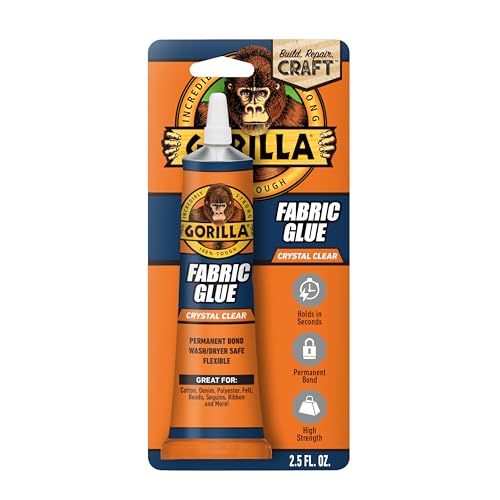
Gorilla Fabric Glue is engineered for strength and, true to the brand’s reputation, it creates a very reliable seal. It is particularly effective for thick, heavy-gauge knits where the patch needs to bridge the gaps between large, bulky stitches.
This adhesive is known for being machine-washable and dryer-safe, which simplifies the long-term care of your garment. It resists the breakdown caused by heat, which is a major benefit if you tend to tumble-dry your clothes rather than air-drying them flat.
Use this glue sparingly. While it is powerful, its thick consistency can sometimes be difficult to spread evenly. A little goes a long way, and excess glue can create a visible outline around the edges of the patch.
Tear Mender Adhesive: The Fastest-Setting Glue
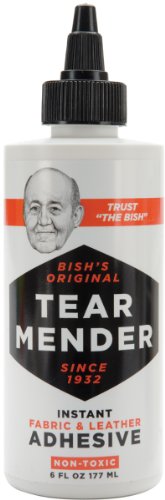
Tear Mender is a latex-based, water-proof adhesive that dries in mere minutes, making it the top choice for those who value efficiency. It is highly resistant to water, making it a reliable choice for outerwear that might encounter rain or snow.
The texture is quite thin, which allows it to penetrate slightly into the fibers to create a mechanical bond. This is ideal for wool or cotton knits, as it anchors the patch into the yarn structure rather than just sitting on the surface.
Avoid using this if there is a known latex allergy in the household. Additionally, because it sets so rapidly, ensure the patch is perfectly aligned before it touches the fabric, as there is little room for adjustments once contact is made.
Dritz Liquid Stitch: Precision for Small Patches
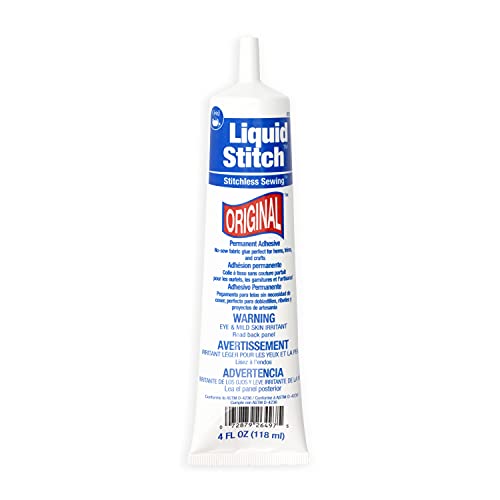
Dritz Liquid Stitch is a classic for a reason; its narrow nozzle makes it perfect for intricate, small patches or detailed appliqué work. If you are adding small embroidered patches or letters to a delicate knitted baby item, this precision is invaluable.
The bond is relatively gentle compared to industrial adhesives, which is a benefit when working with fine-gauge yarns or delicate fiber blends like angora or silk. It provides enough security for daily wear without creating a stiff, heavy patch that ruins the drape of the garment.
While it is wash-resistant, it may not stand up to years of heavy laundering as well as thicker formulas. It is best suited for items that are hand-washed or worn only occasionally.
Permatex Fabric Repair: Best for Tough Repairs
Permatex is a heavy-hitting adhesive often used for repairing upholstery, but it serves a vital purpose for knitters dealing with structural patches. When a knit fabric has suffered a significant tear or hole that needs a patch for reinforcement, this glue provides the necessary structural integrity.
It is highly durable and designed to survive harsh conditions, including exposure to the elements. If you are repairing a thick wool coat or a rugged accessory, this is the most secure option available.
The tradeoff for this level of strength is that it is not as flexible as other options. Use it primarily for areas of the garment that do not require much “give” or stretch, such as an elbow patch on a wool sweater or a reinforcement patch on a bag strap.
How to Prep Fabric for a Lasting Adhesive Bond
- Clean and dry: Ensure the area of the knit fabric is free from lint, body oils, or dust.
- Flatten: Use a pressing cloth to lightly steam the area flat, ensuring the stitch definition is uniform before application.
- Test: Apply a tiny dab of glue to a small, hidden area of the fabric to ensure it does not cause discoloration or melting.
- Backing: For open-stitch knitting, consider placing a small piece of lightweight fusible interfacing behind the patch area first to create a solid surface for the glue to grab onto.
Washing Glued Patches: A Quick Care Guide
- Wait to wash: Always wait at least 72 hours after applying the glue before the first wash to ensure the adhesive has fully cured.
- Turn inside out: Protect the patch from direct abrasion in the drum by turning the garment inside out before washing.
- Cool water: Use cold water on a delicate cycle, as high heat can soften some adhesive bonds over time.
- Avoid the dryer: Air-drying is always the safest method for items with glued-on patches, even those labeled “dryer safe.”
Removing Unwanted Fabric Glue: A Simple How-To
If glue spills on your knitting, do not rub it; this only forces the adhesive deeper into the yarn. Instead, let the glue dry completely, then use a pair of fine-tip tweezers to gently peel it away from the surface. For stubborn residue, a small amount of an adhesive remover or a gentle citrus-based solvent can be applied with a cotton swab, but always test on a swatch first to ensure it won’t affect the fiber’s color or integrity. If the fiber is synthetic, such as acrylic or polyester, use extra caution, as some chemical solvents can melt these materials.
With the right adhesive, you can breathe new life into your knitted projects and ensure they last through seasons of wear. Choose a product that balances strength with the unique characteristics of your yarn to keep your patches secure and your garments beautiful.