6 Best Paper Piercing Tools For Embroidery On Paper
Discover the 6 best paper piercing tools for embroidery on paper. Elevate your craft with our top-rated recommendations and start your next project with ease today.
Paper embroidery bridges the tactile world of textile arts with the precision of paper crafting, requiring the same attention to detail as choosing the perfect needle for a delicate lace project. Just as a blunt needle can split a high-twist wool yarn, a dull piercing tool will tear delicate cardstock instead of creating clean channels for embroidery floss. Achieving professional results requires tools that offer consistent hole depth and spacing. This guide explores the essential equipment needed to elevate paper projects with the grace of a hand-knitted heirloom.
We R Stitch Happy Piercer: Best Overall Value


The We R Stitch Happy Piercer serves as a reliable workhorse for those who transition frequently between paper and fabric. Much like a versatile set of circular needles that can handle everything from a worsted-weight hat to an intricate shawl, this tool offers a balanced handle that prevents hand fatigue during long sessions.
The ergonomic design provides sufficient grip for steady control, ensuring that lines remain straight even when working through thicker substrates. It strikes an excellent balance between cost and function, making it the ideal entry point for anyone serious about paper embroidery.
For those who prioritize efficiency, this tool excels at creating consistent, uniform holes that prevent thread breakage. It is a solid, no-nonsense investment for any craft room.
Tim Holtz Craft Pick: Most Versatile Option

The Tim Holtz Craft Pick is renowned for its durability and multipurpose nature, functioning much like a high-quality tapestry needle that navigates various yarn weights with ease. Its steel tip is sharp enough to pierce heavy-duty chipboard yet slender enough to avoid distorting the surrounding paper fibers.
This tool shines when intricate, multi-directional stitching is required. Because the tip maintains its edge exceptionally well, it remains a favorite for makers who demand consistency across diverse materials, from vellum to thick recycled cardstock.
The trade-off is the utilitarian grip, which lacks the plush feel of dedicated ergonomic tools. If the goal is a tool that survives years of heavy use, however, this remains the gold standard for performance.
Prick and Stitch Tool: For Precision Piercing

When working with intricate patterns or small-scale embroidery, precision is non-negotiable. The Prick and Stitch tool is designed specifically for delicate work, ensuring that holes are placed exactly where the design dictates without damaging the surrounding area.
This tool functions similarly to a fine-point knitting needle, allowing for high-accuracy placement on complex charts. It is indispensable for patterns requiring close, tight stitching that would otherwise risk tearing the paper if the spacing were uneven.
While it lacks the sheer power of an industrial awl, it offers unparalleled control. It is the best choice for makers focused on clean, professional-looking details rather than speed or force.
Clover Straight Tailor’s Awl: Classic Choice

Clover is a trusted name in the fiber arts world for a reason, and their straight tailor’s awl is no exception. Its sturdy, tapered point creates a clean, tapered hole, allowing embroidery floss to glide through the paper without snagging or fraying.
The weight and balance of the tool feel familiar to anyone accustomed to high-quality knitting notions. It is built to last, providing a consistent piercing experience that mimics the smooth action of polished steel knitting needles.
Though technically intended for sewing, its application in paper arts is seamless. It is a reliable, time-tested tool that rarely fails to deliver a clean result.
Tidy Tray Piercer & Mat: Best Beginner Set
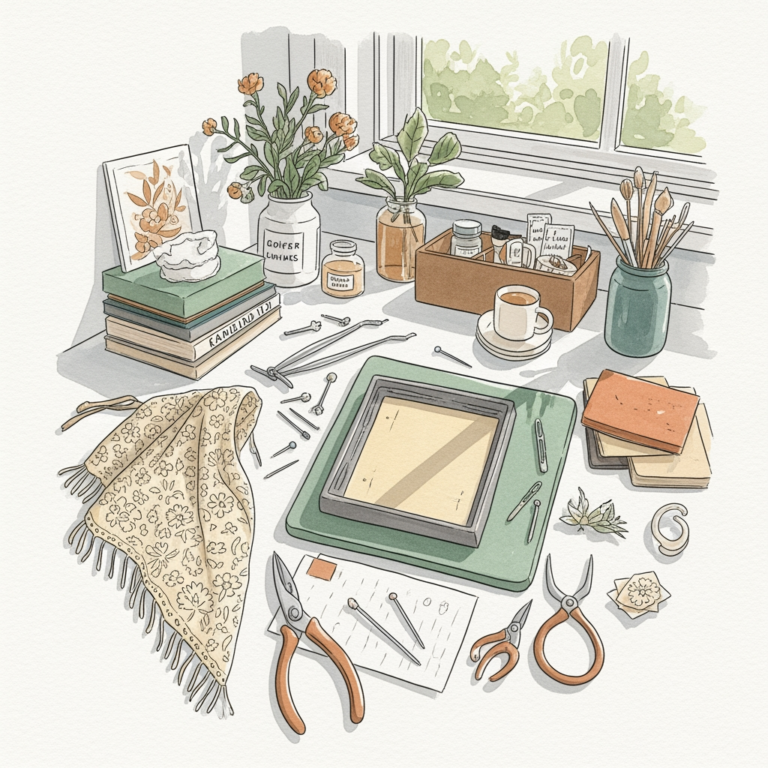
For those just beginning to explore paper embroidery, a starter kit simplifies the learning curve. The Tidy Tray set provides everything necessary to start immediately, including a base that helps contain the debris created by repeated piercing.
Having a dedicated workspace setup is as important as having the right yarn tension; it allows the maker to focus entirely on the design. This set removes the guesswork, ensuring that the needle, mat, and tray work in harmony.
While seasoned crafters may eventually upgrade to specialized individual tools, this kit is perfectly suited for building confidence. It provides a structured environment that prevents common mistakes like uneven spacing.
DIY Pin Vise & Needle: The Pro-Budget Hack
Many experienced crafters prefer a DIY approach using a jeweler’s pin vise and a standard sewing needle. This configuration allows for extreme customization, as the needle can be swapped out based on the thickness of the embroidery thread or the required hole size.
This method is analogous to choosing specific needle sizes for different yarn gauges. If the thread is bulky, use a thicker needle; for fine silk threads, swap to a thinner gauge to keep the punctures discreet.
This is the most cost-effective solution for makers who already possess a variety of sewing needles. It requires a bit of assembly but offers the greatest degree of control over the final look of the project.
What to Look For in a Paper Piercing Tool
- Tip Sharpness: A dull tip will tear paper rather than pierce it, leading to messy, fraying edges.
- Grip Ergonomics: Long piercing sessions require a comfortable hold to prevent hand cramping.
- Material Compatibility: Ensure the tool can handle the thickness of the specific paper being used without snapping.
- Weight: A slightly weighted tool provides more stability, similar to the difference between lightweight aluminum and heavier wood knitting needles.
The Best Paper Types for Paper Embroidery
Choosing the right paper is just as critical as selecting the right yarn base for a project. High-quality cardstock (80lb to 100lb) provides enough structure to hold stitches without buckling or tearing under tension.
Avoid overly thin paper, which acts like a low-twist, loosely spun yarn that lacks the integrity to support decorative embroidery. Conversely, avoid extremely heavy chipboard unless it is intended for a permanent, structural display, as it can be difficult to pierce without significant force.
Piercing Mat 101: Protect Your Surfaces
Never attempt to pierce paper directly on a tabletop or a hard surface. A piercing mat acts as a buffer, preventing damage to the work surface and, more importantly, allowing the needle to pass through completely, creating a clean hole on the backside.
Think of a piercing mat as a blocking board for your embroidery; it provides the necessary foundation for quality results. Use a foam-based mat to ensure the tip of the tool is protected and to minimize noise during the repetitive motion of piercing.
Pro Tips for Clean, Evenly Spaced Holes
Consistent spacing is the secret to professional paper embroidery. Consider using a printed template or a grid paper underneath the project to ensure that every hole is aligned perfectly.
When piercing, keep the tool perpendicular to the paper surface to maintain a consistent hole size. Treat each puncture with the same care as a stitch on a needle; steady, deliberate movements will always yield better results than rushing through the design.
Successfully combining needlework with paper requires patience and the right equipment to ensure the final piece is as refined as the stitches within it. With these tools and techniques in hand, any maker can achieve stunning, textured results.