6 Lint Rollers For Removing Craft Fibers Worth Trying
Struggling with messy workspaces? Discover 6 effective lint rollers for removing craft fibers to keep your projects clean. Read our expert reviews and shop now.
Every knitter knows the frustration of spending weeks on a complex colorwork sweater only to have it emerge from a project bag covered in stray fibers. Whether it is halo from a soft mohair blend or stubborn bits of cotton lint, keeping finished handknits pristine requires the right tools. Standard adhesive rollers are often too aggressive, potentially pulling at delicate stitches or leaving behind sticky residue. Selecting an effective fiber-removal tool is just as vital as choosing the correct needle material for a specific yarn.
Evercare Pet Mega Roller: For Heavy Shedding Fibers


When working with high-halo fibers like mohair, angora, or Icelandic wool, standard rollers often become saturated within seconds. The Evercare Pet Mega Roller offers an extra-wide surface area that tackles significant fiber shedding without requiring a constant change of sheets.
This roller excels when dealing with intense “fiber shed” during the initial blocking or wearing stages of a project. Because the adhesive is formulated for pet hair, it provides the necessary grip to lift loose, migrating fibers from between the purl bumps of a sweater.
Be cautious when using this on delicate lace patterns or loose, airy structures. The adhesive strength is high, which may tug at fine, untwisted fibers if pressed too firmly into the fabric.
ChomChom Roller: Best Reusable Picker-Upper
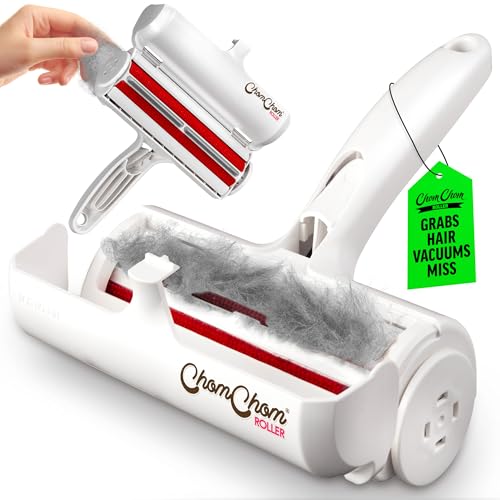
The ChomChom Roller operates on a mechanical principle rather than an adhesive one. It utilizes a rubber blade and a fabric trap to lift fibers, making it an excellent long-term investment for the serious maker.
This tool is particularly effective for removing surface lint from tightly plied, smooth yarns like mercerized cotton or tight-twist wool. It does not pull at the yarn itself, meaning it is much safer for delicate structures than a traditional sticky roller.
One tradeoff is that it requires a back-and-forth motion to be effective. This can occasionally snag on unfinished, loose ends of a garment if the knitter has not properly woven them in.
Flint Retractable Roller: The Stylish, Portable Pick

Knitting projects often travel in backpacks and project bags, where standard rollers are prone to getting crushed or collecting debris. The Flint Retractable Roller features a self-contained design that protects the adhesive surface from picking up stray yarn bits inside a bag.
Its compact, elegant form factor makes it a perfect addition to a dedicated knitting notions pouch. It is ideal for quick touch-ups before a knitting group or when transitioning from a travel project to wearing the item.
The sheets are high-quality, but they are smaller than standard industrial rollers. Use this specifically for final touch-ups, rather than attempting to clean a large, fuzzy cardigan that has been shedding for hours.
Gleener Fuzz Remover: For Pilling and Fabric Care

Pilling is a mechanical process where fibers migrate to the surface and tangle together, often caused by friction in high-wear areas like underarms. The Gleener Fuzz Remover is a multi-sided tool specifically designed to address these tangles without damaging the integrity of the knit.
Unlike a roller, which removes surface debris, the Gleener actually detaches the pills from the fabric. It comes with different edges suited for varying yarn weights, from delicate lace to heavy, chunky-weight sweaters.
Always test on an inconspicuous area first, such as the inside hem or underarm. Even with the appropriate edge, aggressive use can thin out the yarn if the garment is already prone to excessive wear.
OXO Good Grips Furlifter: The Easiest to Clean
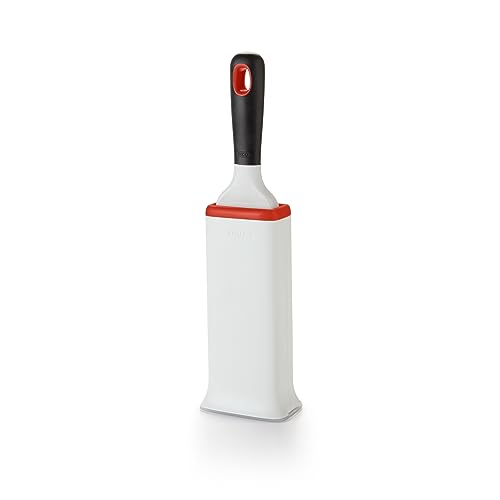
The OXO Furlifter is a clever hybrid that uses a micro-bristle surface to lift fibers, which are then collected in a self-cleaning base. This mechanism makes it incredibly efficient for those who frequently work with multiple fiber types.
This tool is particularly useful for those who maintain a home with both fiber crafts and pets. The bristles catch long, migrating fibers effectively without the need for adhesive sheets that quickly lose their efficacy.
Because it relies on friction rather than glue, it is much gentler on hand-dyed yarns that might have more delicate surface textures. It is arguably the most sustainable option for a high-volume knitter.
Kent Clothing Brush: The Old-School Natural Option

Natural boar bristle brushes offer a traditional approach to garment maintenance that favors fiber longevity. By gently lifting dust and loose fibers from the surface of wool sweaters, these brushes help maintain the garment’s natural loft and finish.
Using a Kent brush is an act of care, not just cleaning. It is highly recommended for luxury fibers like cashmere or alpaca, as the bristles smooth the cuticle of the fiber rather than pulling it.
The primary tradeoff is the requirement for a specific technique; brushes should be used in one direction to effectively sweep fibers away. They are not intended for heavy-duty cleanup of a sweater that has been sitting in a box for months.
How to Choose the Right Roller for Your Fiber Type
- Mohair and Angora: Avoid sticky rollers entirely; use a gentle brush to smooth the halo without stripping it.
- Merino and Superwash: These can handle adhesive rollers, but use a light touch to avoid pulling at the delicate twist.
- Cotton and Linen: These firm, non-elastic fibers benefit from mechanical rollers or brushes that grip surface lint without affecting the fabric’s structure.
- Hand-dyed or Novelty Yarns: Use tools with the least aggressive grip to prevent snagging on irregular textures.
Sticky vs. Reusable Rollers: Which One Is for You?
Sticky rollers offer immediate, high-volume removal but create waste and can leave adhesive residue on delicate, protein-based fibers. If the project involves a high-traffic, durable yarn, the convenience of a sticky roller is often worth the trade-off.
Reusable rollers are superior for frequent, light maintenance. They are more economical over the long term and carry zero risk of chemical transfer onto the yarn.
If the goal is to manage a high-shed project during the finishing phase, a sticky roller is the correct choice. If the goal is daily maintenance of a high-quality knitwear collection, a reusable option is the standard.
Using a Lint Roller Without Damaging Your Handknits
Never press hard into the fabric; let the tool do the work by hovering just over the surface. Excessive pressure can force fibers deeper into the tool or cause the yarn to pill by rubbing it against the base.
Always move in the direction of the stitch formation when possible. Working against the direction of the knit can create unnecessary friction, which causes the very pilling you are trying to avoid.
If a garment is prone to shedding, use the roller only on the outside. Working on the inside of a sweater, where floats and loose ends live, is a recipe for snagging a strand and ruining a complex pattern.
Pilling vs. Lint: Understanding What You’re Removing
Lint refers to loose, surface-level debris like dust, pet hair, or stray fiber ends that have not yet attached to the structure. This is easily handled by any of the tools mentioned above, and it is a normal part of the lifecycle of any hand-knitted garment.
Pilling, however, involves the actual structure of the yarn itself, specifically where fibers have tangled and pulled out of the twist. Removing pilling requires a fabric shaver or a dedicated tool like the Gleener; a lint roller will simply fail to remove these securely attached clumps.
Distinguishing between the two is critical. Treating a pill with a sticky roller may pull the fiber further out, exacerbating the problem rather than solving it.
Selecting the right tool for fiber maintenance is as much about preservation as it is about aesthetics. By choosing a method that respects the specific twist, fiber content, and density of the project, a knitter ensures that every stitch remains as beautiful as it was the moment it came off the needles.