6 Best Miniature Tools For Dollhouse Felting
Discover the 6 best miniature tools for dollhouse felting to elevate your craft. Click here to learn which essential supplies you need to create tiny masterpieces.
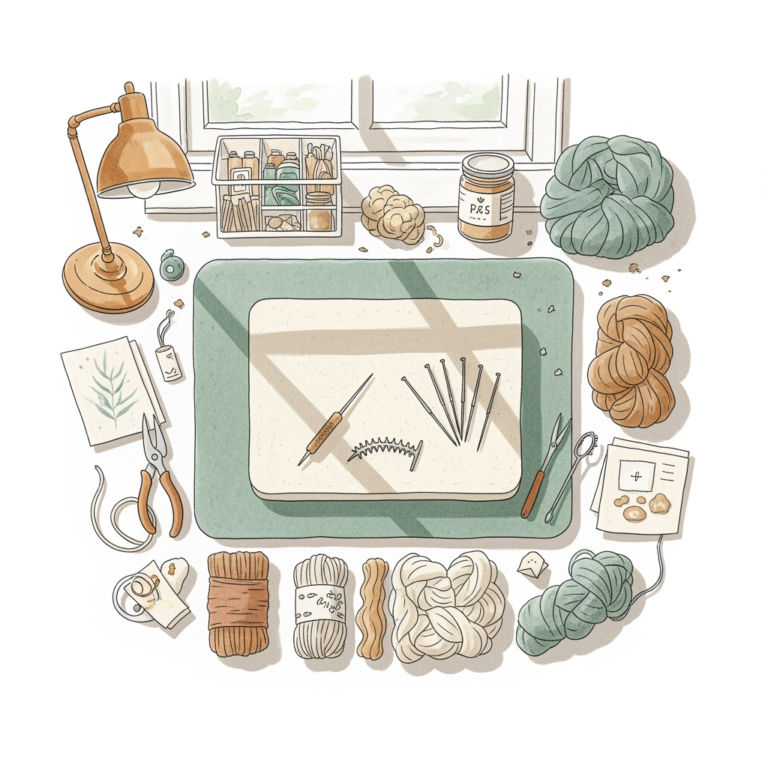
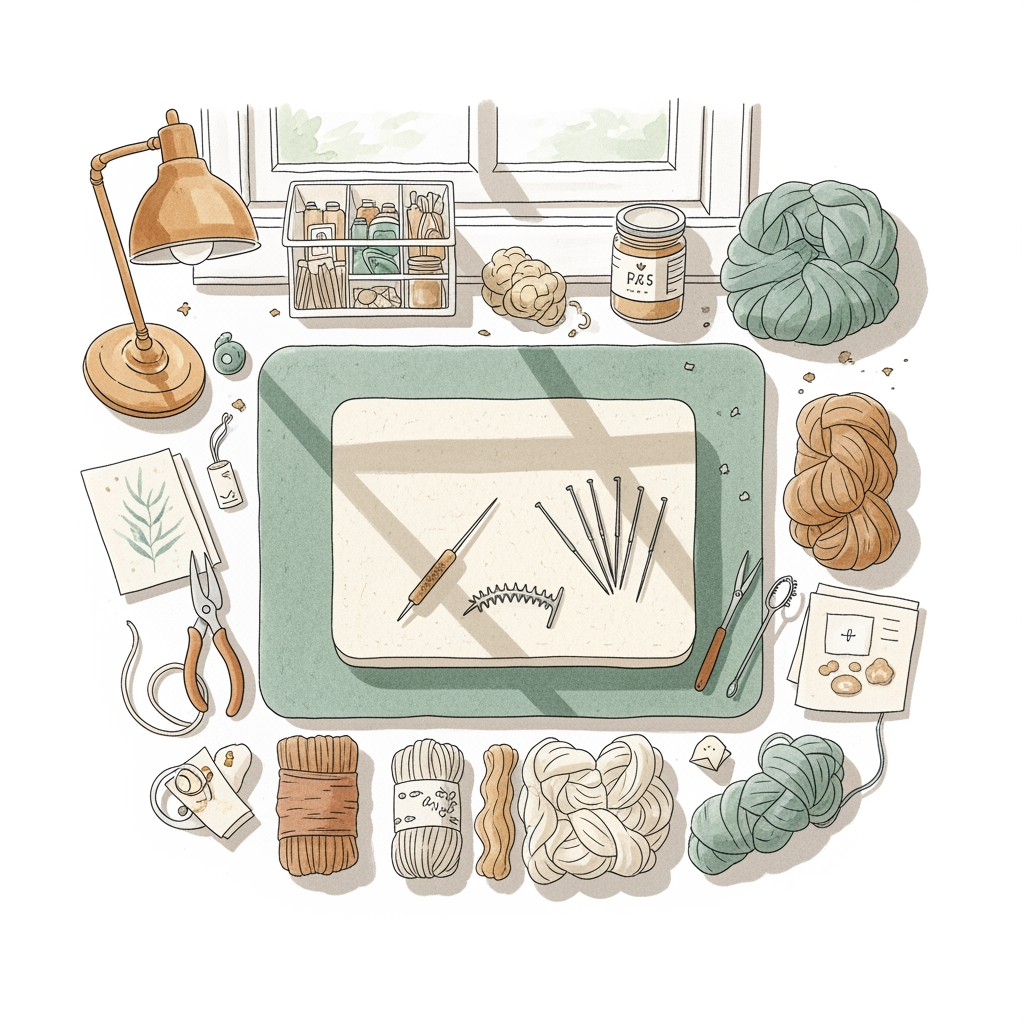
Miniature needle felting transforms raw wool roving into tiny, intricate treasures perfect for dollhouse dioramas or heirloom displays. Achieving scale-perfect results requires more than just patience; it demands specialized tools designed to manage microscopic fiber density. Unlike standard needle felting, where broad strokes suffice, miniature work requires the precision of a surgeon and the touch of a master crafter. Equipping a workspace with these six essential tools ensures that every tiny creation maintains its shape and structural integrity.
Clover Pen Style Needle Felting Tool: Best Overall


This tool functions much like a mechanical pencil, offering an ergonomic grip that drastically reduces hand fatigue during long sessions. For those accustomed to holding 2.25mm knitting needles for intricate lace projects, this pen-style handle feels natural and familiar.
It typically houses a single, fine-gauge needle, allowing for targeted placement that multi-needle tools simply cannot replicate. Because miniature felting is essentially sculpting with fiber, the ability to control a single point of entry is non-negotiable.
The primary trade-off is the depth of the needle, which is optimized for small-scale projects rather than thick, heavy wool pads. If the goal is creating dollhouse-sized accessories or figures, this tool provides the necessary control to avoid over-felting delicate areas.
Dimensions Needle Felting Mat: Small & Mighty
A compact, dense foam mat is the unsung hero of the miniature workspace, providing a stable foundation for tiny pieces. Standard large mats often feel cumbersome, causing the maker to lose focus on the minuscule scale of the project.
High-density foam prevents the needle from passing through too easily, which protects the work surface and the tool tip alike. Much like choosing the right blocking board for a delicate sweater, the density of the felting mat dictates how firmly the fiber anchors into the design.
Avoid using soft, loosely packed cushions, as these allow the fiber to sink too deeply, resulting in uneven tension across the miniature piece. A firm surface ensures that every poke has a clear, consistent purpose.
Fun-To-Felt Fine Gauge Needles: For Tiny Details
Fine gauge needles—usually sizes 40 or 42—are essential for avoiding large, visible puncture marks on tiny felts. Think of these as the equivalent of lace needles in knitting; they are designed for projects where every stitch or poke must be invisible to the eye.
These needles move through the roving with minimal resistance, which is vital when working on a scale where a single misplaced poke can distort the entire form. The structural trade-off is that these needles are brittle and prone to snapping if handled with excessive force.
Always work with a light touch, allowing the barbs on the needle to do the work of intertwining the fibers. Applying too much pressure will only lead to broken tools and frustration rather than a more tightly felted item.
Woolbuddy Felting Awl: For Perfect Tiny Holes

An awl is a precise tool for creating pathways within the felt, especially when adding rigid appendages or hair to a dollhouse figure. Inserting a wire frame into a pre-felted body often tears the wool, but an awl creates a clean, intentional channel.
This tool is especially useful when adding features like miniature buttons or tiny felted accessories that require a secure anchor point. It serves the same purpose as a tapestry needle does for weaving in ends—it prepares the way so the final addition sits perfectly flush.
Use the awl to test the depth of a project before committing to a permanent insertion. It is far easier to adjust a hole made by an awl than it is to repair a tear caused by forcing a rigid piece into raw fiber.
Mini-Felt Finger Protectors: Safety First!

Miniature needle felting involves working with sharp points in close proximity to the skin, making leather or silicone protectors essential. When working on a project the size of a thimble, the needle is often inches away from the finger holding the piece.
These protectors provide a tactile barrier that doesn’t sacrifice the dexterity needed for fine-scale manipulation. Unlike thick work gloves, they allow for the sensitivity required to feel when the wool has reached the correct density.
If the protectors feel too bulky, look for thin, heat-resistant silicone versions that grip the fiber slightly. Staying safe while working keeps the creative flow going and prevents the inevitable pricks that come with working on such a small scale.
Precision Tweezers Set: For Placing Fibers
Precision tweezers are indispensable for positioning tiny tufts of roving in areas where fingers are far too large to reach. Whether adding a whisper of color to a tiny animal or placing a detail on a miniature garment, tweezers act as an extension of the hand.
Look for a set that includes both pointed and curved tips to handle different angles of the project. These tools are the equivalent of holding a cable needle in one hand and a main needle in the other; they provide the extra support needed for complex fiber manipulation.
Keeping the tips clean and free of rogue fiber bits is essential for maintaining accuracy. When the tool is clean, the placement of the wool is crisp, professional, and precise.
Choosing Needle Gauges for Miniature Felting
Needle gauge refers to the diameter and the number of barbs on the needle, both of which drastically impact the final texture of the felt. For miniature work, high-gauge needles (40-42) are almost always the correct choice, as they create minimal surface disruption.
Lower gauge needles (32-36) have larger barbs that work well for core building but will leave unsightly craters in delicate finishes. Much like matching yarn weight to needle size in knitting, matching needle gauge to the project scale determines the smoothness of the final surface.
If the fiber is dragging or looking lumpy, the needle gauge is likely too low for the refinement needed. Switch to a finer needle to tighten the weave and smooth out the texture for that professional, miniature finish.
What to Look for in a Mini Felting Surface
The ideal surface for miniature work is firm, smooth, and portable, allowing for easy rotation of the piece. Stability is the priority; the surface should not shift or slide while the needle is making contact.
Avoid surfaces that shed particles, as these can easily become embedded in the wool roving and ruin the finish. A high-density foam or a specialized wool-felt mat provides the best feedback, letting the maker feel exactly when the needle hits the backing.
A good surface also needs to be easily replaceable or brushable to remove stray fibers. When working in miniature, a clean workspace prevents cross-contamination of colors, especially when alternating between light and dark wool roving.
Safety Tips for Felting on a Miniature Scale
Needle felting safety is often overlooked, yet the repetitive motion and sharp instruments require consistent caution. Always keep the non-dominant hand away from the path of the needle, especially when working on tiny, rounded shapes that are difficult to hold.
Take frequent breaks to stretch the hands and wrists, just as a long-term knitter would to prevent strain during a complicated project. The constant tension of holding a tiny piece can lead to cramping, so mindful posture is key.
If a needle does snap, stop immediately and ensure all pieces are accounted for. Working with broken, jagged metal bits inside a felted piece is a hazard that can be easily avoided by keeping an eye on the integrity of the tools.
Best Wool Roving Types for Dollhouse Felts
Selecting the right wool is the difference between a fuzzy, uneven mess and a crisp, well-defined miniature. Merino wool is often the preferred choice for miniatures due to its short staple length and high crimp, which allows it to felt quickly and densely.
Corriedale wool is another excellent option for those needing a slightly sturdier fiber that holds its shape well under manipulation. Avoid very long-staple, greasy wools, as these are meant for spinning rather than the rapid, precise felting required for small-scale sculpting.
- Merino Roving: Best for fine details and smooth finishes.
- Corriedale Roving: Best for structural strength and durability.
- Carded Batts: Excellent for building volume quickly before refining with roving.
Mastering miniature needle felting is a process of refinement, where the right tools translate the intent of the maker into a physical, scaled-down form. By carefully selecting fine-gauge needles, ergonomic handles, and high-density surfaces, the complexities of working on such a small scale become manageable and deeply rewarding. Consistency in tool choice and technique will ultimately define the professional quality of every dollhouse-sized creation.