6 Best Embroidery Gloves For Wrist Stability
Protect your joints while crafting with our top 6 embroidery gloves for wrist stability. Improve your stitching comfort today and shop our expert recommendations.
Long hours spent hunched over delicate embroidery hoops or intricate lace charts often lead to significant wrist fatigue and joint strain. While the repetitive motion of pulling thread through fabric is meditative, it places unique demands on the small muscles of the hands and wrists. Choosing the right compression garment can mean the difference between finishing a cherished heirloom project and having to set the needles or needles down indefinitely. These specialized gloves provide the structural support necessary to maintain proper ergonomics during marathon crafting sessions.
Dritz Crafter’s Comfort Gloves: Best Overall


Dritz Crafter’s Comfort Gloves serve as a reliable baseline for fiber artists seeking a balance between gentle compression and dexterity. These gloves are specifically engineered to address the fatigue that sets in after hours of holding embroidery hoops or delicate lace needles.
The lightweight, breathable fabric ensures that moisture doesn’t build up during long, detailed work. Unlike heavier medical supports, these allow for the precise finger movements required to pick up dropped stitches or knot thread tails with ease.
If the goal is moderate, everyday support that doesn’t feel bulky, this is the primary choice. They provide just enough structure to discourage awkward wrist angles without restricting the fine motor skills essential for complex stitching.
IMAK Compression Gloves: Best for All-Day Wear

IMAK gloves utilize a unique design that focuses on mild, consistent compression across the joints. This design is particularly effective for knitters and stitchers who experience stiffness in the mornings or after long periods of inactivity.
The soft, cotton-rich material feels natural against the skin, making them less irritating than synthetic neoprene alternatives. Because they lack thick seams, they won’t snag on delicate yarn or textured embroidery thread, which is a major advantage when working with silk or mohair.
These are best suited for those who find themselves stitching intermittently throughout the day. They provide enough relief to stay comfortable without needing to be removed constantly, acting almost like a second skin for the hands.
Copper Compression Gloves: Best for Pain Relief

Copper-infused fabric is often cited for its ability to reduce inflammation and promote blood flow in strained joints. For the artisan dealing with chronic aches, these gloves provide a tighter, more therapeutic feel than standard compression wear.
The compression provided here is firmer, which helps stabilize the wrist during heavy cable knitting or dense needlepoint work. While the firm fit is excellent for stability, it does mean the fabric is thicker, which may slightly alter tactile sensitivity.
Use these during sessions where hand fatigue is at its peak. The increased stability helps enforce better posture, preventing the “claw hand” posture that often develops when focusing too intently on a pattern.
Vive Arthritis Gloves with Strap: Max Stability

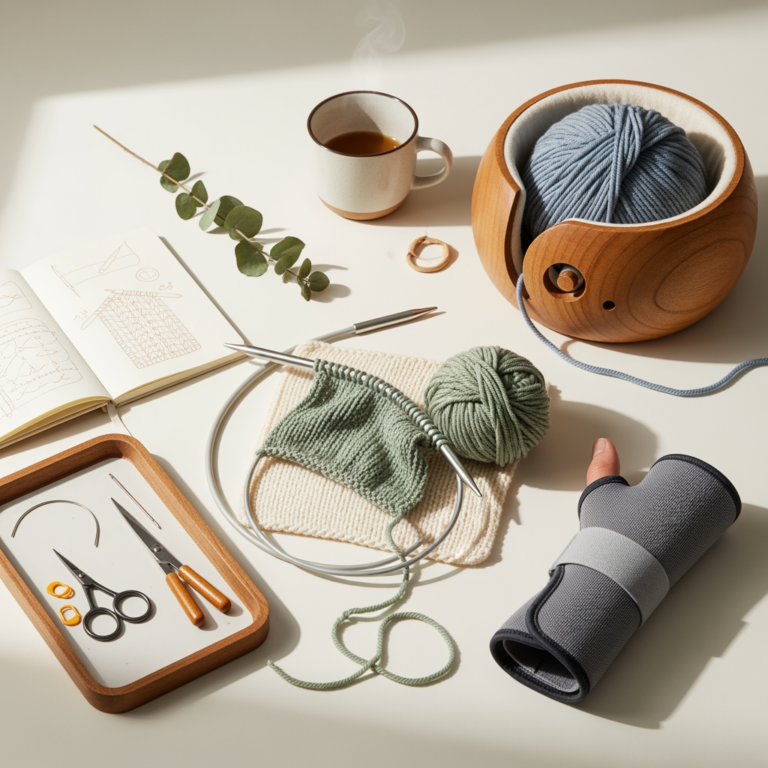
The inclusion of an adjustable wrist strap sets the Vive gloves apart for those requiring actual mechanical support. If the wrists tend to drop or hyper-extend during long hours of crafting, this strap offers a physical barrier against poor alignment.
This level of support is ideal for those managing tendonitis or significant joint hyper-mobility. The ability to tighten the strap mid-project provides a level of customization that non-adjustable gloves cannot match.
Be aware that the strap adds bulk. While it provides superior stability for heavy-duty projects, it might feel cumbersome if the project requires extremely fine detail work or constant switching between different tool sizes.
Thermoskin Thermal Gloves: Best for Cold Hands

Thermal properties are essential for knitters who find their dexterity compromised by cold, stiff joints. These gloves use heat-trapping technology to keep blood flowing to the fingers, which is critical for maintaining consistent tension in both knitting and embroidery.
Keeping the joints warm helps prevent the micro-strains that occur when muscles are cold and rigid. The thermal material provides a soothing sensation that can make a long project feel significantly more manageable during winter months.
This is the preferred choice for those who craft in drafty spaces or struggle with cold-induced joint pain. They provide a therapeutic, localized heat that helps keep the hands fluid and responsive to delicate movements.
Grace & Able Gloves: Best Fingerless Design
Grace & Able offers a refined approach to compression that focuses on a slim profile and high-quality materials. These gloves are designed to look and feel more like an accessory than a medical device, which is helpful for those who dislike the clinical appearance of standard supports.
The fingerless design is carefully shaped to offer compression exactly where it is needed—on the knuckles and the wrist—without blocking the fingertips. This ensures the tactile feedback required for identifying yarn ply or fabric tension remains entirely intact.
For the artisan who values both form and function, these represent a high-end investment in longevity. The tailored fit prevents the fabric from bunching up around the palms, ensuring that grip remains consistent regardless of the project.
How to Find Your Perfect Glove Size and Fit
Proper sizing is non-negotiable when it comes to compression; a glove that is too loose provides no therapeutic benefit, while one that is too tight can restrict blood flow and worsen fatigue. Always measure the circumference of the hand just below the knuckles, as indicated by the manufacturer’s size chart.
If a measurement falls between two sizes, err on the side of the tighter fit only if the brand specifically suggests it. Most high-quality compression gloves rely on consistent pressure, so an ill-fitting pair will inevitably fail to provide the intended stability.
Remember that hands tend to swell slightly after repetitive movement or during warmer temperatures. A glove that feels perfectly snug at the start of a project might feel restrictive after two hours of intensive work, so check for comfort after the first thirty minutes.
Compression vs. Support: Which Do You Need?
Compression gloves are designed to apply gentle pressure to reduce swelling and improve circulation, which is perfect for managing mild fatigue or occasional stiffness. Support gloves, which often feature straps or rigid stays, are intended to physically limit the range of motion in the wrist.
Distinguishing between these two is key to long-term joint health. If the issue is general fatigue, compression is usually sufficient. If there is a history of repetitive strain injury or a need to correct wrist position, look for support-focused models with adjustable elements.
Do not mistake compression for a cure-all; these tools are meant to facilitate proper ergonomics, not replace them. Even with the best support, one must still take regular breaks to stretch and reset the posture of the shoulders and neck.
When to Wear Your Gloves for Maximum Benefit
The most effective way to utilize these gloves is to put them on before the pain starts. Wearing them for the duration of a project keeps the joints warm and stabilized from the very first stitch, rather than waiting for inflammation to trigger a need for relief.
Many crafters find that wearing them during intense tasks—like working on a complex, high-tension lace chart—prevents the buildup of tension that leads to discomfort later in the evening. There is no need to wear them while performing daily tasks around the house unless prescribed by a professional.
Listen to the body’s cues; if a project requires a high degree of precision and the gloves are causing the hands to feel heavy, take them off for a short break. Consistency in wearing them during active crafting is far more beneficial than wearing them sporadically.
Caring for Your Embroidery and Crafting Gloves
These gloves are made of technical fabrics that lose their elasticity if mistreated. Hand-washing in cool water with a mild, wool-safe detergent is the standard for preserving the integrity of the elastic fibers.
Avoid the dryer at all costs, as the high heat will break down the compression knit and cause the gloves to lose their shape within a few weeks. Instead, roll the gloves in a clean towel to remove excess moisture and lay them flat to air dry away from direct sunlight.
Check the gloves regularly for snags or fraying seams, especially if the embroidery work involves metallic threads or sharp needles. Maintaining the fabric ensures that the compression level remains consistent, which is the key factor in getting the most out of the investment.
Prioritizing wrist health is as fundamental to the craft as choosing the right yarn weight or needle material. By selecting a glove that aligns with specific needs, one ensures that the joy of creating remains a lifelong pursuit rather than a cause for physical strain.