
7 Best Stencil Tapes For Delicate Surfaces To Use
Protect your paint projects with our list of the 7 best stencil tapes for delicate surfaces. Read our guide to choose the right tape and start crafting today.
Achieving clean colorwork or sharp edges on custom knitwear often requires the use of stencils for blocking boards or labeling tools. Standard masking tape is the enemy of delicate fibers and paper patterns, often leaving behind a tacky residue or tearing through fragile surfaces. Choosing the right adhesive ensures that your project remains pristine from the first cast-on to the final weave-in. This guide explores the best tapes for delicate surfaces to keep your workspace efficient and your materials safe.
FrogTape Delicate Surface: Best All-Rounder


FrogTape Delicate Surface utilizes PaintBlock technology, which creates a micro-barrier that instantly reacts with water-based liquids to seal the edge. This makes it an ideal companion for knitters who use liquid blocking agents or who apply textile paints to their handmade items.
The adhesive is specifically designed for surfaces that require a gentler touch, such as finished wood blocking boards or high-quality pattern printouts. Because it lacks the aggressive tack of standard contractor tape, it won’t pull the fibers or finish off your equipment.
The tradeoff here is that the adhesive is slightly less aggressive than heavy-duty alternatives, meaning it may require a firmer press on textured surfaces. The bottom line: It is the most versatile choice for a studio that rotates between blocking delicate lace and labeling storage bins.
Scotch Delicate Surface Tape: Top for Walls
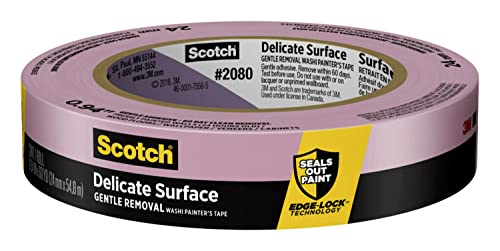
If the workspace includes painted walls or finished decorative panels used for photo backdrops of finished garments, Scotch Delicate Surface Tape is the standard. It is engineered to remain on surfaces for extended periods without damaging the finish or leaving behind a ghosting residue.
This tape is exceptionally thin, which prevents the “step-up” edge that often causes paint or dye to bleed underneath. For a knitter working on a pattern board or a visual project layout, the low-tack formula ensures that paper templates can be repositioned multiple times without tearing.
Do not mistake this for general-purpose painter’s tape, which can ruin delicate cardstock. This is the reliable workhorse for those who prioritize clean lines on non-fabric surfaces.
Cricut Stencil Vinyl: For Machine Crafters
Machine crafters who use digital cutters to create custom stencils for knitting bags or personalized project journals need a material that cuts cleanly. Cricut Stencil Vinyl is designed to adhere flatly to surfaces, preventing ink or dye seepage during the application process.
The vinyl creates a superior seal compared to paper-based tapes, making it perfect for complex, intricate designs. Because it is non-porous, it holds up better against the moisture involved in textile printing or blocking setups.
Remember that vinyl requires careful removal to avoid pulling up underlying paint or sensitive finishes on your equipment. Use this when the complexity of the design outweighs the simplicity of a standard tape roll.
Oracal ORAMASK 813: Pro Stencil Film Pick
Oracal ORAMASK 813 is a professional-grade stencil film that is the preferred choice for those who need absolute precision. It is a translucent blue film that is easier to align than opaque tapes, which is a major advantage when layering patterns on project bags or blocking templates.
The adhesive is specifically formulated to be solvent-resistant, meaning it won’t break down when exposed to the chemicals often found in textile dyes or fabric mediums. It offers the crispest possible edge, vital for fine-detail work that will later be showcased in fiber arts exhibitions.
However, the precision comes at the cost of a slightly steeper learning curve for application. Select this if the project demands professional-grade sharpness and resistance to medium saturation.
MT Washi Tape: Best for Paper & Cardstock
MT Washi Tape brings a touch of personality to your organization system while remaining incredibly gentle on paper. Washi is made from natural fibers and features a light adhesive that is almost impossible to damage a surface with, regardless of how thin the paper may be.
It is ideal for marking pages in knitting pattern books or temporarily securing a swatch to a record sheet. Because it is repositionable and translucent, it won’t obscure the vital row-by-row instructions written on your printed patterns.
While it lacks the heavy-duty seal needed for painting, its low tack makes it the safest option for the most fragile of archival-quality papers. Keep a roll of this on hand for all your paper-based project organization needs.
Shurtape CP 27: The Budget-Friendly Option
Shurtape CP 27 is a high-quality masking tape that offers a balance between cost and performance for those who go through large quantities of material. It is designed to resist paint bleed while being gentle enough for use on delicate surfaces that have already been cured.
For the knitter who is constantly mocking up new display boards for yarn swaps or trunk shows, this tape provides a clean edge without the premium price tag. It is significantly better than generic masking tape, which often features a brittle adhesive that yellows over time.
While it is not as specialized as the delicate-surface specific brands, it handles the vast majority of workshop tasks with ease. If you need to stock a large studio on a budget, this is the most effective choice.
Tesa Delicate Surface Masking Tape: Pro Grade
Tesa produces industrial-grade tapes that are held in high regard for their consistent adhesive quality across different temperatures and humidity levels. This is critical for knitters living in regions where humidity fluctuates, as it prevents the tape from curling or losing its tack during the blocking process.
The flat-back construction allows for a very tight seal, which is essential if you are working with liquid resists on fabric. It removes cleanly even after several days, leaving no sticky residue that could attract dust or attract pilling on your yarn fibers.
This tape is a premium product, and the investment is reflected in the ease of removal. Choose Tesa when you need a professional, reliable tool that performs perfectly in a demanding studio environment.
How to Pick the Right Tape for Your Project
Choosing the right tape depends entirely on the surface you are working on and the medium you are applying. Always consider the following factors:
- Surface Porosity: Smoother surfaces require less aggressive adhesive, whereas textured surfaces may need a tape with slightly more grab.
- Medium Compatibility: If using liquid dyes or heavy fabric paints, opt for vinyl or treated film over paper-based tapes to prevent bleed.
- Duration of Contact: If the tape needs to stay in place for several days, ensure the adhesive is rated for “long-term clean removal.”
When in doubt, perform a test on a small, hidden corner of the surface. If the tape lifts any finish upon removal, switch to a lower-tack option immediately.
Getting Crisp Stencil Lines on Fabric & Paper
The secret to crisp lines lies not just in the tape, but in the application pressure. Once the tape is positioned, use a credit card or a bone folder to burnish the edges firmly against the surface, ensuring there are no gaps for the medium to seep under.
Apply your medium sparingly using a “dabbing” or “stippling” motion rather than a long, brushing stroke. Brushing forces the liquid against the tape edge, increasing the likelihood of bleed; stippling builds up the medium safely.
Remove the tape while the medium is still slightly damp, but not dripping. Pulling the tape back at a 45-degree angle helps to shear the medium cleanly at the edge, resulting in a perfectly sharp line.
Removing Tape Without Damaging Your Surface
The most common mistake is removing tape too quickly or at a 90-degree angle, which can cause surface tearing. Always pull the tape back slowly, keeping it close to the surface, and work in a smooth, continuous motion.
If you encounter resistance, stop pulling immediately. Use a hairdryer on a low-heat setting to gently warm the adhesive, which will cause it to soften and release its grip without pulling away the surface layer.
Never leave masking tape on a surface for longer than the manufacturer suggests, as adhesives can eventually bond permanently. A clean removal starts with thoughtful application and ends with patience during the extraction process.
Selecting the correct tape for your delicate surfaces is a minor detail that prevents major headaches, ensuring your creative process remains focused on the craft rather than the cleanup. By matching the tape properties to your specific needs, you protect your tools and your finished work with ease.