7 Best Felt-Tip Pens For Ink Illustrations To Try
Elevate your ink illustrations with our curated guide to the 7 best felt-tip pens. Discover the top tools for precise, professional drawing and start creating today.
Choosing the right illustration pen is much like selecting the perfect needle for a delicate lace shawl. Just as a blunt needle will split a fine silk-mohair yarn, the wrong tip will drag against paper or bleed into fibers, ruining an otherwise precise sketch. Mastering these tools requires understanding how ink flow interacts with surface texture, much like how yarn weight dictates drape. This guide evaluates seven standout pens to help achieve professional results in illustration.
Sakura Pigma Micron: The Artist’s Go-To Pen
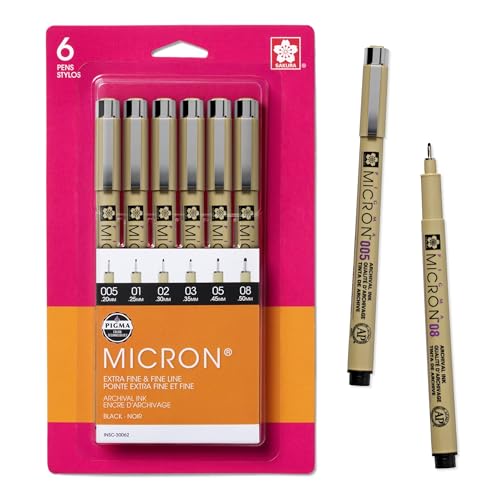

The Pigma Micron is the standard-bearer for archival precision, offering a consistent line width that mimics the reliability of a high-quality stainless steel knitting needle. Its ink delivery is exceptionally stable, preventing the skipping often seen with inferior felt tips.
These pens are ideal for artists who demand permanence and lightfastness. Much like a high-twist superwash wool that retains its structure through repeated blocking, the archival pigment ink in these pens resists fading over time.
They are best suited for detailed work where line weight must remain uniform across the entire surface. If the goal is consistent, fine-line technical drawing, the Micron remains the definitive choice for most portfolios.
Faber-Castell Pitt Pens: Best for Brushwork

Faber-Castell Pitt pens excel at expressive, sweeping strokes that capture movement. The brush tip functions similarly to a flexible bamboo needle, allowing for variations in line weight based on the pressure applied by the artist.
These pens are particularly useful for bold, calligraphic headers or organic forms that require a more fluid approach. The ink is waterproof when dry, making it a reliable partner for watercolor washes.
However, the brush tip will soften over time if handled with a heavy hand. Treat these tools with the same care one would afford a delicate vintage wooden needle to ensure the tip maintains its snap and precision.
Copic Multiliner SP: The Best Refillable Pen
The Copic Multiliner SP is the tool of choice for the serious illustrator who values longevity. Its metal body is as sturdy as a set of premium brass needles, providing a balanced weight that reduces hand fatigue during long drawing sessions.
Unlike disposable pens, the ink cartridges and nibs can be replaced independently. This modularity reduces waste and ensures the investment pays off over years of consistent use.
While the upfront cost is higher, the long-term utility is unmatched. It is the perfect choice for artists who have outgrown entry-level tools and want a permanent instrument that grows with their skill level.
Staedtler Pigment Liner: A Top-Notch Value Set
Staedtler Pigment Liners offer a balance of price and performance that is hard to ignore. They provide a smooth, dark line that performs reliably on a wide variety of papers, much like a versatile wool-nylon blend that handles both sweaters and socks with ease.
The tip is reinforced with a metal casing, which provides durability even for those who bear down hard while drawing. This feature prevents the common issue of the nib mushrooming or losing its shape.
They are an excellent entry point for artists looking to build their collection without a massive initial investment. Keep a set in the studio for quick sketches or detailed cross-hatching where a variety of sizes is needed.
Tombow Fudenosuke: For Expressive, Fluid Lines
The Tombow Fudenosuke is built for control and character. Its unique tip is designed to create dramatic variations in line weight, making it the perfect tool for lettering and stylized illustrative flourishes.
This pen rewards a nuanced touch, much like the rhythmic tension required for intricate stranded colorwork. A steady, practiced hand will find the tip responds beautifully to subtle shifts in angle and speed.
Note that the ink is generally not as archival as the Pigma Micron. Use this pen for sketching, practice, or works that do not require long-term environmental resistance.
Uni Pin Fineliner: The Pro’s Archival Choice
The Uni Pin Fineliner is known for an incredibly deep, opaque black ink that sits perfectly on the page. It is a workhorse tool that rarely clogs, even after periods of inactivity.
The tip is exceptionally hard and retains its shape through long hours of repetitive mark-making. It is the equivalent of a reliable circular needle that never snags, allowing the artist to focus entirely on the pattern rather than the tool.
The wide range of sizes allows for subtle gradients in line weight within a single piece. For artists focused on stippling or precise architectural work, the Uni Pin offers the consistency required for high-stakes illustration.
Papermate Flair: The Classic Everyday Felt-Tip
The Papermate Flair is the quintessential tool for conceptual sketching and brainstorming. While not intended for archival fine art, its bold, saturated colors are excellent for planning layouts or adding quick notes to a draft.
The tip is soft and broad, meaning it is not suitable for fine detail. However, it is fantastic for filling in large blocks of color or creating energetic, quick-drying marks that do not require intense precision.
Think of the Flair as the equivalent of a bulky yarn; it is meant for speed and visual impact rather than refined, delicate texture. It is a necessary addition to the desk for quick mark-making and informal planning.
How To Choose the Right Pen Nib for Your Art
Selecting a nib size is similar to choosing a needle size to achieve a specific gauge. A smaller nib—0.03mm or 0.05mm—is equivalent to fine-gauge needles used for lace, providing intricate detail.
Conversely, a larger tip—0.8mm or 1.0mm—acts like a larger needle, creating bold lines and filling space quickly. Always consider the scale of the artwork before beginning, as resizing ink lines is impossible once they hit the paper.
If you are working on small-scale illustrations, resist the urge to use a broad tip, as it will muddy the details. Conversely, do not attempt to fill large backgrounds with a fine liner, as the tip will wear down prematurely from the friction.
Pigment vs. Dye Ink: What Artists Need to Know
Understanding ink chemistry is just as crucial as understanding fiber content in yarn. Pigment-based inks consist of tiny solid particles suspended in liquid, which sit on top of the paper, offering superior lightfastness and water resistance.
Dye-based inks, like those in the Papermate Flair, consist of color dissolved in a liquid. These are more vibrant but tend to bleed and fade when exposed to direct sunlight or moisture over time.
For professional work intended to last, always reach for pigment-based inks. Use dye-based inks for sketches, mock-ups, or temporary notes where vibrancy is more important than longevity.
Keeping Your Felt-Tip Pens Working Like New
Proper maintenance extends the life of your tools, just as washing and storing your knitting needles correctly prevents warping or oxidation. Always replace the cap firmly until it clicks, as felt tips are highly susceptible to drying out.
Store your pens horizontally when not in use to ensure the ink remains distributed evenly across the tip. If a pen has sat unused for too long, a gentle flick of the wrist can sometimes draw ink back into the reservoir.
Avoid using these pens on textured or abrasive surfaces, which can shred the delicate felt tips. If the nib becomes frayed or blunt, it is often a sign that the paper is too rough for the delicate instrument.
Choosing the right ink pen is a matter of balancing technical requirements with the desired artistic outcome. By matching the tool to the task, you ensure that every stroke remains intentional and every illustration reaches its full potential.