6 Best Apron Styles For Craft Protection To Consider
Discover the 6 best apron styles for craft protection to keep your clothes clean and workspace organized. Choose your ideal durable design and shop today!
Protecting a delicate lace project from accidental spills or keeping animal fibers free from household dust is a hallmark of a serious maker. The right apron acts as a barrier, safeguarding expensive hand-dyed yarns and maintaining the integrity of finished items during the blocking process. Selecting the correct style depends on the physical demands of the craft and how much freedom of movement the hands require. A well-chosen apron becomes an extension of the studio, streamlining the workflow and keeping tools within immediate reach.
Hedley & Bennett Crossback: Best All-Rounder
The crossback design eliminates the dreaded neck strain that occurs during long knitting sessions. By distributing the weight across the shoulders rather than pulling on the cervical spine, this apron allows for hours of comfortable stitch-work.
The fabric choice typically involves sturdy, high-quality canvas that stands up to the rigors of a workshop. It protects against snagging, ensuring that stray stitch markers or loose needles do not catch on clothing.
While the canvas is durable, it does possess a certain rigidity that softens over time. Those who prefer a garment that drapes fluidly might find the break-in period requires patience.
The Fog Linen Work Apron: Best for Comfort
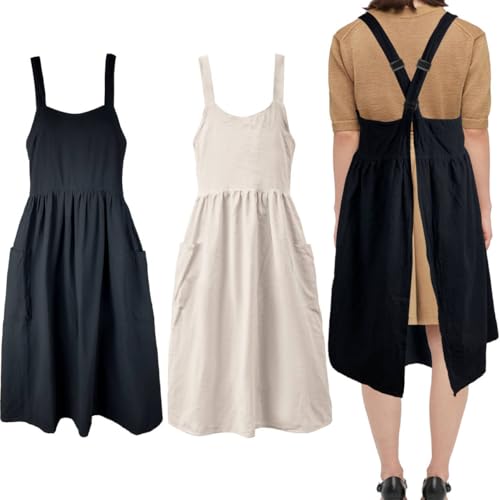

Linen is the superior choice for makers who prioritize breathability and a lightweight feel. This apron provides a protective layer without the thermal burden of heavy waxed canvas, making it ideal for warm-weather knitting or humid studio environments.

The fabric possesses a natural, relaxed drape that moves with the body. When knitting complex cables or intricate colorwork, the lack of bulk in the torso area allows for a closer, more natural posture at the needles.
It is important to note that linen is porous and offers less protection against liquids than treated fabrics. It excels at keeping loose fibers and dust off clothing but will not shield a project from a spilled cup of tea or a soaking dye pot.
Under NY Sky Split-Leg: For Wheel & Loom
The split-leg configuration is essential for makers who alternate between knitting, spinning at a wheel, or operating a floor loom. It offers full coverage for the legs without restricting the wide range of motion required to operate treadles or pedal mechanisms.
Traditional aprons can bunch up when sitting, creating unnecessary tension across the thighs. A split-leg design solves this by allowing each side of the fabric to drape independently, maintaining constant coverage of the garment underneath.
This style is a professional-grade solution for those who treat their fiber studio as a multi-functional space. Expect the heavier weight of these aprons to provide a sense of stability during stationary, long-duration tasks.
The Dyer’s Defender: Top Waterproof Pick
Dyeing fiber requires a level of protection that standard aprons simply cannot provide. A waterproof, chemically resistant apron is the only way to ensure that concentrated dye pigments do not ruin clothing or cause skin irritation during the immersion process.
These aprons are typically constructed from coated fabrics that bead off moisture immediately. If a dye bucket tips or a saturated skein drips while being moved to the drying rack, the barrier remains impenetrable.
The tradeoff for this level of protection is often reduced breathability. Makers should anticipate a warmer experience, which makes these best suited for short, intensive sessions rather than all-day knitting marathons.
Readywares Waxed Canvas: Best for Tool Access
Waxed canvas is a classic choice for the organized maker who likes to keep everything close at hand. The structure of the fabric keeps pocket openings wide and accessible, allowing for quick retrieval of needle gauges, tape measures, and tapestry needles.
The wax finish provides a moderate level of water resistance, protecting against light sprays or spills. It also creates a “grippy” texture that can help hold onto tools if they are temporarily tucked into the waistband.
Over time, the wax will develop a unique patina based on usage patterns, effectively tracking the history of the projects worked. While the stiff nature of the material is excellent for utility, it may feel slightly bulky for those who prefer a minimalist aesthetic.
OLPR Leather Apron: Ultimate Durability
Leather provides a level of physical defense that no woven fabric can match. It is the gold standard for makers who use sharp tools, heavy looms, or equipment that poses a risk of accidental punctures or scratches to the body.
Beyond protection, leather offers a tactile experience that becomes more comfortable as it ages and molds to the wearer’s shape. It is incredibly durable and, with occasional conditioning, will last through decades of craft production.
However, leather is heavy and requires maintenance to remain supple. It is an investment piece meant for serious crafters who do not mind the weight in exchange for unmatched longevity and protection.
How to Choose the Best Apron for Your Craft
The decision-making process should begin with an honest assessment of the primary craft environment. If the workspace is centered around a delicate hand-knitting setup, prioritize comfort and lightweight fabrics that allow for easy movement.
If the primary activity involves messy, wet, or heavy-duty processes, shift the focus toward durability and water resistance. Always consider the weight of the apron itself, as the combined burden of the garment and the project can lead to fatigue over time.
- Movement: Does the craft require standing, sitting, or moving between stations?
- Exposure: Is the primary concern dust/lint or liquid/dye?
- Weight: Can the neck and shoulders handle the added load of a heavy canvas or leather piece?
Apron Fabrics: What’s Best for Your Craft?
The choice of fabric dictates both the level of protection and the tactile comfort of the garment. Understanding these properties ensures that the apron serves the project rather than hindering it.
- Cotton/Canvas: Durable, breathable, and easy to wash; ideal for general knitting and sewing.
- Linen: Extremely breathable and lightweight; best for warm climates and light-duty projects.
- Waxed Canvas: Water-resistant and structured; excellent for tool-heavy workshops.
- Leather: Puncture-resistant and long-lasting; intended for heavy machinery or sharp tools.
Tie Styles: Cross-Back vs. Neck Loop Comfort
The method of securing an apron is often the difference between a productive day and a sore neck. A standard neck loop relies on a single point of tension, which can be taxing during long sessions of working with heavy yarn or large-scale projects.
Cross-back designs distribute the load across the entire shoulder girdle, mimicking the mechanics of a well-fitted backpack. This approach is superior for preventing muscular tension in the upper traps and neck.
For those who prioritize speed of entry and exit, a simple neck loop with a waist tie is often more convenient. However, for any session lasting longer than an hour, the ergonomic benefits of a cross-back design remain the gold standard.
Pockets & Loops: Organizing Your Craft Tools
An apron with well-placed pockets replaces the need to keep a cluttered side table full of notions. Prioritize aprons that feature deep, reinforced pockets for scissors, stitch dictionaries, or notebooks, and narrow loops for holding interchangeable needle tips.
Ensure that the pocket placement does not interfere with the natural motion of the arms when knitting. If the pockets are too high, they can catch on the working yarn; if they are too low, they can snag on the lap during seated work.
Test the orientation of the loops to ensure that tools remain secure when moving or leaning forward. The goal is to create a seamless flow where the necessary tools are retrieved by muscle memory alone, without requiring a visual search.
Choosing an apron is a highly personal decision that hinges on the specific rhythm of a creative practice. Whether the priority is the water resistance required for dyeing or the breathable comfort needed for long sessions of lace knitting, the right fit makes all the difference. By matching the material and design to the actual demands of the project, a maker can focus entirely on the beauty of the craft.