6 Best Finishing Cords For Decorative Edges To Use
Elevate your craft projects with these 6 best finishing cords for decorative edges. Discover the perfect textures to complete your designs and shop your favorites.
Applying a decorative cord edge to a finished garment transforms a simple piece into a polished, professional-grade heirloom. Choosing the right texture, weight, and material ensures that the edging complements the drape of the knitted fabric rather than pulling it out of shape. Whether seeking a functional border to prevent curling or a purely aesthetic pop of color, the following selection of cords covers the most effective options for modern knitters. Careful consideration of fiber content and mechanical flexibility is the key to a lasting finish.
Clover Wonder Knitter: Best for Quick I-Cords


The Wonder Knitter serves as an excellent mechanical alternative to traditional double-pointed needle knitting. It works by looping yarn over small prongs and rotating the tool, which creates a hollow, circular tube identical in structure to a hand-knitted I-cord.
This tool excels when speed is the priority, especially for large-scale projects like long circular rugs or decorative home textiles. Because it requires less manual tension control than needles, it produces an incredibly consistent gauge throughout the entire length of the cord.
Be aware that the resulting cord is often slightly looser than a hand-knitted version using the same yarn. If a firmer structure is required, select a yarn that is one weight class heavier than the tool’s prong spacing suggests, or simply tension the working yarn more aggressively during the cranking process.
Pepperell Rattail Cord: Best for a Silky Sheen

Rattail cord is a thin, satin-finish cord made from synthetic fibers, prized for its high-luster appearance. It offers a smooth, slide-friendly texture that contrasts beautifully against the matte finish of natural wool or cotton yarns.
Because it is made from slippery rayon or polyester, it does not stretch like traditional yarn. Use this for structured edges on bags, pillows, or items that need to maintain their shape without drooping over time.
Due to the synthetic nature of the material, it does not bond well with protein-based fibers through traditional felting or steam blocking. Secure the ends carefully using a small dab of clear fabric glue or a clean, tight whip stitch to prevent the slick surface from unraveling at the joins.
KnitPicks Lucet Fork: Best for Historic Cords
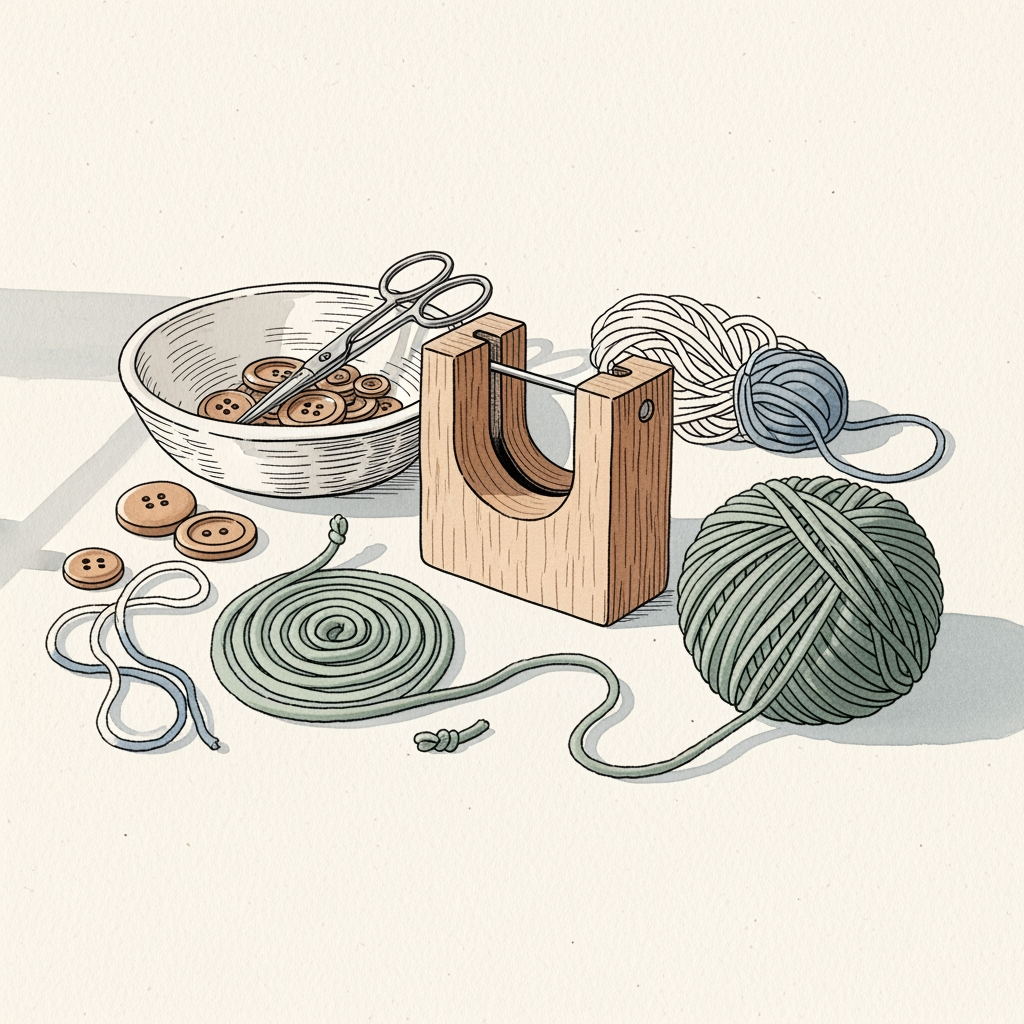
The lucet fork is a handheld tool used to create a square-shaped, braided cord that is structurally stronger and more decorative than a standard round cord. It works by transferring loops back and forth, resulting in a cord that does not twist or tangle during use.
This tool is ideal for knitters who appreciate the intersection of historical craft and functional design. The square profile of the finished cord lays exceptionally flat against knitted edges, making it the perfect choice for drawstrings or hoodie ties that see significant friction.
Unlike machine-knit cords, lucet cords have a unique, dense geometry that feels substantial in the hand. Expect a steeper learning curve to achieve uniform tension, but the final outcome is far more durable and resistant to thinning than common tube-knit alternatives.
Tohofun Kumihimo Kit: Best for Intricate Braids
Kumihimo is a Japanese form of braiding that utilizes a round foam disc to guide multiple strands of fiber into complex, patterned designs. This is the go-to method for creating heavy-duty, multi-colored edging that looks like professional piping.
The benefit here lies in the ability to combine different yarn weights and colors into a single, cohesive rope. If a project has a variegated color scheme, using a Kumihimo disk allows the knitter to pull specific colors from the main project to create a perfectly coordinated custom edge.
Understand that these braids are typically thicker than standard cords and can add significant bulk to a seam. Reserve this technique for projects where the cord is intended to be a structural focal point, such as the opening of a heavy winter coat or a sturdy tote bag.
Faux Suede Cord: Best for a Rustic Vegan Finish

Faux suede cord provides a soft, matte, and flexible finish that pairs effortlessly with autumn-themed knits and chunky cowls. It mimics the tactile appeal of leather without the risk of bleeding dye onto delicate hand-knitted stitches.
The primary advantage is its inherent “grip.” Unlike nylon or satin, faux suede has a slightly fibrous surface that stays put when tied or woven through loose cable gaps. It requires no specialized knitting tools to install, as it can be threaded directly onto a tapestry needle.
Always test the cord for colorfastness before attaching it to a light-colored project. Although synthetic, some lower-quality faux suedes may transfer pigment when wet, which can be devastating to a pristine, light-colored hand-knit project.
Bobbiny Macrame Cord: Best for Chunky Projects
Macrame cord is manufactured as a multi-ply, twisted, or braided rope designed to hold tension under weight. It is the premier choice for large-scale home decor, such as wall hangings or heavy knitted floor cushions that require a sturdy, architectural edge.
When working with this material, remember that it does not possess the elasticity of wool. If the edge of the knit is highly stretchy, avoid pulling the cord tight during the attachment phase, as this will cause the project to pucker and buckle.
Consider the weight of the cord in relation to the knit fabric. Using a heavy-duty macrame cord on a delicate fingering-weight scarf will overwhelm the fabric, leading to a mismatched aesthetic. Pair this cord with super-bulky or jumbo-weight knitting for the best visual balance.
How to Choose the Right Cord for Your Project
The decision-making process should begin with a weight assessment: the cord should never be heavier than the fabric it is meant to decorate. A lightweight lace shawl requires a fine, thread-based cord, whereas a wool basket benefits from a substantial, braided rope.
Consider the functional needs of the garment as well. If the cord will be used as a functional tie or drawstring, prioritize durability and low-friction materials like cotton or polished synthetics. For purely decorative borders, texture and sheen are more important than mechanical strength.
Finally, evaluate the maintenance requirements of the base project. If the knitted item is machine-washable, ensure the chosen cord can withstand the same cycle or can be easily detached prior to washing.
Attaching Cords: Techniques for a Clean Edge
The most professional way to attach a decorative cord is to integrate it directly into the final row of the knitting. Use a crochet hook to pull the cord through every second or third stitch along the edge, creating a looped or scalloped effect.
For a hidden finish, utilize a tapestry needle and a matching thread to sew the cord to the back side of the knitted edge. This “invisible” seam allows the cord to sit on top of the fabric without visible thread marks or bulky knots.
If the project is meant to be reversible, avoid sewing the cord to the back. Instead, weave the cord through the stitches using a continuous running stitch, ensuring the cord is secured at the starting and ending points with a strong, hidden knot or a small, decorative charm.
Hand-Knitted I-Cord vs. Pre-Made Cords
Hand-knitted I-cords provide the advantage of perfect color matching, as they can be created using the exact leftover yarn from the project itself. They also offer a natural, soft drape that mimics the movement of the garment perfectly.
Pre-made cords, however, offer superior durability and are significantly less labor-intensive. If a project requires several yards of edging, knitting an I-cord by hand can become tedious and result in inconsistent tension that detracts from the professional look of the piece.
Choose the hand-knitted approach for special occasion garments where fiber continuity is vital. Opt for pre-made, high-quality cords for items that will see frequent use, such as bags, belts, or home accessories that require the extra structure of a pre-manufactured rope.
Caring for Knits with Decorative Cord Edging
Maintenance of corded knits starts with understanding the lowest common denominator in the material mix. If the cord is not colorfast or shrink-resistant, the entire garment must be hand-washed in cool water with a gentle wool wash to protect the integrity of the trim.
Avoid hanging garments with heavy corded edges, as gravity will stretch the knit fabric at the points of attachment. Lay these items flat to dry, carefully arranging the cord so that it does not retain a distorted shape while the fibers are wet and vulnerable.
If the cord is removable, take it off before cleaning to prolong the life of both the knit and the decorative element. For permanently attached cords, inspect the joining stitches every few washes to ensure that the tension of the cord hasn’t begun to wear through the surrounding knitted loops.
Selecting the right cord is a final, vital step in elevating a handmade project to a professional standard. By carefully balancing the fiber content, weight, and attachment technique, you ensure that the edging serves as a long-lasting, beautiful component of the finished design.