6 Best Workspace Mats For Catching Pigment Dust
Keep your creative space clean and organized. Explore our list of the 6 best workspace mats for catching pigment dust and upgrade your studio setup today.
When working with fiber dyes or hand-painting luxury yarns, fine pigment dust inevitably settles on the workspace. This microscopic powder can stain hardwood tables or ruin delicate lace projects if left to accumulate. A dedicated workspace mat acts as a necessary barrier, trapping particulates before they migrate into your yarn stash. Investing in the right surface ensures the dyeing area remains a controlled environment rather than a source of fiber contamination.
Lrisy Silicone Mat: Best for Heavy Pigment Use


The Lrisy silicone mat offers a thick, durable surface designed to withstand the rigors of frequent pigment application. Its substantial weight prevents it from sliding, even when manipulating heavy skeins of wool or silk.
The primary advantage here is the high-heat resistance and depth of the material. Because pigment dust can be stubborn, having a mat that won’t degrade under cleaning agents is vital for maintaining a clean dye station.
If you regularly work with heavy, high-ply yarns that require significant handling, this mat holds its shape without curling at the edges. The bottom line: it is a reliable choice for serious dyers who prioritize longevity over portability.
Mod Podge Silicone Mat: A Crafter’s Go-To Tool
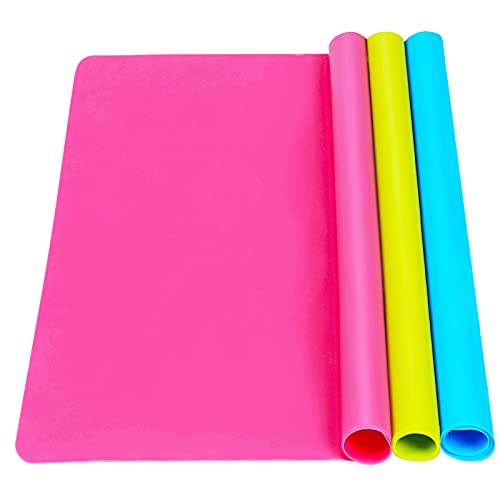
This mat is widely recognized for its versatility across various crafting disciplines, including textile arts. The surface is intentionally designed to be non-slip, ensuring that even slippery bamboo knitting needles or silk-blend yarns remain securely in place during the dyeing process.
The material excels at catching fine particles, which can be wiped away with a damp cloth or rinsed under a tap. Its translucent nature allows for easy identification of stray dust, ensuring no pigment transfers to your next project.
It provides a balance between thickness and flexibility. While not as heavy as industrial-grade mats, it remains an excellent choice for a home studio where space is shared between dyeing and knitting.
Anezus Silicone Sheets: Best Budget Multi-Pack

For those setting up a dedicated dyeing corner for the first time, the Anezus multi-pack offers remarkable value. Having multiple sheets allows for a rotating system where one mat is being cleaned while another is in use.
These sheets are thinner than specialized heavy-duty mats, making them easy to store or fold when the workspace needs to be reclaimed for blocking or yarn winding. They perform well for light pigment work and occasional hand-painting.
While they lack the extreme heat resistance of thicker options, they are perfectly suited for basic acid dye setups. If the goal is protecting a tabletop from minor pigment fallout, these sheets provide the most coverage for the lowest cost.
Let’s Resin Extra Large Mat: For Big Projects
Large-scale dyeing, such as processing entire sweater quantities of wool, requires significant surface area. The Let’s Resin mat provides ample room to spread out wet skeins without the risk of pigment dust drifting onto unprotected furniture.
The surface texture is specifically engineered to catch debris, keeping the workspace tidy. It minimizes the risk of cross-contamination when switching between different colorways or fiber types.
This is the preferred choice for those working with large batches or oversized projects. The sheer size alone makes it a worthwhile investment for the dedicated dyer who rarely handles small, single-skein tasks.
Scraperite Non-Stick Mat: The Pro Dyer’s Pick
The Scraperite mat is favored by professionals because it resists pigment buildup with unmatched efficiency. Its specialized coating ensures that even stubborn, dried pigment particles lift away easily without the need for harsh scrubbing.
Durability is its hallmark. In a high-volume dye studio where the mat faces constant exposure to pigments, mordants, and water, it maintains its integrity far longer than standard craft mats.
This is a premium tool that justifies its cost through professional-grade performance. If the priority is a pristine, low-maintenance workspace that won’t require frequent replacement, this is the definitive choice.
Nicpro Silicone Mat Set: Best All-In-One Kit
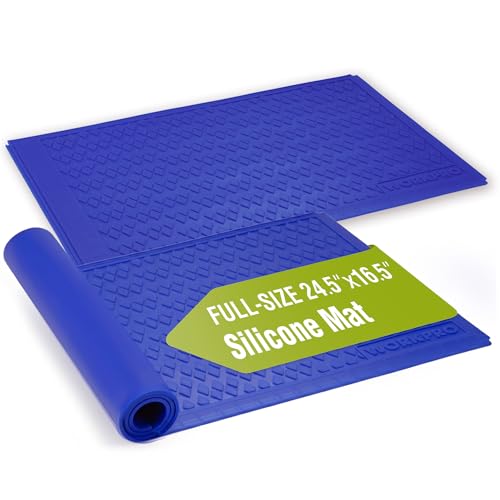
The Nicpro kit is designed for the knitter who enjoys variety in their workspace setup. Including mats of various sizes allows you to customize the coverage based on the specific project, whether you are dyeing a small bundle of lace-weight mohair or a full set of bulky wool.
The inclusion of built-in palettes and compartments is a clever touch for those who mix their own custom dye colors. It organizes the workspace efficiently, reducing the chance of accidental spills that lead to dust accumulation.
This set offers the most comprehensive solution for organizing a dyeing station. It is an ideal starting point for anyone looking to professionalize their setup without buying individual components separately.
Silicone vs. Self-Healing Mats: Which Is Best?
When choosing a surface, many gravitate toward self-healing cutting mats due to their familiarity. However, for pigment dust and dyeing, silicone is vastly superior. Self-healing mats are porous by design, meaning they trap microscopic dye particles permanently, leading to inevitable cross-contamination of future yarns.
Silicone is non-porous and hydrophobic. Pigment dust simply sits on the surface, ready to be wiped away, rather than sinking into grooves or cuts.
- Silicone: Easy to clean, non-absorbent, heat-resistant, and chemically inert.
- Self-Healing: Prone to staining, difficult to sanitize, and holds onto moisture that could encourage mildew.
Stick to silicone for any dyeing or pigment-heavy work. The health of your yarn stash depends on a surface that can be thoroughly decontaminated.
How to Clean and Care for Your Pigment Dust Mat
Maintaining a clean mat is as much about protecting your health as it is about protecting your fiber. Use a damp cloth to wipe down the surface after every session, ensuring no fine dust remains for the next use.
For deeper cleans, mild dish soap and warm water are sufficient for silicone. Avoid abrasive scrubbers that could create tiny crevices where pigment might eventually hide.
Always allow the mat to air dry completely before rolling or folding it for storage. Storing a damp mat can create a breeding ground for bacteria, which is the last thing any fiber artist wants near their delicate protein or plant fibers.
What Mat Size Do You Really Need for Your Space?
Evaluate your workspace based on the scale of your largest projects. If you only ever dye small batches for color-work accents, a small or medium mat is sufficient and keeps your workspace decluttered.
However, if you are dyeing full garments, you need enough room to manage the yarn without edges touching unprotected surfaces. A mat that is too small leads to messy spills and pigment migration.
Consider the dimensions of your table as well. A mat that overhangs the edge is a safety hazard, as it can be easily snagged and pulled down during the delicate process of moving heavy, wet yarn.
Key Features to Look for in a Pigment-Proof Mat
When shopping, prioritize material quality above all else. Food-grade silicone is the gold standard, as it ensures there are no toxic fillers that could react with your dye powders or mordants.
Look for a grippy base. A mat that shifts while you are applying pigment is an invitation for a spill. Edge height is another consideration; some mats come with a small lip that prevents liquids and loose dust from rolling off onto your floor.
- Non-stick surface: Essential for easy cleanup.
- Heat resistance: Required if you use heat-setting techniques on the mat.
- Flexibility: Important for storage in small apartments or shared rooms.
- Edge design: A raised border keeps dust and liquid contained.
The right mat transforms a messy, high-risk chore into a controlled and professional part of your creative process. By selecting a high-quality, non-porous surface, you ensure your workspace stays clean and your beautiful hand-dyed yarns remain free of unwanted contaminants. Happy dyeing.