7 Best Hobby Tool Kits For Beginner Crafters
Discover the 7 best hobby tool kits for beginner crafters. Explore our top-rated picks to build your essential starter collection and launch your next project.
Starting a new craft requires the right foundation to prevent early frustration and wasted materials. While the allure of shiny, professional-grade equipment is strong, beginners benefit most from curated sets that cover the essentials without overwhelming the workspace. This guide breaks down the best tool kits for those ready to dive into fiber arts and DIY projects. Making an informed choice now ensures that focus remains on developing technique rather than troubleshooting inferior tools.
ARTIKA Sewing Kit: Best All-Around Starter
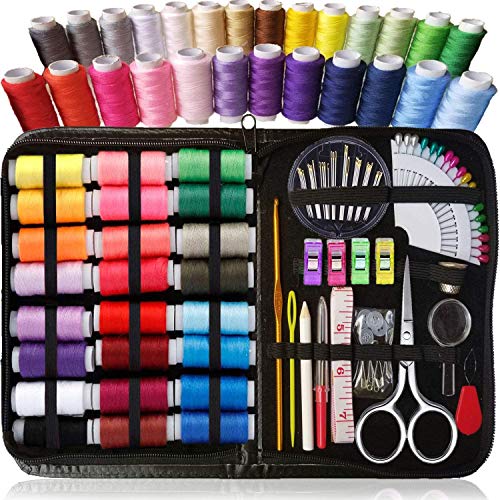

A comprehensive sewing kit acts as the hardware store for any fiber artist. Whether the task involves minor garment repairs, attaching buttons to a hand-knit cardigan, or finishing seams on a textile project, having the right needle and thread on hand is non-negotiable.
The ARTIKA kit excels by providing a high volume of thread colors and basic notions in one place. It eliminates the need to hunt for a specific shade of polyester thread when a simple seam fix is required. While professional tailors might eventually upgrade to individual spools of higher-quality cotton or silk, this set provides the necessary breadth for a novice to experiment.
Focus on the quality of the scissors and the needle eye size when assessing such kits. Blunt scissors lead to frayed yarn ends, while needles with tiny eyes cause unnecessary tension on delicate fibers. Bottom line: This kit is the perfect safety net for any home studio.
KnitPicks Beginner Knitting Kit: Best for Knitters

New knitters often struggle with the mechanical interaction between needle material and fiber. A slick nickel needle can make a novice feel like their stitches are sliding off uncontrollably, while high-friction wood might cause the yarn to snag and stall.
This kit typically balances these factors by providing needles that offer enough grip to control yarn tension while remaining smooth enough to keep the knitting flow steady. Having a variety of sizes allows the knitter to test how different needle diameters influence gauge. Understanding gauge—the number of stitches per inch—is the most critical skill in knitting, as it determines if a garment will fit correctly or hang poorly.
Avoid the temptation to buy dozens of needles at once. Start with a medium-weight yarn, like a worsted wool, and match it with the needle size suggested on the yarn label. This kit serves as a controlled environment to master the basic knit and purl stitches.
Cricut Basic Tool Set: For Paper & Vinyl Crafters

Precision is the hallmark of a clean project, whether working with cardstock or adhesive vinyl. The Cricut Basic Tool Set provides the ergonomic scrapers, weeders, and spatulas necessary to manipulate intricate cuts without tearing the material.
These tools are particularly useful for those who want to create their own stitch markers or custom project labels. When working with delicate cuts, the hook tool becomes an essential partner for removing excess material. Using fingers to pull at small, intricate vinyl designs almost always leads to stretching and distortion.
Assess the ergonomics of the handles before settling into a long session. Prolonged use of poorly shaped tools causes hand fatigue, which mimics the strain often felt after hours of cable knitting. This set is a solid, durable investment for any crafter who values clean lines and geometric precision.
Caydo Embroidery Starter Kit: Best for Needlework
Embroidery is an accessible way to personalize knitwear with delicate floral accents or monograms. The Caydo kit includes the hoops, needles, and basic fabric necessary to start practicing stitch patterns.
The most important component here is the embroidery hoop, which must hold the fabric taut to ensure even stitch tension. If the fabric sags, the resulting embroidery will look puckered once the piece is removed from the hoop. Fiber choice matters just as much as the tool; beginners should start with a smooth, high-twist cotton floss that resists tangling.
Do not overlook the quality of the embroidery needles included. They should have a sharp point for piercing fabric, as opposed to the blunt-tipped tapestry needles used for weaving in yarn ends. This kit provides a low-stakes way to practice the fine motor skills that translate directly into better tension control for knitting and crochet.
BEADNOVA Jewelry Making Kit: Aspiring Jewelers
Jewelry making shares a surprising number of skills with fiber arts, particularly regarding dexterity and the understanding of physical structures. This kit offers the pliers, cutters, and findings required to construct everything from stitch markers to beaded shawl pins.
When selecting a kit, look specifically for pliers with comfortable, spring-loaded handles. Much like the difference between a high-quality circular needle and a cheap, plastic-coated one, the ergonomics of your pliers will dictate how long you can comfortably work. Be mindful of the wire gauge included; thinner wire is easier to manipulate but offers less structural integrity for heavy beads.
These tools are invaluable for creating custom functional accessories that complement knit garments. A handmade beaded stitch marker can save hours of frustration when tracking complex lace repeats. This kit provides the necessary components to bridge the gap between textile creation and wearable ornamentation.
Fiskars Craft Knife and Tool Set: Essential for DIY
Versatility is the primary virtue of this set, which serves as an all-purpose utility solution. In a dedicated knitting room, these tools are indispensable for cutting heavy cardboard for yarn pom-poms, trimming pattern paper, or preparing templates for blocking mats.
The sharpness of the blades is the primary consideration here. Dull blades require more force, which increases the likelihood of slipping and accidental injury. Always maintain a stash of replacement blades and a self-healing cutting mat to protect the work surface.
Safety should never be an afterthought in a craft space. Ensure the set includes a secure blade storage system, especially if the craft area is shared with others. When used correctly, these tools turn chaotic pile of materials into a professional, organized workspace.
Boye Crochet Starter Kit: Your First Crochet Hooks
Crochet hooks function quite differently from knitting needles, primarily because the hook itself is a complex tool requiring specific geometry. A good hook needs a deep throat to catch the yarn easily and a smooth shaft to ensure the yarn slides off without catching.
Beginners often find that plastic or resin hooks provide a good balance of grip and speed. Unlike knitting, where two needles are used, crochet relies on the ergonomics of a single hook handled in a way that feels like holding a pencil or a knife. The Boye set is a industry standard because of its consistent shape and affordability.
Pay close attention to the hook size, as this dictates how the yarn sits and flows. A hook that is too small for the yarn will result in tight, stiff fabric that lacks drape. Start with a standard size like a 5.0mm (H) hook and a medium-weight yarn to see how the tool influences the final stitch structure.
How to Choose Your First Craft Tool Kit
The best tool kit is the one that removes barriers, not the one with the most pieces. Evaluate the contents against the specific project you have in mind rather than the potential for “someday” projects.
- Ergonomics: Test the weight and grip of the tools for ten minutes.
- Material Quality: Look for smooth, snag-free surfaces on all needles and hooks.
- Scalability: Can the kit be expanded with individual pieces as skills advance?
- Storage: Does the kit come with a durable, organized case that prevents tool loss?
Avoid kits that focus on quantity over quality. A set with 50 cheap tools is rarely better than a set with 5 high-quality, professional-grade instruments. Focus on the tools that will be in your hands 90% of the time.
What’s Actually Inside a Beginner’s Kit?
A functional beginner’s kit should prioritize the essential tools required to manage the physical properties of the materials. For fiber-based kits, this includes measuring tapes, small scissors, and basic storage solutions for small items like stitch markers or spare needles.
Be wary of kits padded with “filler” items. Often, mass-produced kits include low-quality yarns or fabrics that do not behave well during the learning process. A kit that focuses on the mechanics of the tool—like needle material, grip texture, and precision tip design—is far more valuable than one filled with cheap, decorative extras.
Inspect the inclusion of instructional materials, but do not rely on them exclusively. Most kits provide basic charts, but visual learning via tutorials often bridges the gap between the kit’s contents and a finished project. The goal is to obtain a set of tools that feel like a natural extension of your hands.
Key Tools to Add to Your Kit as You Grow
As experience grows, the requirements for tools shift from “basic capability” to “refined performance.” For the knitter, this often means upgrading from entry-level fixed needles to interchangeable circular needle sets. These allow for a wider range of cord lengths and tip materials, such as bamboo for slick lace yarn or nickel for wool that needs extra help sliding.
Additional essential upgrades include: * Digital Scale: Necessary for weighing yarn remnants to ensure you have enough for a project. * Blocking Mats and T-Pins: Essential for shaping finished garments to their final measurements. * Lighted Magnifying Glass: Reduces eye strain during intricate work or when using dark-colored yarns. * Quality Yarn Swift and Ball Winder: Essential for transforming hanks of luxury fiber into manageable cakes.
Growth in any craft is iterative. Invest in tools that solve specific problems you encounter regularly. If your hands cramp, look for ergonomic grips. If your stitches are inconsistent, look for needle materials that offer more or less friction.
Selecting the right starter kit is the first step toward mastery in any fiber art or DIY craft. Prioritize ergonomics and quality over quantity, and you will find that your tools support your creative goals rather than hindering them. Remember that every master began with a simple set of tools and a willingness to learn. Happy crafting.