6 Best Drawing Clips For Paper Securing Artists Trust
Keep your canvas stable with these 6 best drawing clips for paper securing. Explore our top expert-tested picks to improve your workflow and buy yours today.
Securing paper to a workspace is much like managing tension in a complex cable knit sweater. If the foundation is loose, the final result will lack the crisp definition and structure needed for professional-grade work. Choosing the right tool ensures the drawing surface remains stable, preventing unwanted creases or shifts during long hours of creation. Stability is the hallmark of any serious artistic endeavor, providing the consistency required for intricate details.
Officemate Bulldog Clips: The All-Purpose Classic


Bulldog clips are the workhorses of the studio, much like a reliable set of stainless steel needles that never warp or snap. Their heavy-duty springs provide a consistent, firm grip that handles thick watercolor paper or layered sketches with ease.
The primary advantage is the sheer clamping force, which keeps heavy papers from sliding during vigorous drafting. Unlike flimsy alternatives, these clips don’t fatigue over time, maintaining their tension just as a well-plyed wool yarn retains its structure through repeated washings.
However, be mindful of their strength. If thin, delicate drafting paper is clamped too tightly, these clips can leave permanent indentations. Always place a small scrap of cardstock between the clip and the paper to distribute the pressure more evenly.
Mr. Pen Binder Clips: Best Budget-Minded Option

Binder clips serve as the entry-level tool for students and hobbyists, mirroring the accessibility of bamboo needles. They offer a versatile, low-cost solution for keeping reference photos or charts pinned directly to a drafting table or board.
The folding handles allow for a flat, low-profile surface that won’t interfere with a ruler or T-square movement. This is a critical feature, much like ensuring needle tips don’t snag on fine lace work when picking up stitches for a border.
The tradeoff lies in the durability of the metal handles, which can snap under extreme tension. Use these primarily for lighter paper stocks rather than heavy-duty boards to ensure they last for several projects without failing mid-stroke.
U.S. Art Supply T-Pins: For Drawing Board Setups

T-pins are the go-to choice for artists who need to stretch large sheets of paper across a wooden board, similar to how one might pin out a delicate lace shawl during the blocking process. They allow for uniform tension across the entire surface.
By pushing the pin directly into the board, the paper is held taut without any bulky hardware obstructing the drawing area. This technique creates a clean, edge-to-edge workspace that is ideal for large-scale charcoal or graphite compositions.
Note that this method requires a surface that accepts pins, such as foam core or soft wood. When removing them, always use a slow, steady pull to prevent the paper from tearing, much like unpinning a delicate finished garment from a blocking mat.
Pro Tapes Artist Tape: The No-Damage Alternative

Artist tape provides the gentlest hold available, functioning like a mild adhesive for projects that cannot risk any surface disturbance. It is ideal for delicate surfaces where even the lightest clip might leave a mark.
This tape is designed to be repositionable and leaves behind minimal residue, making it the perfect choice for high-end archival papers. In the fiber world, this is akin to using specialized stitch markers that won’t snag or leave oil residues on fine silk yarn.
While it lacks the physical strength of a metal clip, it excels at protecting the integrity of the paper edges. Avoid using it on oily surfaces, as the adhesive bond will weaken significantly, leading to unwanted peeling mid-project.
Pony Spring Clamps: For Heavy-Duty Securing Jobs
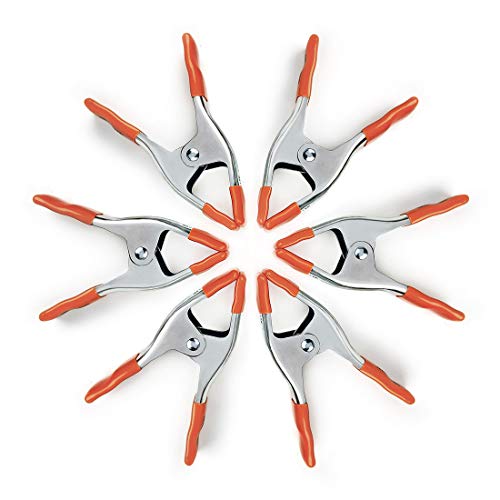
When working with large boards or thick cardboard mounts, spring clamps provide superior leverage that standard clips cannot match. These are the equivalent of using large, circular needles for a bulky weight wool project; they are built for substantial, structural tasks.
The rubberized tips provide excellent friction, preventing the clamp from slipping even on smooth wooden surfaces. This added stability is essential when the drawing process involves heavy hand pressure or frequent erasing.
These clamps are bulky and can take up significant room on the table edge. Use them only when the project scale demands their heavy-duty holding power to avoid cluttering a smaller desk space.
Art Alternatives Canvas Clips: For Plein Air Work
Canvas clips are engineered for artists working in the field, providing a secure way to carry boards or canvases without damaging the edges. They are compact, lightweight, and specifically designed to keep stacked surfaces from shifting during travel.
For those painting or drawing on location, these offer a level of security that mimics the safety of locking stitch markers. They are designed to snap onto edges firmly without requiring a flat desk surface to function.
They are less effective for horizontal, stationary table work compared to bulldog clips. Keep these in the field kit rather than the primary home studio to maximize their specific mobility benefits.
How to Choose the Right Clip for Your Artwork
Selecting the correct fastener depends on the weight of the paper and the duration of the project. A heavy, textured watercolor paper requires the high-tension grip of a bulldog clip, while a thin, sensitive sketching paper demands the soft touch of artist tape.
Consider the surface underneath the paper as well. If the board is hard and smooth, spring-loaded clamps will perform best; if the board is wood or foam, T-pins offer the most unobtrusive hold.
Always test your chosen clip on a scrap piece of the same paper stock first. If the clamp leaves a dent or crease, swap it for a gentler alternative or add a protective buffer layer.
Clips vs. Tape: Which Is Best for Your Paper?
Clips are superior for temporary, high-tension holds, whereas tape is the better choice for permanent or long-term alignment. Clips allow for quick repositioning, making them ideal for sketching phases where the paper might need to be shifted or rotated.
Tape is better suited for finished, high-quality work where the paper must remain perfectly stationary. However, tape carries a small risk of adhesive damage if left on the paper for months at a time, especially in humid environments.
Balance the need for speed against the need for preservation. Use clips for iterative, experimental stages and transition to tape as the work nears completion and requires permanent stability.
Matching Your Clip to Your Drawing Surface
The texture of the drawing board influences how well a clip performs. A slick surface, such as a laminate table, requires clips with rubberized or high-friction grips to prevent sliding.
Soft surfaces like drawing boards offer more purchase, allowing smaller binder clips to hold effectively without shifting. Just as the friction of wooden needles is superior for slippery synthetic fibers, the texture of the board determines the necessary “grip” of the clip.
Avoid using metal clips directly on painted or lacquered tables, as they can scratch the surface. A simple felt pad or piece of masking tape on the clip’s jaw can act as a protective layer for your furniture.
How to Avoid Damaging Paper With Drawing Clips
The most common mistake involves clamping too close to the active drawing area, where pressure can cause ripples or creases. Always secure your paper at the very edge, ideally overlapping the clip onto a border area that will be trimmed away later.
If you must clamp near the image area, use a shim or a secondary piece of scrap paper to act as a barrier between the metal jaw and the artwork. This pressure-distributing technique is universal, whether preventing clip damage or ensuring a stitch doesn’t pull during a complex cable cross.
Regularly check your clips for burrs or sharp edges that could snag the paper fiber. A quick inspection before each session keeps the tools in top condition, ensuring your work remains pristine from start to finish.
Choosing the right securing method is the final touch of preparation that allows for true creative flow. By matching the tool to the specific needs of your paper and project, you eliminate the frustration of shifting surfaces and allow yourself to focus entirely on the art. Invest in high-quality fasteners, treat your materials with care, and notice how much more polished your workflow becomes.