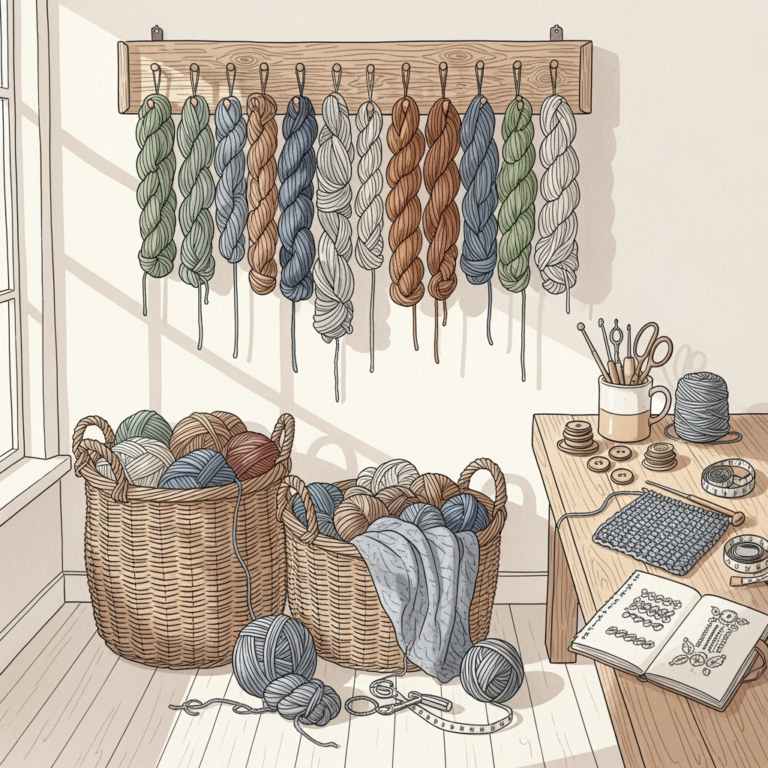
6 Best Expandable Racks For Drying Hand-Dyed Yarn
Discover the 6 best expandable racks for drying hand-dyed yarn. Protect your delicate fibers and ensure even airflow by choosing the perfect tool for your studio.
Drying hand-dyed yarn requires more care than a standard machine-washable load, as uneven moisture or stretching can alter the twist and color distribution of your fiber. A proper drying rack provides the necessary airflow to ensure even evaporation, preventing mildew and maintaining the structural integrity of the delicate strands. Whether you are dealing with luxury silk blends or sturdy wool, the way you hang your skeins dictates their ultimate bounce and loft. Investing in a dedicated rack is the most effective way to protect the time and financial investment poured into hand-dyeing.
Honey-Can-Do Gullwing Rack: Best Overall Value


The Gullwing design is a staple for a reason, offering a generous amount of horizontal space that prevents yarn from overlapping and creating damp spots. Its adjustable wings allow for customized height, which is essential when working with longer skeins that need extra clearance from the floor.
Because the rack is lightweight and folds nearly flat, it is ideal for those who turn a dining room or spare bedroom into a temporary dye studio. While it lacks the heavy-duty framing of premium models, it provides ample stability for the average rotation of hand-dyed skeins.
For the price, the functionality is unmatched. It offers enough bars to accommodate several skeins simultaneously without compromising on the airflow needed for uniform drying.
Leifheit Pegasus 200: The Premium Choice

If you are drying heavy, moisture-retaining fibers like untreated wool or bamboo blends, the Leifheit Pegasus 200 is an investment in durability. Its sturdy parallel legs provide a rock-solid base, ensuring that your precious hand-dyed fibers aren’t accidentally knocked over during the drying process.
The wings are exceptionally high, which is a major advantage for preventing longer hanks from dragging on the floor or getting tangled in the base supports. It also includes small clips for delicate items, though these are often better repurposed for securing yarn ends if they are prone to unraveling while wet.
This rack is designed for the serious fiber artist who dries yarn on a weekly, high-volume basis. It is built to last through years of repetitive use without bowing or losing its tension.
Cresnel Stainless Steel Rack: Most Durable
Stainless steel is the gold standard for drying tools because it is completely resistant to rust and corrosion. Since wet, dyed yarn can sometimes be slightly acidic or alkaline depending on the dye bath, having a rack that won’t react with the fiber is a significant benefit.
Unlike plastic-coated wire racks, this model won’t peel or flake, which protects your yarn from potential snags. The surface is smooth and non-porous, meaning it cleans up easily if dye runoff happens to land on the frame.
This rack is heavier than its aluminum or plastic counterparts, which adds a layer of stability that is hard to beat. It is the perfect choice for high-humidity environments where other materials might eventually show wear or oxidation.
Household Essentials Wall-Mount: Best for Small Spaces

Wall-mounted racks are the perfect solution for dedicated dye studios that lack a large floor footprint. By utilizing vertical space, this rack keeps your yarn out of the way of foot traffic while maximizing airflow.
It works best when installed at eye level, allowing you to monitor the drying progress of your skeins without bending down. The accordion design retracts completely when not in use, making it virtually invisible in a multi-purpose room.
While it lacks the sheer capacity of a floor-standing unit, it is an excellent choice for dyers who work in smaller batches. It effectively turns any empty wall into a professional-grade drying station.
Amazon Basics Foldable Rack: The Budget Pick

Simplicity is often the best approach, and this basic foldable rack does exactly what is required with no unnecessary frills. It is lightweight, compact, and sets up in seconds, making it ideal for the hobbyist who only dyes yarn occasionally.
Though it is not designed to support heavy, water-logged pounds of yarn, it manages small batches of fingering or lace weight perfectly. If you find the frame to be slightly flexible, simply balance the weight of your skeins evenly across the center to maintain structural alignment.
It is a functional, no-nonsense tool that earns its place in any yarn storage closet. It provides the necessary ventilation for quick drying without requiring a significant financial outlay.
Polder 2-Tier Mesh Rack: Best for Lay-Flat Drying
Some fibers, particularly loose-twist yarns or delicate mohair, benefit from laying flat rather than hanging to prevent permanent stretching. The Polder 2-Tier mesh rack provides a safe, horizontal surface that allows air to circulate underneath the yarn without the risk of gravity pulling on the fibers.
The mesh material is gentle and won’t leave hard creases or “ladder” marks on your skeins. It is also an excellent option if you are drying small swatches or accessories alongside your yarn.
This rack is a specialized tool for the knitter who prioritizes fiber longevity over speed. By eliminating the stress on the yarn structure, it ensures that your finished project maintains the exact gauge and tension you intended.
How to Choose the Right Rack For Your Rack
The most important factor is the surface material and its interaction with moisture. You need a rack that won’t rust, as even a small fleck of oxidation can permanently stain light-colored hand-dyed yarns.
Consider the height of your skeins, as nothing is more frustrating than having the bottom of a hand-dyed hank pool on the floor, picking up dust and dirt. Always look for a rack with a wide base to prevent tipping, especially if you are drying long, heavy wool skeins that shift weight as they dry.
Finally, think about storage. If you do not have a dedicated drying space, a model that folds flat is essential to prevent your living area from becoming cluttered.
Hanging Skeins Correctly to Prevent Tangling
Properly hanging yarn is just as important as the rack you choose. Always ensure the skein is twisted in a figure-eight before hanging, but keep it loose enough that air can reach the interior strands.
If the yarn is particularly prone to tangling, consider using a piece of waste yarn to tie the skein in three or four places around the circumference. This keeps the loop structure intact and prevents the strands from migrating and forming knots while the yarn is heavy with water.
Never pull or stretch the skein to make it fit a bar. If a skein is too long, double it over the bar rather than allowing it to touch the ground.
Metal vs. Plastic: Which Is Better for Wet Yarn?
Metal racks are generally superior for long-term use because they are rigid and resist the degradation that comes with constant exposure to water. Stainless steel, in particular, is the preferred choice for preventing chemical reactions with the dyes or detergents used in the processing of the yarn.
Plastic-coated racks are more affordable and lightweight, but they have a finite lifespan. Over time, the plastic coating can crack or become sticky, which poses a risk of snagging delicate fibers like silk or merino.
If you choose a plastic rack, inspect the joints and bars before each use. If the coating is compromised, move that rack to drying items that aren’t as delicate as your hand-dyed stash.
Can I Just Use Hangers? (And Why You Shouldn’t)
While it might seem convenient to loop a skein over a standard clothes hanger, this is rarely a good idea. The narrow surface of a hanger acts as a fulcrum, causing the yarn to stretch unevenly at the contact point and potentially leaving a permanent kink in the strand.
Hangers also tend to crowd the yarn, restricting the necessary airflow that prevents mildew. Because the yarn is bunched together at the top, the inside of the skein will remain damp long after the outside has dried, which can alter the fiber’s loft and bloom.
A dedicated drying rack offers a wide, flat surface that supports the yarn’s weight across its entire length. Protect your fiber by using tools specifically engineered for the unique demands of wool and delicate textiles.
A well-chosen drying rack is a permanent upgrade to your studio, ensuring your hand-dyed skeins dry safely, evenly, and without damage. By selecting a model that suits your space and your fiber volume, you can focus entirely on the creative process rather than worrying about the mechanics of drying. Proper care at this stage is the final, essential step in turning raw, dyed fiber into a beautiful, finished project.