6 Best Bamboo Rack Displays For Studio Organization
Streamline your creative space with our top 6 bamboo rack displays for studio organization. Explore these eco-friendly storage solutions and upgrade today.
A chaotic stash is the quickest way to lose inspiration, especially when a project calls for a specific dye lot or fiber blend. Proper organization transforms a pile of tangled skeins into a curated library, making it easier to match gauge and texture for complex patterns. Investing in quality bamboo storage creates a neutral, sustainable backdrop that highlights the vibrant colors of natural wools and luxury hand-dyes. Selecting the right shelving requires balancing floor space, accessibility, and the physical weight of your collection.
SONGMICS 6-Tier Shelf: Best Overall Storage


The SONGMICS 6-tier bamboo shelf acts as a robust backbone for any serious yarn stash. Its height-to-width ratio is ideal for narrow craft corners, ensuring that vertical space is maximized without crowding the room.
Each shelf offers enough clearance to accommodate stacked sweaters, large yarn cakes, or bulky bins of roving. Because bamboo is naturally resistant to moisture, these shelves provide a stable environment that helps prevent fiber degradation in humid climates.
The weight capacity is significant enough to handle heavy collections of wool, provided heavier skeins are placed on the lower shelves. The bottom-heavy loading strategy is essential to maintain the stability of this tall, slender unit.
Pip & Pin Wall Cubby: Best for Tools & Notions
Small accessories like double-pointed needles, cable stitch holders, and tapestry needles are notoriously easy to misplace during a complex pattern repeat. The Pip & Pin wall cubby keeps these critical tools visible and reachable, preventing the frustration of hunting for a spare stitch marker when the heart of a project is on the needles.
Wall-mounted storage is the superior choice for small studio spaces where every square inch of floor is occupied by a loom or a spinning wheel. These cubbies are perfectly sized to hold individual hanks of luxury lace-weight yarn or essential notion jars.
Mounting these at eye level creates a visual catalog of tools that keeps the creative process flowing smoothly. Use these for items you reach for daily, reserving deep drawers or cabinets for seasonal projects or long-term inventory.
Yarn Valet Bamboo Cart: Best Mobile Organizer
Projects often migrate from the living room to the studio depending on the complexity of the row being knitted. A bamboo cart with wheels allows the current project, relevant needles, and pattern notes to travel together without the need for constant reorganization.
This utility is vital for those who toggle between multiple projects, such as keeping a pair of socks on the needles for travel and a large colorwork sweater stationary on a desk. Mobility reduces the likelihood of yarn balls rolling under furniture where dust and pet hair can compromise the fiber.
Look for models with locking casters to ensure the cart remains stationary while working with high-tension fibers. Mobile carts excel in small homes where a dedicated studio space is not possible and equipment must be stowed away after every session.
IKEA NORDKISA Rack: Best for Hanging Skeins
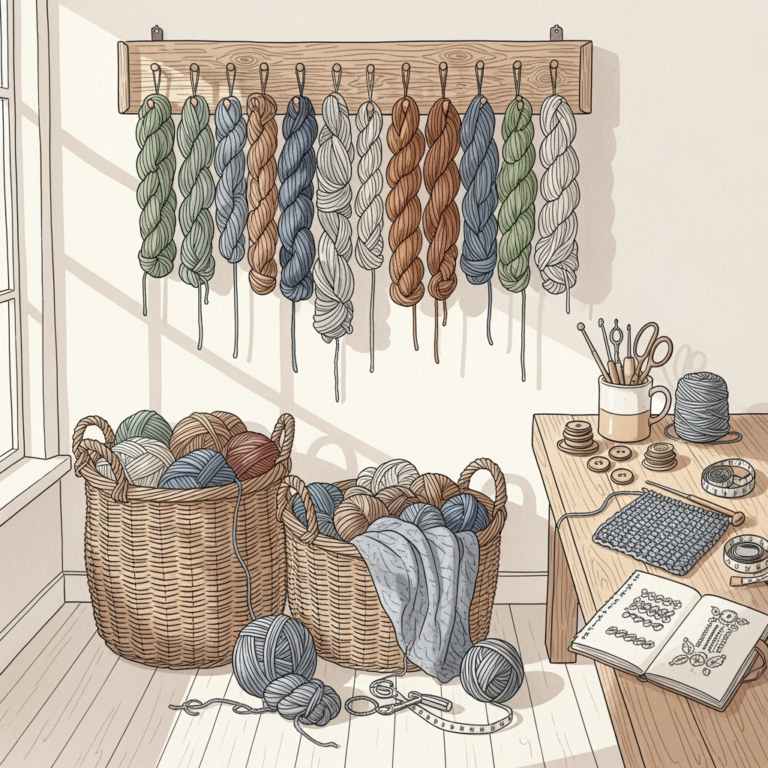
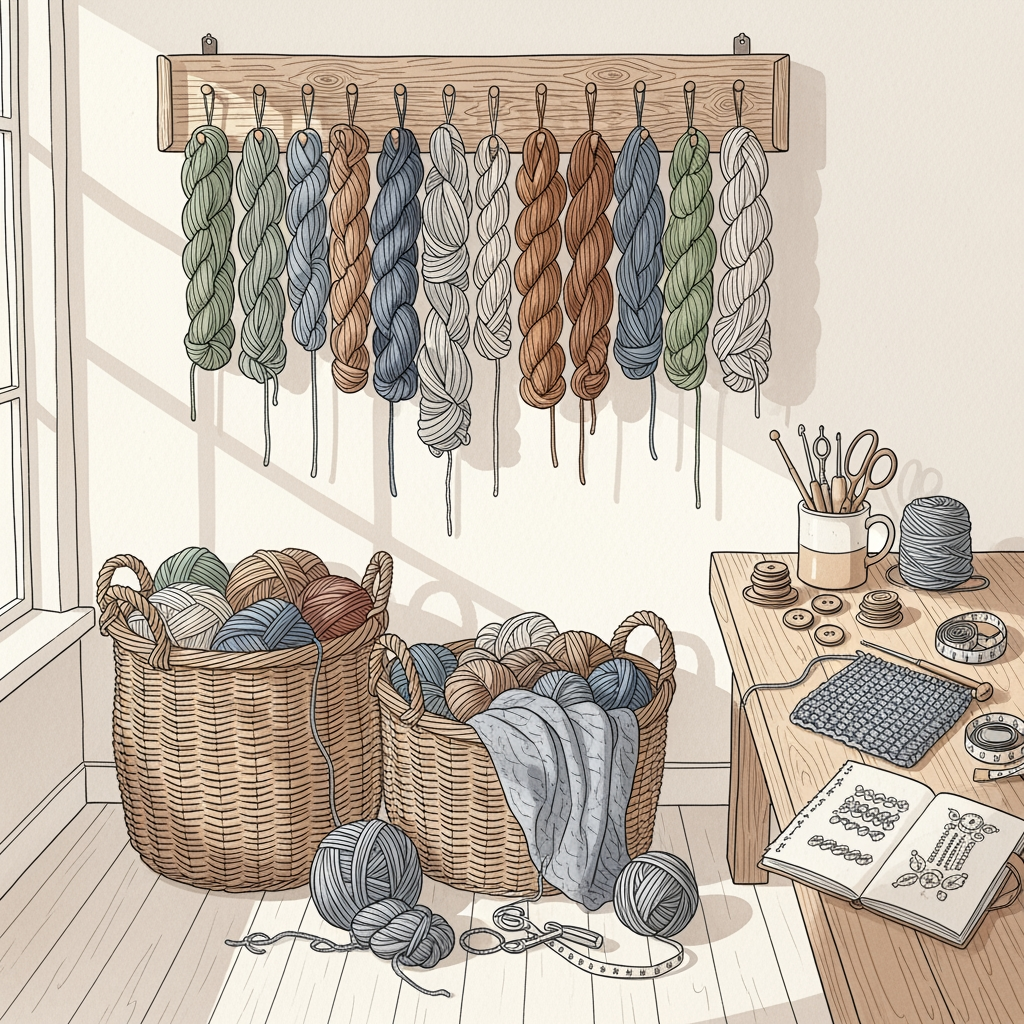
Hanging skeins vertically is the gold standard for preventing crushing, which can alter the loft and elasticity of delicate mohair or high-twist merino. The IKEA NORDKISA rack utilizes a simple rod-and-frame design that mimics a retail yarn shop, allowing for a clear overview of color transitions and yarn weights.
This rack is particularly effective for storing hanks that have already been washed and blocked, as it keeps them aerated and ready for immediate use. Hanging also makes it easy to identify yardage discrepancies by comparing hanks side-by-side.
Do not overload the rods with heavy, damp yarn, as bamboo has natural flex. Keep the total weight distributed evenly to prevent bowing of the hanging rail over time.
Crate & Barrel A-Frame Shelf: Stylish Display
Fiber artists who treat their collection as decor often prefer the open-concept design of an A-frame shelf. The angled construction creates a unique visual footprint that prevents the “wall of storage” look found in many craft rooms.
The tiered depth of an A-frame is perfect for organizing supplies by weight; place bulky, heavy sweater quantities at the bottom and lighter, single-skein project remnants at the top. This creates an aesthetically pleasing gradient that makes selecting yarn for a new project feel like browsing a boutique.
While beautiful, the open sides mean yarn is more exposed to light and dust. Reserve this for yarn you rotate through frequently rather than long-term, archival storage.
AmazonBasics 4-Tier Rack: Best Budget Pick
For the maker just starting to accumulate a library of basics—such as worsted weight acrylics or mid-range wool blends—this rack provides essential utility at a manageable price point. It lacks the bells and whistles of high-end furniture, but it provides the critical airflow that fibers need to stay clean and fresh.

The 4-tier configuration is low enough to serve as a secondary surface for a needle organizer or a small project bowl. It is an honest, utilitarian piece that acknowledges the reality of budget constraints in the fiber arts hobby.
When assembling, ensure the tension screws are tightened firmly, as inexpensive bamboo frames can loosen with seasonal temperature changes. A quick monthly check of the hardware will keep this rack solid for years of frequent use.
How to Choose the Right Rack for Your Stash
Selecting a rack requires a sober assessment of your current inventory and your future acquisition habits. If your stash consists primarily of heavy superwash wool or cotton, you must prioritize weight capacity and structural integrity.
Consider the following factors before you click “buy”: * Fiber sensitivity: Does the yarn need to breathe to avoid felted textures? * Available square footage: Will a vertical tower or a horizontal cart serve your workflow? * Light exposure: Is the rack placed near a window, which could cause dye fading in natural fibers?
Never prioritize aesthetics over structural support if you store large quantities of sweater-quantity bags. Form should follow fiber volume to ensure your investment in storage doesn’t result in a collapse.
Assembling a Rack for Heavy Yarn Loads
Heavy yarn, such as dense cotton or bulky wool, exerts significant pressure on shelves. During assembly, verify that all dowels and screws are perfectly perpendicular to the frame; a slight skew in a bamboo unit will compromise the weight limit significantly.
If the rack feels wobbly upon completion, use a small amount of wood glue on the joints during assembly to create a permanent bond. For those living in areas with high humidity, apply a thin coat of food-safe mineral oil to the bamboo surfaces to prevent the wood from drying out or splintering.

Always secure tall shelving to the wall using safety brackets. A loaded shelf of yarn is surprisingly top-heavy and poses a tipping risk in homes with children or pets.
Bamboo vs. Metal Racks: A Quick Comparison
Bamboo is a superior choice for yarn because it is a naturally porous, renewable material that “breathes” alongside your fibers. Metal, while often stronger, can sometimes develop sharp edges or finish flaking that snag delicate fibers like silk or angora.
- Bamboo: Lightweight, warm aesthetic, eco-friendly, holds up well in standard home environments.
- Metal: High weight capacity, often modular, but can be prone to rusting in humid environments if the finish is compromised.
Choose metal if you are storing hundreds of pounds of commercial cones that need extreme reinforcement. Stick to bamboo for a curated, home-based stash that benefits from the natural, soft contact points.
Tips for Organizing Your New Bamboo Shelving
Effective organization is about accessibility, not just visual appeal. Group your yarn by weight (lace, fingering, worsted, bulky) so that when a pattern calls for a specific gauge, you know exactly which shelf to check.
Use transparent, breathable mesh bags for yarn that is prone to attracting dust or for loose, tangled hanks. This allows air to circulate while keeping the fiber pristine. If you organize by color, ensure the shelves are not in direct sunlight to prevent UV bleaching of hand-dyed yarns.
Keep your most frequently used needles and tape measures in a small bin on the bottom shelf. The goal is to minimize the friction between wanting to start a project and having the materials ready to go.
Investing in bamboo storage is a commitment to the longevity of your craft. With these racks, your fiber collection transitions from a cluttered pile into a functional, inspiring studio asset.