6 Best Ergonomic Needles For Intricate Lace Patterns
Struggling with hand fatigue? Discover the 6 best ergonomic needles for intricate lace patterns to help you knit comfortably for longer. Shop our top picks now.
Knitting intricate lace requires more than just patience and a steady hand; it demands tools that harmonize with the delicate nature of fine yarn. When working with complex charts involving frequent increases, decreases, and yarn-overs, the right needle can transform a stressful project into a rhythmic, meditative experience. Choosing the wrong equipment often leads to hand fatigue or dropped stitches that threaten the integrity of a shawl’s geometry. This guide explores the best ergonomic options to help maintain precision without sacrificing comfort during those long, detail-oriented knitting sessions.
Addi Ergonomic Lace: Best for Textured Grip


The Addi Lace needles are legendary for their tapered, needle-sharp tips, but the “Ergonomic” line adds a crucial layer of comfort. These needles feature a unique, slightly flattened grip area that prevents the fingers from slipping during repetitive lace maneuvers.
This specific shape is designed to reduce the force required to hold the needle, which is vital when working with slippery silk or bamboo yarns. By providing a subtle tactile index, the design helps the hands stay relaxed, even during long sessions of complex pattern-following.
However, the textured grip might feel unconventional to those accustomed to perfectly smooth, round surfaces. If the grip pattern creates friction that slows down the knitting speed, it is worth considering whether the benefit of reduced hand strain outweighs the loss of pure fluidity.
Kollage Square Needles: Easiest on the Hands

Square needles operate on a simple principle of ergonomics: they offer a more comfortable, surface-area-rich grip that requires less tension to hold. The corners of the square needle provide a slight “anchor” for the stitches, while the flat sides rest against the pads of the fingers.
For knitters who struggle with repetitive strain or arthritis, the shift to a square profile can be a revelation. The fingers do not need to “pinch” the needle as tightly to maintain control, which significantly lowers the baseline tension in the hands and wrists.
One minor tradeoff is the adjustment period required to master the stitch gauge on square needles. Because the yarn sits differently on the corners versus the flats, some knitters find their gauge shifts slightly compared to round needles.
ChiaoGoo Red Lace: The Ultimate Lace Knitting Tool

ChiaoGoo Red Lace needles are the gold standard for many lace enthusiasts, primarily due to their exceptionally sharp, surgical-grade tips. These tips are vital for maneuvering through complex stitch clusters, such as knitting three stitches together or working intricate bobbles.
The stainless steel finish is smooth enough to allow for rapid movement, yet not so slick that the yarn slides off unexpectedly. The cables are famously memory-free, meaning they won’t twist or coil, which is a major advantage when dealing with a large, heavy shawl resting in the lap.
It is important to note that these needles are rigid and quite pointed, which can be unforgiving for knitters who have a tendency to “push” the tip of the needle with their finger. Using a leather thimble or keeping a lighter touch is recommended to avoid fingertip soreness.
Signature Needle Arts: The Ultimate Splurge Pick

Signature Needle Arts needles represent the intersection of precision engineering and luxury aesthetics. These needles offer a choice of tip sharpness—Stiletto or Middy—allowing a knitter to match the needle geometry perfectly to the specific lace pattern requirements.
The weighting and balance of these aluminum needles are superior, providing a premium feel that is immediately noticeable in the hands. They are a high-investment tool, but for those who commit to large-scale lace projects, the long-term comfort and control can justify the price.
Because these needles are a significant investment, it is best to start by purchasing a single pair in a frequently used size. Testing the weight and the specific taper of the Stiletto tip will confirm if they suit a particular knitting style before committing to a full set.
Lykke Driftwood Needles: Warmth and Comfort
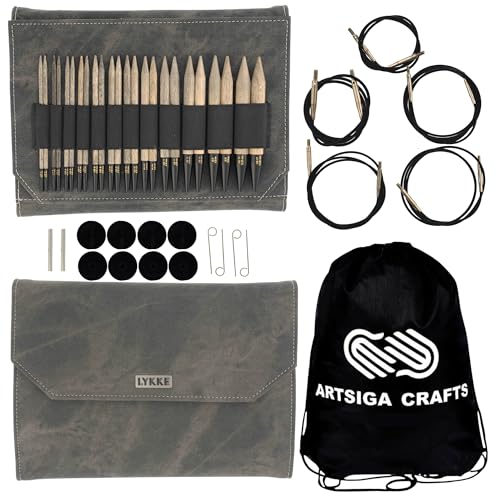
Lykke needles, crafted from smooth, finished birch wood, provide a tactile warmth that metal needles simply cannot match. For many, the weight and natural “grab” of wood are more ergonomic than the slippery surface of stainless steel, especially when working with natural fibers like wool or alpaca.
Wood provides a gentle resistance that keeps stitches securely in place during complex lace work. This reduces the subconscious need to “grip” the needle, which is a common, hidden source of hand and shoulder tension.
The main tradeoff is durability; wooden tips can eventually lose their sharpness or even splinter if they are dropped or caught on hard surfaces. They are best reserved for yarns that require a bit of extra grip, while metal needles remain the superior choice for high-speed, synthetic, or superwash yarns.
Knitter’s Pride Karbonz: Lightweight & Durable

Karbonz needles utilize a hybrid construction of high-tech carbon fiber with brass tips. The carbon fiber body is incredibly lightweight and flexible, which puts significantly less stress on the wrists compared to heavier metal or wooden needles.
The brass tips are smooth and sharp enough to pick up yarn precisely, while the carbon fiber body remains warm to the touch. This combination effectively bridges the gap between the speed of metal and the comfort of wood.
The only potential downside is that the join between the carbon fiber and the metal tip, while well-engineered, can sometimes catch if the join is not perfectly seamless. Knitters with a very tight gauge may want to verify that their yarn weight passes over the connection point easily.
How Needle Tip Shape Affects Intricate Lace
Lace knitting often involves complex decrease techniques like SSK (slip, slip, knit) or K2tog (knit two together). A sharper, tapered tip is essential for inserting the needle into tight, twisted, or clustered stitches without distorting the surrounding yarn.
Conversely, a blunt or rounded tip is better suited for larger gauges or slippery, loose-ply yarns where splitting the fiber is a constant risk. If a pattern relies on many yarn-overs and delicate maneuvers, a sharp tip saves time and reduces the physical effort of “forcing” the needle into the stitch.
Match the tip sharpness to the project: * Sharp/Stiletto: Best for fine lace, mohair, and intricate cable-lace combinations. * Standard/Middy: A versatile middle ground for general lace and fingering-weight patterns. * Blunt/Rounded: Ideal for bulky yarns or when working with fragile, splitty fibers like single-ply wool.
Metal vs. Wood: Which Is Better for Lace?
The choice between metal and wood is largely dictated by the “stickiness” of the yarn and the speed of the knitter. Metal needles are the gold standard for speed, as they allow the yarn to glide across the surface with minimal resistance.
Wood is superior for beginners or for those using very slippery yarns, such as silk or bamboo, where dropped stitches are a constant danger. The natural friction of wood acts as a brake, allowing the knitter to work with more confidence and less physical tension.
If a project requires rapid speed, metal is the logical choice, but only if the knitter can maintain a relaxed grip. If the hands start to cramp from trying to keep the yarn on the needle, switching to a wood or carbon fiber needle will instantly provide more control.
Do Square Needles Really Help with Hand Pain?
Square needles are built on the ergonomic premise of increasing surface contact between the fingers and the needle. By moving away from a traditional round cylinder, the fingers find natural “flat” spots to rest against, which inherently requires less gripping strength.
This change is particularly beneficial for knitters who suffer from carpal tunnel syndrome or general hand fatigue. By eliminating the need to constantly squeeze a round, rolling surface, the muscles in the palm and forearm stay more relaxed throughout the project.
It is important to remember that tools are only one piece of the puzzle. Even with the best square needles, regular breaks and proper posture are necessary to prevent long-term strain. Use these needles as a way to enhance comfort, not as a replacement for good knitting ergonomics.
What Makes a Knitting Needle Ergonomic?
An ergonomic needle is defined by its ability to minimize the physical effort required to perform a stitch. This includes the weight of the material, the shape of the shaft, the sharpness of the tip, and the quality of the cable joins.
A well-balanced needle should feel like an extension of the hand, rather than a heavy tool that needs to be fought. Beyond the needle itself, the flexibility and memory of the cable play a massive role; a stiff cable forces the wrists to compensate, leading to inevitable discomfort.
Ultimately, ergonomics is subjective and changes based on the project at hand. The best strategy is to curate a collection of different materials and shapes, allowing the needle to adapt to the specific fiber properties and technical requirements of each new lace shawl or garment.
Selecting the right needles is a journey of refinement, much like the lace patterns themselves. By understanding how material, shape, and sharpness influence the knitting process, you can build a toolkit that protects your hands and elevates your craft. When you choose tools that feel intuitive, the complexities of even the most intricate lace charts become much easier to manage. Happy knitting.