6 Best Cable Needles For Chunky Cables To Try
Struggling with bulky yarn? Discover our top 6 cable needles for chunky projects. We compare materials and shapes to help you achieve perfect, cozy stitches.
Mastering chunky cables requires more than just a sturdy yarn; it demands a cable needle that can support heavy stitches without dragging or slipping. When working with bulky wools or alpaca blends, the right tool acts as a reliable third hand for your project. Choosing the wrong needle often leads to dropped stitches or unnecessary tension fatigue. This guide will help you navigate the best options to keep your cable work smooth and professional.
Clover Takumi Bamboo Cable Stitch Needles


If you find yourself working with slippery fibers like silk-wool blends or superwash merino, bamboo is your best friend. The natural texture of the Clover Takumi needles provides just enough friction to hold those heavy, chunky stitches firmly in place while they wait to be worked.
The lightweight nature of bamboo is a significant advantage when you are dealing with the added weight of a bulky project. These needles don’t pull on your work, which helps maintain a consistent gauge across your cable crossings.
Keep in mind that bamboo can be slightly more fragile than metal. If you are a "tight knitter" who tends to yank stitches across the needle, be gentle to avoid snapping the wood. These are the gold standard for those who prioritize control over raw speed.
ChiaoGoo Stainless Steel Cable Needles
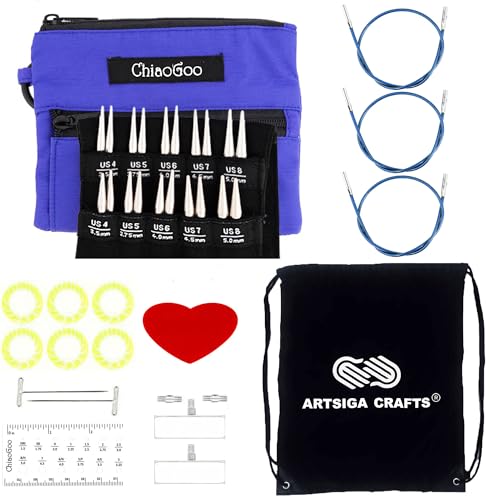
When you need a tool that offers zero resistance, ChiaoGoo’s stainless steel needles are the top choice. They are incredibly slick, allowing your stitches to glide effortlessly from the cable needle back onto your main needles.
Because they are made of steel, they are virtually indestructible and won’t bend under the weight of heavy, cabled wool. The finish is polished to a mirror-like shine, which is perfect for working with sticky, rustic wools that might otherwise cling to wood or plastic.
Be aware that their slickness is a double-edged sword. If you are working with a very smooth, high-twist yarn, your stitches might slide off the needle if you aren’t careful. Use these when you want speed and durability for high-volume cable projects.
Brittany Birch Wood Cable Stitch Needles

Brittany birch needles feel warm and organic in the hands, making them a pleasure to use for long knitting sessions. The wood has a subtle "grab" that is ideal for beginners who are still mastering the mechanics of cable crossings.
The craftsmanship is excellent, featuring a smooth finish that won’t snag delicate fibers like mohair or angora. Because birch is a harder wood than bamboo, these needles offer a bit more structural integrity for heavy-duty projects.
While they are beautiful, they are best suited for knitters who appreciate a tactile, traditional experience. If you are a fast, aggressive knitter, you might find the wood slightly slower than metal, but the comfort factor is unmatched.
Knitter’s Pride Ginger Cable Needles

The Knitter’s Pride Ginger series features a polished, laminated wood that bridges the gap between the grip of bamboo and the speed of metal. These needles are exceptionally smooth, yet they retain the warmth that makes wooden tools so comfortable to hold.
The tapered ends are designed to make picking up stitches easier, which is vital when you are managing multiple cable crossings in a dense, chunky pattern. They are sturdy enough to handle bulky yarns without feeling cumbersome in your hands.
These are an excellent "all-rounder" for knitters who work with a variety of yarn weights. If you want one set of cable needles that can handle everything from worsted to super-bulky, this is a versatile, high-quality investment.
Susan Bates Crystalites Cable Needles

If you have ever struggled to see your stitches against a dark needle, the translucent nature of the Crystalites will be a revelation. These plastic needles are lightweight, inexpensive, and incredibly easy to spot if you drop them in your knitting bag.
The material offers a moderate amount of grip, making them a safe middle ground between the extreme slickness of steel and the high friction of bamboo. They are a fantastic entry-level option for knitters who are just starting to experiment with cable motifs.
However, plastic can occasionally develop small nicks over time if you are using them with abrasive yarns. They are best treated as a reliable, functional tool for everyday projects rather than a lifetime heirloom piece.
Addi Aluminum Cable Stitch Needles

Addi is legendary for their high-quality manufacturing, and their aluminum cable needles are no exception. They are exceptionally smooth and lightweight, which helps reduce hand fatigue when you are working on a large, heavy cabled blanket or sweater.
The aluminum finish allows for rapid movement, making these ideal for experienced knitters who want to fly through complex cable charts. They are also very durable and won’t warp, no matter how heavy the yarn you are using.
Because they are metal, they can be quite slippery. If you are working with a very slick synthetic yarn, make sure you have a firm grip on your work so your cable needle doesn’t slide out of the stitches unexpectedly.
Understanding Cable Needle Shapes and Sizes
Cable needles generally come in three main shapes: straight, U-shaped, and J-shaped (or "hooked"). A straight needle is the simplest to use, while U-shaped needles are designed to let the stitches "sit" in the dip, preventing them from sliding off accidentally.
The size of your cable needle should ideally be the same as or slightly smaller than your working needles. If your cable needle is too thick, it will stretch out your stitches, creating unsightly gaps in your finished fabric.
Always match your needle size to your yarn weight. Using a tiny needle for bulky yarn will make it difficult to transfer stitches, while a needle that is too thick will distort the tension of your cable crossings.
Why Material Matters for Chunky Cable Projects
The material of your cable needle dictates how much "work" your fingers have to do. Slick materials like steel and aluminum require more attention to prevent stitches from sliding off, while grippy materials like wood or bamboo do the heavy lifting for you.
When working with chunky, heavy yarns, the weight of the needle becomes a factor. A heavy metal needle can pull on your stitches and distort the cable, whereas a lightweight wood or plastic needle will keep the fabric tension balanced.
Consider the "stickiness" of your yarn fiber:
- Slick/Silky yarns: Use wood or bamboo to add friction.
- Rustic/Sticky wools: Use metal to help the yarn slide.
- High-twist fibers: Use wood to prevent the yarn from "springing" off the needle.
How to Prevent Stretched Stitches in Cables
Stretched stitches at the points of your cable crossings are usually caused by the tension of the yarn traveling across the gap. To minimize this, ensure you are not pulling your yarn too tightly when you move the cable needle into position.
Another trick is to keep your cable needle as close to the main needles as possible during the transfer. The further away the needle hangs, the more it stretches the yarn between the stitches.
If you still see gaps, try knitting your cable stitches slightly tighter than your background stitches. This small adjustment in tension can prevent the "laddering" effect that often plagues beginners working with bulky, heavy cables.
Pro Tips for Managing Heavy Cable Projects
When knitting a massive cabled garment, the weight of the project itself can cause fatigue. Try to keep the weight of the knitting in your lap or on a table rather than letting it hang off your needles, which distorts your gauge.
If you find yourself constantly losing your cable needle, try using a double-pointed needle (DPN) of the same size instead. Many experienced knitters prefer DPNs because they are longer and easier to manage, and you can simply knit directly off them.
Finally, remember that cables "shrink" your fabric width. Always swatch with your cable pattern to ensure your sizing is correct, as a heavy cable project will behave very differently than a flat stockinette piece.
Selecting the right cable needle is an exercise in balancing your personal knitting speed with the specific needs of your yarn. Whether you prefer the warmth of birch or the lightning-fast finish of stainless steel, the best tool is the one that lets you knit comfortably for hours. Don’t be afraid to keep a variety of materials in your kit to match the unique texture of every new project. With these tools in hand, your chunky cables will look as professional as they feel.