6 Best Yarn Tension Guides For Colorwork Knitting
Master colorwork with these 6 top-rated yarn tension guides. Discover tools that prevent tangles and ensure consistent, professional-looking stitches every time.
Mastering consistent tension in stranded colorwork is often the biggest hurdle for knitters transitioning from simple stripes to intricate Fair Isle patterns. Without the right support, your floats can become too tight, puckering the fabric, or too loose, leaving unsightly loops that snag on fingers and toes. Investing in a quality yarn tension guide can be the difference between a frustrating tangle and a professional-looking garment. These tools serve as a mechanical anchor, ensuring your yarn flows at a steady, manageable rate.
Clover Knitting Thimble: Best for Two-Color Work
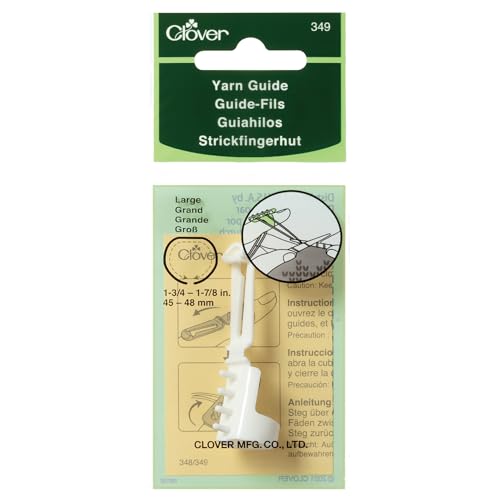

The Clover Knitting Thimble is an absolute classic for a reason, acting as a sturdy guide that keeps two strands of yarn separated on your fingertip. By preventing the yarns from twisting together, it allows you to maintain a consistent rhythm when alternating colors.
For knitters working on hats or sweaters where you need to carry one color in each hand, this tool provides a clear physical boundary. It effectively eliminates the "yarn soup" that often happens when you’re juggling multiple balls of wool.
However, note that it requires a bit of a learning curve to find the most comfortable position on your finger. If you have smaller hands, you may find the fit slightly bulky, but it remains one of the most reliable ways to keep your tension even across long colorwork rows.
The Knitting Barber Yarn Ring: Best for Comfort

If you find that traditional plastic thimbles dig into your skin during long knitting sessions, The Knitting Barber Yarn Ring is a game-changer. These rings are designed to be lightweight and unobtrusive, sitting comfortably on your finger without the rigid structure of a full thimble.
They are particularly excellent for knitters who suffer from hand fatigue or joint stiffness. Because they don’t force your yarn through a tight plastic channel, they allow for a more natural, fluid movement of the fiber as you work.
The trade-off here is that they offer slightly less "mechanical" control than a rigid guide. If you are a loose knitter, you might find that you still need to manually adjust your tension, but for overall comfort, they are hard to beat.
Prym Ergonomics Yarn Guide: Best for Beginners

The Prym Ergonomics guide is designed with a focus on simplicity, making it the ideal entry point for those new to stranded knitting. Its snap-on design means you don’t have to fiddle with complicated threading or sizing issues.
For a beginner, the biggest challenge is often just keeping the yarn from slipping off the fingers entirely. This tool acts as a dedicated "track" for your yarn, providing enough friction to keep your stitches uniform without being so tight that it shreds delicate fibers like alpaca or mohair.
Keep in mind that it is primarily designed for standard yarn weights. If you are working with very bulky, roving-style yarns, the guide may feel a bit cramped, but for your standard worsted or DK weight projects, it is incredibly intuitive.
Tulip Knitting Yarn Guide: Best for Precision

Tulip tools are renowned in the knitting community for their high-quality manufacturing and ergonomic thoughtfulness. This yarn guide is no exception, offering a smooth surface that prevents friction-based wear on your yarn.
Precision is the hallmark of this tool; it is designed to hold the yarn at a specific angle that promotes even tensioning. If you are working on complex charts where you need to switch colors frequently, the smooth flow provided by this guide helps maintain a consistent gauge throughout the entire project.
Because it is so precise, it is best suited for experienced knitters who have already developed a "knitting rhythm." It won’t do the work for you, but it will certainly polish the results of your hard work.
Cocoknits Yarn Guide: Best for Versatility
Cocoknits has a knack for creating tools that solve specific problems, and their yarn guide is a masterclass in versatility. It is designed to be worn on the finger and can accommodate multiple strands, making it suitable for everything from simple two-color work to more complex motifs.
The beauty of this guide lies in its adjustability. You can easily slide it to different positions on your finger to find the "sweet spot" that works best for your specific tension style.
It is particularly useful if you tend to switch between different fiber types, such as slippery silk blends and grippy wools. The guide handles various textures with ease, ensuring that your yarn doesn’t snag or bind while you work.
Addi Express Yarn Guide: Best for Speed Control
While many people associate the Addi name with knitting machines, their yarn guides are excellent for hand-knitters who want to pick up the pace. This tool is built to handle the tension requirements of faster, more rhythmic knitting styles.
By providing a consistent path for the yarn, it allows you to focus on the pattern rather than constantly checking your tension. It is a fantastic choice for those working on large-scale projects like blankets or oversized sweaters where efficiency is key.
Just be aware that speed can sometimes come at the cost of precision. Always perform a gauge swatch with the guide before starting your main project to ensure your speed isn’t causing your stitches to tighten up inadvertently.
How to Choose the Right Tension Guide for You
Choosing the right guide is less about the brand and more about your unique physiology and knitting style. Start by considering your primary pain points: do you struggle with tangled yarn, hand fatigue, or inconsistent stitch size?
If you have sensitive skin or arthritis, prioritize comfort-focused options like rings. If you are a beginner, look for tools that offer a clear, simple path for the yarn to follow, as this will help build your muscle memory.
- Finger size: Ensure the guide is adjustable or fits snugly without cutting off circulation.
- Fiber type: Slick yarns (like cotton or bamboo) may need a guide with more grip, while sticky wools need a smooth, frictionless path.
- Project scope: A simple ring is fine for a hat, but a more structured thimble may be better for a complex colorwork sweater.
Mastering Two-Handed Fair Isle Colorwork Basics
Two-handed colorwork involves holding one color in your left hand (continental style) and one in your right (English style). This method is widely considered the gold standard for stranded knitting because it keeps the colors distinct and prevents them from tangling.
Start by practicing with two high-contrast, non-fuzzy yarns. Avoid mohair or angora for your first attempt, as the halo will make it impossible to see your stitches and will cause the yarns to "felt" together while you work.
Focus on your floats—the strands of yarn carried across the back of the work. You want these to be long enough to allow the fabric to stretch, but short enough that they don’t catch on your fingers when you put the garment on.
Troubleshooting Common Colorwork Tension Issues
The most common issue in colorwork is the "pucker," caused by floats that are pulled too tight. If your fabric looks like a crumpled paper bag, your floats are likely too short, effectively cinching the stitches together.
Conversely, if you see large loops of yarn on the back, your floats are too loose. This often happens if you are focusing too much on the front of the work and ignoring the tension of the yarn being carried across the back.
- Tighten up: If your floats are too loose, try holding the yarn slightly closer to the needle.
- Loosen up: If your fabric is puckering, try "spreading" your stitches out on the right-hand needle after every few color changes.
Essential Tips for Maintaining Even Yarn Flow
Even with the best guide, your tension is ultimately controlled by your hands. The secret is to keep your yarn tension consistent across the entire row, regardless of which color you are using.
Many knitters find that they have a "dominant" hand, which results in one color being slightly larger than the other. You can combat this by consciously adjusting your grip or by swapping the colors between your hands every few rows to balance out the gauge.
Finally, always block your colorwork swatches. Stranded knitting often looks uneven until it has been washed and blocked, as the process allows the fibers to relax and settle into their final, uniform position.
Finding the perfect yarn tension guide is a journey of trial and error that rewards patience and persistence. Whether you opt for a sleek ring or a structured thimble, the goal is always to support your natural knitting rhythm rather than fighting against it. Remember that your tension will naturally improve with practice, so don’t be afraid to experiment with different tools as your skills evolve. Keep your stitches consistent, your floats relaxed, and most importantly, enjoy the beautiful patterns you create.