6 Best Heavy-Duty Sewing Needles For Attaching Cords
Selecting the right needle is vital for attaching cords. Explore our top six heavy-duty picks designed to handle thick materials with precision and durability.
Attaching decorative cords or functional drawstrings to a finished knit piece can be the difference between a professional garment and a homemade-looking one. Many knitters struggle here, often forcing standard tapestry needles through dense wool, which leads to frayed yarn and bent tools. Choosing the right heavy-duty needle is essential for maintaining the integrity of your stitches while ensuring your cords stay securely in place. This guide explores the best tools to help you finish your projects with confidence and precision.
Bohin Extra Strong Leather Needles: Best Overall


When you need to drag a thick cord through a dense cable or a folded hem, standard needles simply won’t cut it. Bohin’s leather needles are designed with a triangular point that slices through fibers rather than pushing them aside.
This structural difference is a game-changer for thick wool or felted items. While a blunt tapestry needle might snag on the ply of your yarn, these needles glide through the construction with minimal resistance.
Just be careful with delicate fibers, as the sharp point can accidentally pierce the yarn itself rather than traveling between the stitches. Use these when your cord is bulky and the base fabric is sturdy.
Singer Heavy Duty Upholstery Needles Selection
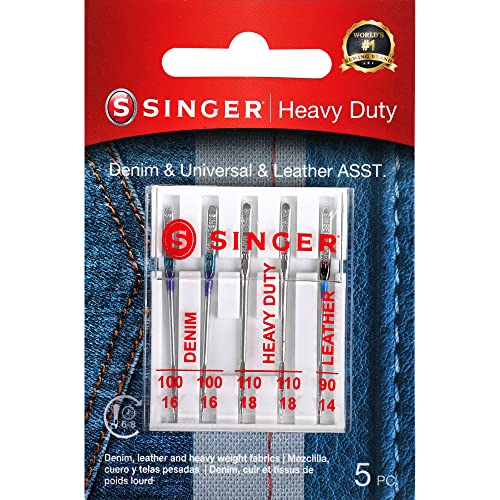
Upholstery needles are the workhorses of the fiber world, often featuring a slight curve that is incredibly helpful for blind-stitching cords into place. If you are attaching a cord to a circular neckline, that curve allows you to enter and exit the fabric without maneuvering the entire needle through a tight space.
These needles are exceptionally rigid, meaning they won’t snap when you hit a particularly dense section of a garment. This is vital when you are working with non-superwash wool that has a high degree of friction.
Because they are so sturdy, they can feel a bit clunky in the hands. Reserve these for heavy-weight projects like bag straps or home decor items where durability is the priority.
Dritz Heavy Duty Hand Needles for Thick Cords

Dritz offers a reliable variety pack that is a staple in many sewing kits for a reason. These needles have a substantial eye, which is the most important feature when you are trying to thread a thick, decorative cord through a needle without fraying the ends.
The shafts are thick and polished, allowing them to slide through knitted fabric without creating large, unsightly holes. They are an excellent middle-ground option for the knitter who wants one tool that can handle multiple cord thicknesses.
If you are working with a delicate silk or thin cotton yarn, however, these might be too thick. Always test the needle on a swatch first to ensure it doesn’t distort your stitch definition.
Clover Gold Eye Milliners for Cord Attachment

Milliners needles are long and thin, which makes them perfect for weaving in tails or attaching cords through long, straight channels. Their length allows you to thread a long section of cord and pull it through a hem in one fluid motion.
The "Gold Eye" finish is not just for show; it is designed to be smoother than standard steel, reducing friction as you pull your cord through the fabric. This is especially helpful if you are using a textured cord, like a braided trim, that tends to grab onto the surrounding stitches.
Because they are long, they can be prone to bending if you apply too much lateral pressure. Keep your movements straight and steady to ensure they last for years in your sewing kit.
John James Saddlers Harness Needles Review

Saddlers needles are designed for heavy-duty leatherwork, making them the ultimate choice for attaching cords to heavy-duty items like canvas-lined knit bags. They feature a blunt, rounded point that is surprisingly safe for delicate knits.
The strength of these needles is unmatched; they are virtually impossible to bend under normal use. If you are tired of your needles warping after a few passes through a dense, double-knit fabric, this is your solution.
Note that the eyes on these needles are often quite small compared to the shaft thickness. You may need a needle threader to get your cord through, even if the needle itself is large enough to handle the job.
Piecemakers Big Eye Quilting Needles for Yarn

Quilting needles are known for their strength and their ability to pierce multiple layers of fabric. The "Big Eye" version is specifically engineered for those of us who need to thread thicker fibers or decorative yarns without a struggle.
These needles are shorter than milliners needles, which provides better control when you are working in tight spots, such as inside a sleeve or a narrow waistband. The shorter length prevents the needle from wobbling while you are trying to navigate through your stitches.
They are an excellent choice for detail work where precision is more important than speed. If you are attaching a decorative cord to a child’s sweater, the small size and large eye make for a very ergonomic experience.
Essential Features to Seek in Heavy Duty Needles
When shopping for needles to attach cords, don’t just look at the brand name. The most important feature is the eye-to-shaft ratio, which determines how easily your cord will pass through the fabric.
- Eye Size: Must be large enough to accommodate the cord without bunching.
- Shaft Thickness: Needs to be substantial enough to prevent bending but thin enough to avoid distorting your gauge.
- Finish: A polished, slick surface is essential to reduce friction against the yarn fibers.
- Point Shape: Choose blunt for delicate knits and sharp or triangular for dense, heavy-duty applications.
Always prioritize a smooth finish. A rough needle will pull at the fibers of your yarn, leading to pilling or even breakage over time.
Choosing the Right Point for Cord Application
The point of the needle dictates how it interacts with your knitted stitches. A blunt point is almost always the safest bet for hand-knitting because it pushes the yarn strands aside rather than piercing them.
However, if you are working with a very dense, tightly felted fabric, a blunt needle will be nearly impossible to push through. In these instances, a sharp or triangular point is necessary to pierce the fabric cleanly.
Remember that once you pierce a strand of yarn, you cannot easily undo it. If you are working with an expensive yarn like cashmere or silk, err on the side of a blunter tip and take your time.
How to Prevent Needle Breakage on Thick Fibers
Needle breakage usually occurs when we force a needle through a section that is too dense for the tool’s diameter. If you feel significant resistance, stop immediately; forcing it will either snap the needle or tear your knitting.
Instead, use a thimble to provide extra leverage without straining your fingers. You can also use a pair of pliers to gently pull the needle through if you are working with particularly tough materials, provided you grip the shaft and not the eye.
Always keep your needles organized in a case, as moisture and humidity can cause steel to rust, which weakens the metal. A rusty needle will not only break more easily but can also snag and ruin your hard-earned knitting.
Expert Tips for Securing Cords to Knitted Items
When attaching a cord, think about the distribution of weight. Don’t just anchor the cord at the ends; use a hidden stitch every few inches to distribute the tension across the garment.
If your cord is prone to stretching, consider using a piece of clear sewing thread to "tack" it in place first. This keeps the cord from shifting while you sew it down with your primary yarn.
Finally, always block your finished item before attaching any cords. If you attach a cord to an unblocked garment, the fabric may shift or shrink later, causing your cord to pucker or sag in ways you didn’t intend.
Mastering the art of attaching cords is a hallmark of a knitter who cares about the longevity of their work. By selecting the right needle for the specific fiber and project, you protect your stitches and ensure a polished finish. Take the time to test your tools on a swatch, and you will find that these finishing tasks become just as meditative as the knitting itself. Happy crafting, and may your cords always lay perfectly flat.